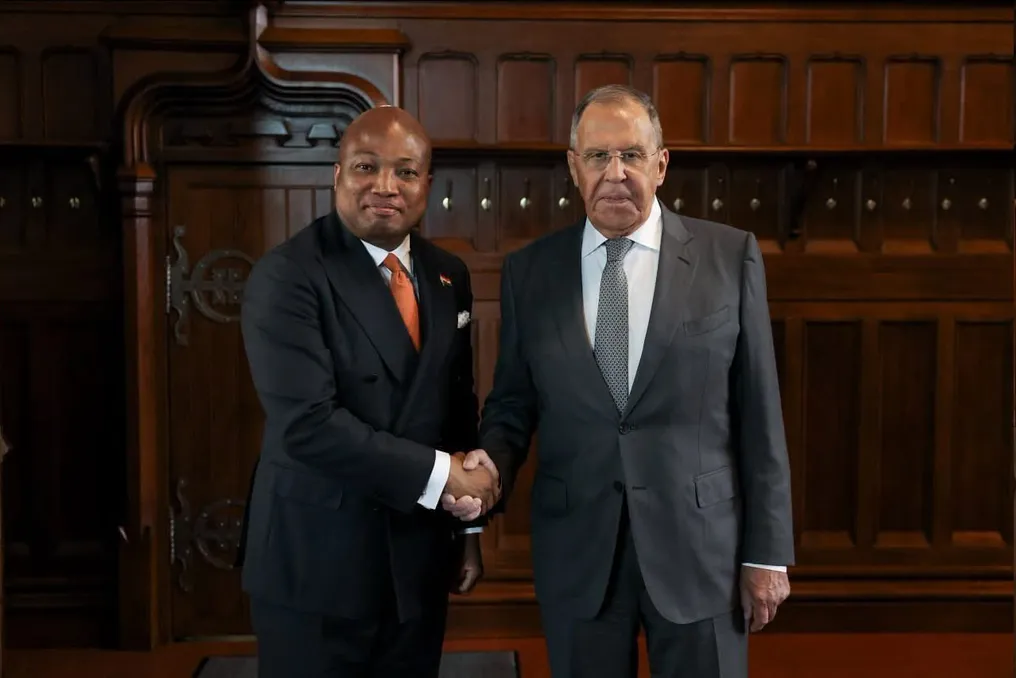
Ghana has taken a significant step in expanding its global economic presence by receiving official diplomatic support from Moscow. Russian Foreign Minister Sergey Lavrov announced full support for Ghana's aspiration to join the BRICS partner countries.
This announcement was made during high-level bilateral meetings at the Russia-Africa ministerial conference. Ghanaian Foreign Minister Samuel Okudzeto Ablakwa reported on this milestone following productive morning discussions held at the end of October 2026.
During the foreign ministers' discussions at the Russia-Africa Summit, Lavrov personally promised assistance in forming a broad consensus for Accra. Russia committed to using its influence to persuade founders such as Brazil, India, China, and South Africa to accept Ghana into their structure.
In early October 2026, the Ghanaian cabinet approved an official government statement expressing the desire to gain partner status in the growing economic organization. Thanks to active support from Russia, Ghana has gained a strong ally within this alliance.
However, the process of obtaining partner status is not quick, as admission requires unanimous consent from all founding members of the organization. Thus, Moscow's support will give the negotiations necessary momentum.
President John Dramani Mahama also unequivocally supported the country's strategic course in response to potential diplomatic tensions. He expressed confidence in the country's strategy, noting that the pursuit of BRICS partner status does not mean abandoning Ghana's traditional Western partners, but rather is a result of a policy of strategic optionality.
Ghana aims to diversify its development opportunities through new avenues in trade, industrialization, technology transfer, and adding local value. The country is building a balanced foreign policy, maintaining constant contact with Western states while preserving close interaction with rising powers in emerging markets. This dual approach ensures national economic stability in the face of geopolitical changes and increases export opportunities.
In an era of leading businesspeople, venture capitalists, and tech startups, macro-geopolitical decisions directly affect the market. Ghana's integration with BRICS countries opens promising prospects for financial ties and trade corridors that are independent of a centralized hub. Furthermore, membership in the partner structure can improve access to development capital through institutions like the New Development Bank.
While venture capital cycles in the West are constantly changing, Africa, which is in urgent need of alternative funding sources, cross-border fintech channels, and diversified supply routes, is in great need of such channels. Therefore, deeper engagement with developing economies in high-growth countries will help stimulate digital trade, reduce trade costs, and ensure economies of scale in West Africa.
In the future, Ghana must continue to seek approval from all members of the BRICS founding group. Although Russian support is a significant achievement, the deal will require collective acceptance. Success will allow Ghana to become one of the African countries influencing the future of South-South cooperation, alongside countries such as South Africa, Egypt, and Ethiopia.