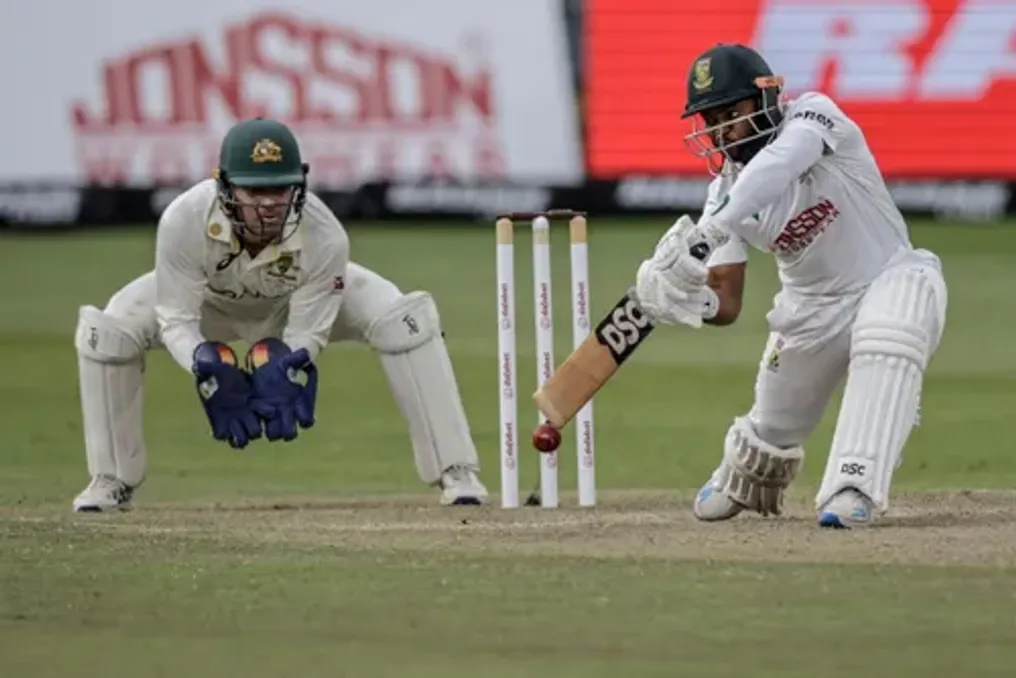
Third Test between Proteas and Australia: Five Key Moments of the Third Day of the Match
Read more
IOL
iol.co.za

Third Test between Proteas and Australia: Five Key Moments of the Third Day of the Match

The third day of the tense match between Proteas and Australia in Newlands concluded with a dramatic blow from Nathan Lyon, who turned a potential recovery for Proteas into a thrilling contest. After Proteas managed to negate Australia's 100-run advantage in the first innings, the South African team closed the third day at 140/4, maintaining a fragile 40-run lead heading into an anticipated busy fourth day.

Here are five key takeaways from the exciting game played in Cape Town.

Josh Inglis's batting anchored a massive fifth wicket

The dominance of the Australian middle order continued on the morning of the third day when Josh Inglis completed a brilliant Test century (102 runs off 135 balls). He began his innings with an effective reverse sweep off Simon Harmer. His partnership with Alex Carey (80) ultimately reached an impressive 185 runs, which drastically changed the course of Australia's first innings and allowed the visitors to establish a vital 100-run lead.

Simon Harmer sparked the Australian collapse in the morning

After Inglis and Carey looked set to create an insurmountable advantage, Simon Harmer (4/104) led a dramatic morning session, reviving Proteas' fortunes. Harmer broke the marathon fifth-wicket partnership by catching Inglis behind, and subsequently dismissed Carey with a slap. Joining him, Kagiso Rabada and Gerald Coetzee, the South African attack took six wickets shortly after lunch, restricting Australia's total in the first innings to 429 runs.

South Africa's second innings started very poorly: Aiden Markram was dismissed for just one run after attempting to hit the ball over mid-on. David Bellingham also departed for modest runs, caught again on the short leg, leaving the hosts in a difficult position at 32/2. Captain Temba Bavuma's decision to bat against the dry-grass turning ball essentially mirrored the South African team's efforts in batting.

Drama with DRS during Marcus Ackermann's timeout

Left-handed batsman Marcus Ackermann (62) continued his excellent form, contributing a second half-century to Proteas' fight in the second innings. However, his innings ended chaotically: he was struck on the helmet by Mitchell Starc's bouncer, which grazed the edge. In the ensuing confusion, the DRS timer expired before Proteas could request a review, leaving Ackermann bewildered on the boundary as he slowly returned.

Nathan Lyon's late strike opened up the game

Just as Bavuma (35) and Matthew Britzke seemed set to see the team through the end of the innings, veteran off-spinner Lyon bowled a delivery outside the off-stump. The ball caught and sharply spun past the wicket as Bavuma attempted to flick it towards the leg side. This late strike shattered the desperate partnership, dramatically shifting momentum in favour of Pat Cummins' team before the start of the fourth day.
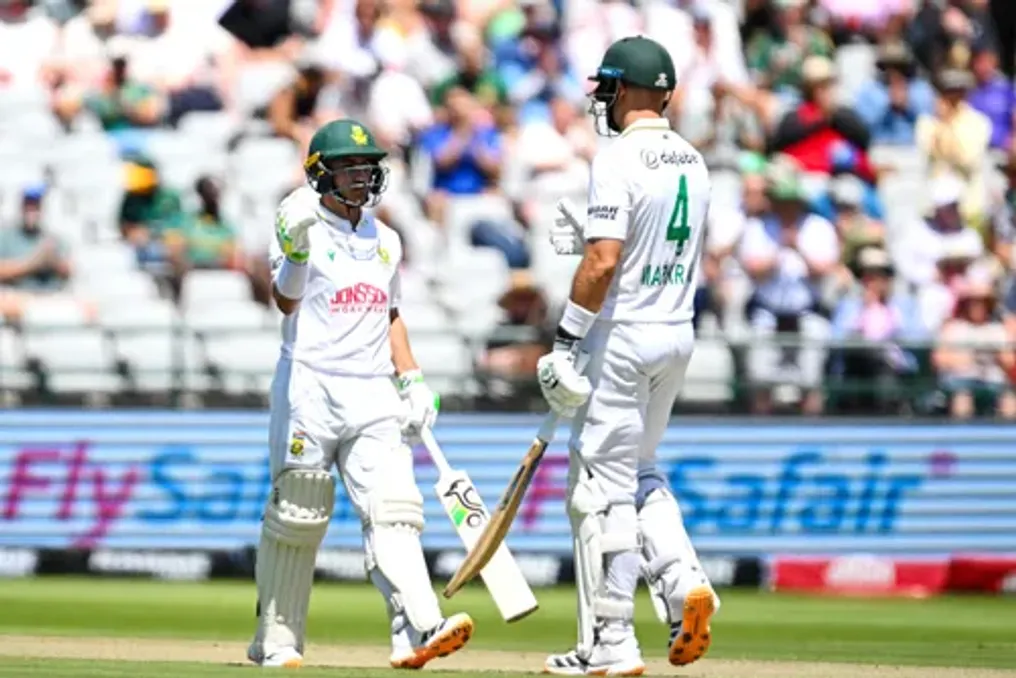
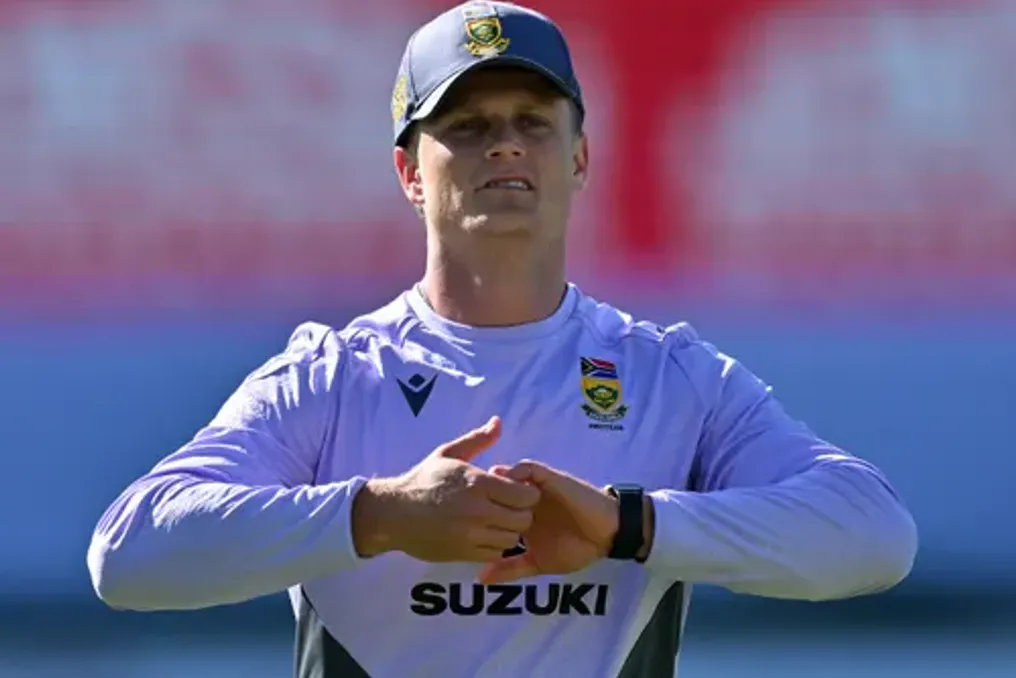
Similar stories

Clumsy failures of Proteas batters lead to comparisons with the French language
Read more
iol.co.za

Clumsy failures of Proteas batters lead to comparisons with the French language

The batting lineup of the Proteas team was on the verge of completely overwhelming Australia during the first day of the third Test at Newlands Stadium, but then lost the initiative to their opponents due to a series of inaccurate shots. Although the final score of 329 runs looks solid on paper, the main story of this incarnation, as well as the broader narrative of the entire Test series, is a disappointing pattern of soft exits and unrealized potential.

From time to time, the top and middle order batters of South Africa put in significant effort to settle in at the crease, only to lose their wickets precisely when the opportunity for absolute dominance arises.

During the Tuesday lunch break, active scoring was expected over the next two sessions on the calmest pitch at Newlands on the first day. The first session looked like paradise for the batters, and Pat Cummins' strange decision to start with bowling was deemed the biggest mistake in Australian cricket since the sandpaper scandal in 2018.

A brilliant performance by Marcus Ackermann and Aiden Markram before lunch provided Proteas with a fine start that could have crushed Australia. There were individual successful shots and a degree of luck, but this is Test cricket after all.

Nevertheless, before lunch, former Proteas captains Graeme Smith and Shaun Pollock called for some calmness, perhaps even restraint, after Proteas began playing very aggressively, scoring more than five runs per over.

The main reason was that this match resembled a familiar plot. And, as it turned out, it was another repetition of the Proteas batters' performance that made us all quote the French dictionary...

Both opening batters fell, despite having opportunities for big, weighty scores. Ackermann's haste against Nathan Lyon, when he came onto the field but was easily dismissed for only five runs before reaching a century milestone, illustrated the lack of ruthless determination that continues to plague this batting line.

Of course, this is only Ackermann's second Test, but he behaved as if the Australian attack was just another home game where little was at stake. And that is normal; players should play freely and express themselves, but losing one's wicket in such a manner was a crime.

Experienced Markram is a wonderful player and a person who tends to perform at the right moment, such as his magnificent century against the Australians in the Cricket World Cup. But, I fear that one day he might not be considered one of the true greats of Proteas.

For a player with his silky ability, he loses his wicket too easily. This is why his majestic batting ability and average of 35.65 in Tests do not quite correlate.

Travis Head helped him when he tried to hit Mitchell Starc over the keeper's head through the covers, as if it were an International T20 match. Then Starc made a miraculous catch on the boundary when he tried to grab the ball in the air.

Similarly, David Beddingham worked hard for a well-constructed half-century, but then gave away his wicket to a short ball from Mitchell Starc when he needed a big achievement to silence the skeptics. Perhaps he needs to silence his inner critic to become the true Test batter his talent demands.

And what happened to Vian Mulder's batting? It seems he scored all his runs during a marathon three hundred in Zimbabwe, where he generously allowed Brian Lara's record to be broken. I think we can all agree that this was probably the best decision because his shot selection since has been rather poor.

When captain Temba Bavuma misjudged Lyon's trajectory and was dismissed for a duck, the middle order resistance quickly collapsed, until Marco Jansen (unsurprisingly) and Ryan Rickelton organized a rescue counterattack.

This was a theme throughout their journey to the WTC Final: someone contributed to the score after several batting struggles, usually Bavuma and Jansen, before the bowlers saved them.

It is simply unfair to expect Bavuma to carry the burden of scoring alone every time the team takes the field in Test cricket. The captain has constantly been the team's pillar, but the top six cannot function effectively when senior batters repeatedly squander promising starts.

Test cricket at the highest level demands a ruthless instinct. When you have an attacking opposition lineup under the pressure of the Cape Town sun, you must not offer them a lifeline. You must completely knock them out of the competition.

Leaving behind at least 100-200 runs due to reckless shot selection not only gives Australia a chance but also creates unnecessary pressure on the Proteas attack to save the team again.

Reaching 40, 50, or 70 is just a ticket in; the real work begins after that. Until the batters take personal responsibility for turning promising starts into big scores, Proteas will continue to leave the door open for the elite opponent to walk back in.

Proteas aim for victory in Cape Town, risking the world number one ranking
Read more
iol.co.za

Proteas aim for victory in Cape Town, risking the world number one ranking

After two intense matches in which both teams suffered serious blows, South Africa and Australia head to Newlands for the final game of the heavy test cycle, which is tied at 1:1.

Australia delivered the first blow in Durban, followed by Themba Bavuma knocking Proteas off their feet with a powerful counter-attacking shot in Gqeberha.

Although the World Cup is not being played in Cape Town, the stakes remain high. A victory would allow South Africa to achieve a second consecutive home series win against their arch-rival and displace Australia from the world number one ranking.

For the Proteas team, which has repeatedly had to defend its status as Test Champions, this prospect is extremely attractive. Even after dethroning Australia in last year's Test World Cup final at Lord's, skeptics continued to label them 'paper champions.'

Nevertheless, fast bowler Ryan Rickelton is not planning to be distracted from the current task. He noted that after winning the World Cup, Bavuma spoke with the team, emphasizing that the goal is to leave a more long-term impression and confirm it by playing against the best teams in the world.

Rickelton added that Australia has long been the best and most powerful team in the world. He believes that even beating them on home soil is a huge achievement. However, speaking about the bigger picture, he mentioned the upcoming summer home tournament, which, if successful, could lead the team to the World Cup final in London in June.

He concluded that while both teams are in a very equal state, acknowledging that Australia holds a significant advantage in world cricket due to recent and past history. Currently, the team is simply fighting for the next day, hoping to have a good week.

The current 1:1 scoreline is reminiscent of the 2018 series, when the teams arrived in Cape Town after battles in Durban and Gqeberha. Rickelton, who did not participate in that confrontation, understands the importance of this familiar situation.

He stated that they are now in a similar 1:1 position before the final match of the series in Cape Town against a strong team, which adds confidence and significance. The team is set for a good performance, and success this week will give a significant boost to the team, coaching staff, and their methods. They are focused on achieving the current objective and maintaining stability in their approach to the games.

The third and final match is scheduled for Tuesday.

Progress against Australia: Temba Bavuma leads South Africa's counterattack in Gqeberha
Read more
iol.co.za

Progress against Australia: Temba Bavuma leads South Africa's counterattack in Gqeberha

The Proteas team delivered an outstanding day of Test cricket at St George's Park, managing to turn a precarious position early on the third day into complete dominance over Australia. Resuming play with a score of 97/5 after two rain-interrupted days, the South Africans launched a relentless counterattack led by captain Temba Bavuma, who played a monumental career-best innings.

Following this, the Proteas concluded a dominant session, achieving immediate success with the new ball before dusk. This allowed South Africa to enter the fourth day confidently, completely changing the course of the match.

One of the main highlights was the impressive counterattacking performance of Marco Jansen. After the early dismissal of Vian Mulder, Marco Jansen joined Temba Bavuma and drastically changed the dynamic at St George's Park. This tall all-rounder scored 85 runs, hitting a half-century off 43 balls, which included seven fours and two sixes.

Jansen's aggressive play in partnership with the composed captain brought the Proteas back into contention before he was caught by Scott Boland, who secured a well-deserved five-wicket haul.

Leading by example under immense pressure, Proteas captain Temba Bavuma played a masterful century in the fifth Test, becoming the bedrock of South Africa's recovery. Overcoming the fatigue of marathon exertion and weathering Australia's aggressive short spells, Bavuma neutralized Pat Cummins with great composure, reaching his important milestone.

His steadfast effort lasted over six hours, earning him a standing ovation as he spearheaded his team's counterattack from a difficult situation.

Spinner Simon Harmer provided invaluable support in the middle order, scoring his maiden Test half-century, which intensified the frustration of the Australian side. In a crucial partnership with Bavuma for 183 runs off 277 balls, Harmer displayed remarkable calm against the second new ball, guiding Bo Weibster past dismissals to reach 50 runs off 116 deliveries.

He was eventually dismissed in a tenacious innings of 82 runs when Marnus Labuschagne got him out, preventing him from achieving a magnificent century.

Bavuma achieved his career-best Test score of 179 runs, surpassing his previous record of 172 against West Indies. Playing with grit and elegance, the captain propelled South Africa past 400 runs before ultimately nudging Mitchell Starc behind him, concluding a monumental innings.

Shortly after his departure, South Africa declared the innings at an impressive 425/9, leaving themselves two days to take 20 wickets to level the series ahead of the third Test in Cape Town.

After missing the ODI series and the first Test, Proteas were led by Kagiso Rabada, who provided a brilliant start with the new ball after South Africa declared late on the third day. In his very first over, Rabada forced Nick Maddinson to attack from the back foot, resulting in a touch that went straight into Harmer's hands for a slap for zero.

Rabada's early breakthrough put Australia at 0/1, forcing night watchman Scott Boland onto the field to navigate a tense final spell against the spin of Harmer and Aiden Markram as the light began to fade.

Popular