
Fino Payments Bank recorded a loss of 20.9 crore rupees in the second quarter due to margin compression
Read more
Business Standard
business-standard.com

Fino Payments Bank recorded a loss of 20.9 crore rupees in the second quarter due to margin compression

Fino Payments Bank reported a net loss of 20.9 crore rupees for the quarter from July to September of fiscal year 27. The bank's profitability suffered due to margin compression and increased depreciation expenses following the migration of its core banking system.

Despite revenue consistently increasing by 9 percent to reach 333.6 crore rupees, earnings before interest, taxes, depreciation, and amortization (EBITDA) decreased by 19 percent to 35.1 crore rupees.

Anup Agarwal, Interim CFO of Fino Payments Bank, noted: 'Although revenue has increased consistently, profitability has declined due to margin compression and the impact of depreciating our core banking system migration. While these investments may put pressure on short-term profits, we remain committed to building a sustainable and viable bank through product innovation, financial discipline, and targeted growth.'

For the first half of fiscal year 27, the bank reported a net loss of 34.6 crore rupees. Meanwhile, revenue for the year decreased by 25 percent compared to the previous year, amounting to 640.5 crore rupees, and EBITDA fell by 37 percent to 78.2 crore rupees.

In Q2FY27, the volume of payments for credit facilities attracted by the bank sharply increased by 286 percent compared to the same period last year, reaching 762 crore rupees. The total payment volume for the first half of FY27 reached 1,390 crore rupees, exceeding the figure for the entire fiscal year FY26. This occurs against the backdrop of the bank preparing to transition to the status of a Small Finance Bank (SFB).

Ketan Merchant, Interim CEO, stated that 'The bank is in a consolidation phase and is working to strengthen its core retail business and restore growth momentum in the B2B sector.' As part of the preparation to become an SFB, Fino has recruited senior management in branch banking, liabilities, micro, small, and medium enterprises (MSMEs), and credit risk. The bank is also investing in technology, infrastructure, and operational capabilities.

In Q2FY27, the bank's net interest margin improved by 96 basis points compared to last year, reaching 38.1 percent. The Current Account and Savings Account (CASA) business remained a key driver of growth, with revenue in this area growing by 9 percent compared to last year and accounting for 52 percent of total revenue. Income from renewals increased by 7 percent, reaching a record 74.6 crore rupees.

Similar stories

ACC profit fell by 91% to 93 billion rupees, revenue decreased by 5.2% to 5,656 billion rupees in the second quarter
Read more
business-standard.com

ACC profit fell by 91% to 93 billion rupees, revenue decreased by 5.2% to 5,656 billion rupees in the second quarter

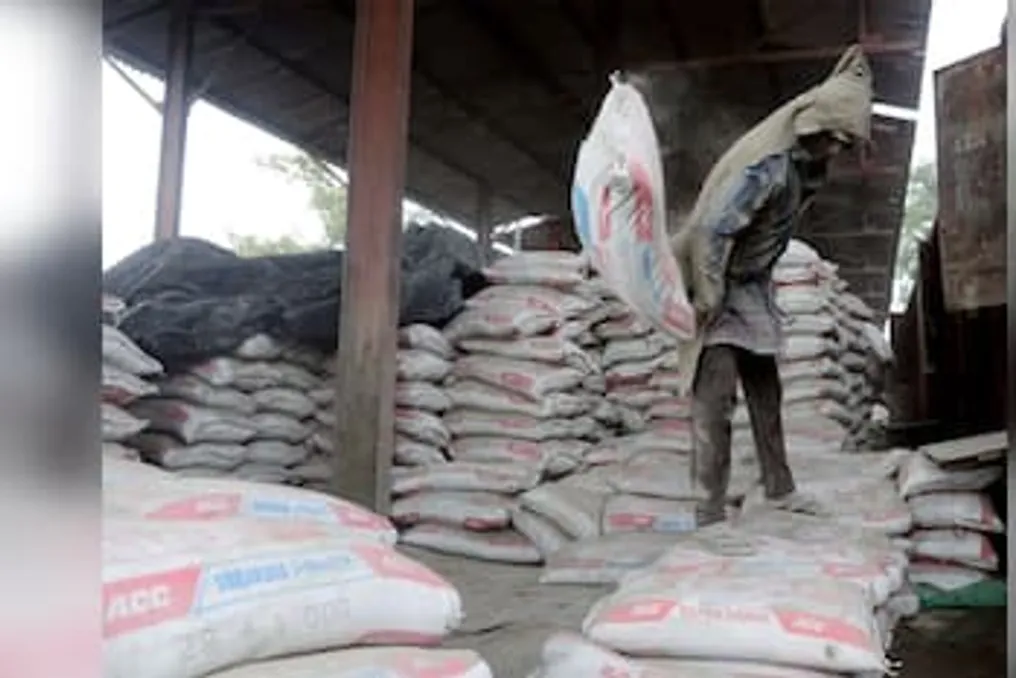
ACC Ltd, a cement manufacturer part of the Adani Group, reported on Tuesday a significant drop in consolidated net profit of 91.7% compared to the previous period, amounting to 93 billion rupees for the September quarter of fiscal year 27. This decline was due to a reduction in sales volume caused by the Master Supply Agreement (MSA) with the parent company.

Previously, the company had shown a profit of 1,119 billion rupees for the period from July to September. According to regulatory filings by ACC, a subsidiary of Ambuja Cements, the profit a year earlier included a tax refund of 659 billion rupees related to the previous period, as well as interest on the tax refund of 205 billion rupees.

Operating revenue for the September quarter of FY27 decreased by 5.24% year-on-year, reaching 5,656 billion rupees. Meanwhile, total expenses increased by 2.46% to 5,602 billion rupees. In the cement segment, revenue fell by 6.9% to 5,206 billion rupees. The company attributed this decrease in sales volume to a higher volume of MSA with the parent company, Ambuja Cements, in Q2FY26.

Cement manufacturers enter into MSAs with parent entities to optimize logistics operations and stimulate growth within the group. Nevertheless, ACC's revenue from Ready Mix Concrete (RMC) grew by 26.4% to 574 billion rupees in this quarter. In this segment, the company achieved a quarterly volume of 1.07 million cubic meters, corresponding to a 19% year-on-year increase.

ACC's total income, including other receipts, increased by 10.45% to 5,587.76 billion rupees in the second quarter. Vinod Bahati, Director and CEO, noted: 'Although the figures presented are not strictly comparable due to the influence of the MSA, the underlying business momentum remains encouraging, supported by our trading partners. Industry demand remains supportive and is expected to strengthen after the monsoon season due to housing construction, infrastructure, and capital expenditure, while improved price dynamics should mitigate the impact of increased fuel and energy costs.'

In the first half (H1), ACC's total consolidated income decreased by 7.66% to 11,657 billion rupees. ACC indicated that the second quarter of FY27 was characterized by geopolitical uncertainty, the impact of monsoons, seasonal shutdowns, and high energy costs amid global instability and restrictions on domestic coal availability. However, the company believes that long-term demand forecasts remain supported by investments in infrastructure, urbanization, rural housing, and industrial activity.

The company emphasized that it continues to focus on improving operational efficiency, premiumization, logistics optimization, and disciplined capital allocation. The improvement of the business portfolio, expansion of the RMC network, brand recognition, premium and sustainable product portfolio, and strong balance sheet provide a solid foundation for growth. ACC Ltd shares closed at 1,142.35 rupees on the BSE on Tuesday, down 2.14% compared to the previous close.

Urban Company reports increased net loss in the second quarter despite 41.4% revenue growth
Read more
business-standard.com

Urban Company reports increased net loss in the second quarter despite 41.4% revenue growth

Urban Company announced that its consolidated net loss for the second quarter of the fiscal year 2027 increased to INR 182.48 crore, even though revenue grew by 41.4%, reaching INR 537.29 crore.

According to regulatory filings, in the corresponding period last year, the company recorded a net loss of INR 59.33 crore. Urban Company's operating revenue increased by 41.4 percentage points, rising from INR 380.03 crore in the second quarter of the fiscal year 2026 to INR 537.29 crore.

In a sequential comparison, the net loss rose from INR 92.12 crore in the quarter from April to June, while revenue increased by only 1.7 percentage points.

The company's board of directors also approved the possibility of raising up to INR 2,500 crore through the issuance of equity capital or other convertible securities via a Qualified Institutional Placement (QIP), subject to shareholder approval.

Furthermore, the board of directors gave preliminary approval to explore household air conditioners as a new business vertical under the 'Native' brand. The company noted that it services millions of air conditioners annually, giving it direct insight into customer needs and product gaps.

The InstaHelp segment, which provides daily cleaning and maintenance services to households, reported a segment loss of INR 173.12 crore for the quarter, compared to a loss of INR 42.91 crore a year earlier. Segment revenue grew to INR 20.54 crore in the second quarter of the fiscal year 2027, up from INR 1.43 crore in the second quarter of the fiscal year 2026.

Revenue from consumer services in India, excluding InstaHelp, increased by 28.4 percent, amounting to INR 336.38 crore. The 'Native' brand revenue grew by 39.7 percent to INR 105.37 crore, and international business income showed an increase of 82.1 percent, reaching INR 75 crore.

In a statement, Urban Company said: 'The second quarter of the fiscal year 2027 was a strong quarter. The company's core business continued to gain momentum with margin expansion, while the company actively invested in InstaHelp, where unit economics improved even with rapid business scaling. The business is significantly larger than at the time of listing, growth has accelerated, and we now manage three businesses at scale with proven economics. The proposed fundraising of up to INR 2,500 crore provides flexibility: it allows us to confidently invest in each of them, strengthen leadership in InstaHelp, and selectively pursue inorganic growth without sacrificing one for another.'

Popular