Technology companies are turning to various religions and spiritual leaders with the aim of discussing and establishing guidelines for the behavior of artificial intelligence (AI) systems. This approach seeks to ensure that chatbots can make responsible decisions, recognize moral dilemmas, and avoid providing harmful responses.
This movement raises a fundamental question: how to integrate diverse human values and beliefs into the rules governing AI system responses? Interest in this topic is growing alongside debates about the inherent risks of advancing these technological models.
Corporations need to establish well-defined operational limits, going beyond the mere development of increasingly sophisticated software. In this scenario, religion can offer crucial reflections on issues such as justice, human dignity, and responsibility.
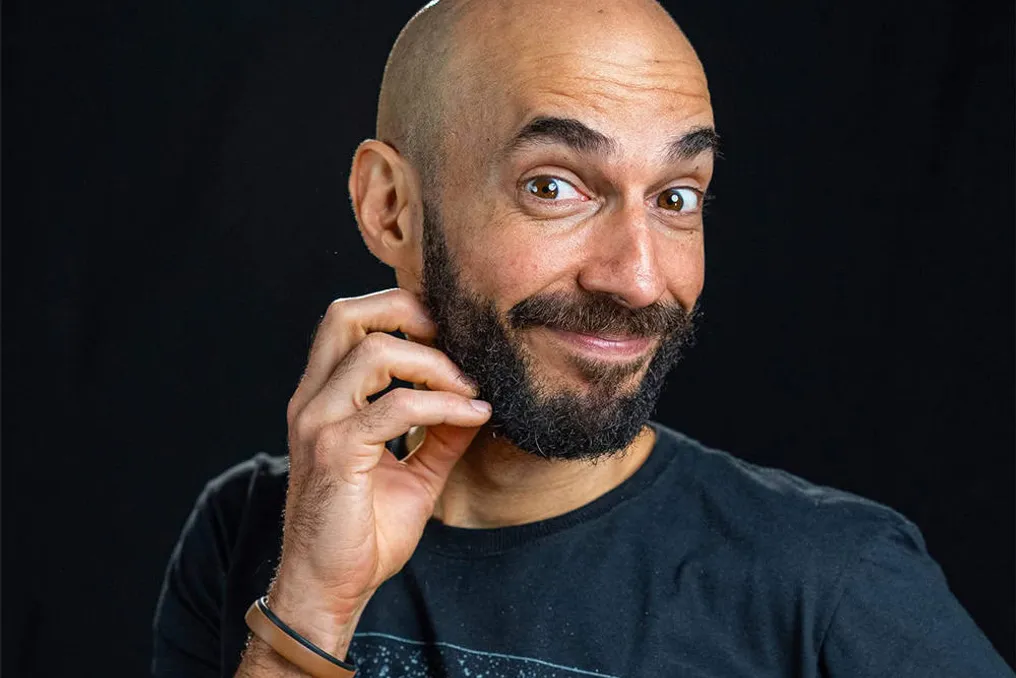
Roberto 'Pena' Spinelli, a physicist from the University of São Paulo (USP) and a Machine Learning specialist from Stanford University, commented on the great influence power of these platforms during the Olhar Digital News program. He pointed out that since models operate within people's homes, they recommend, speak, suggest, and argue, and that no model is neutral. Everything has a bias, determined by who created it, how it was trained, and what data was inserted.
An ABC News report stated that some companies intend to collect contributions from multiple religious traditions, alongside secular views.
Anthropic, the developer of the Claude chatbot, reported holding meetings with academics and leaders from more than fifteen religious groups. In these meetings, the company presents its models and debates issues raised by the technology, covering topics such as child use limits, education, and philosophical concepts about human nature.
Other major companies have shown great interest in the subject. Representatives from Meta, Google, and Amazon were recently gathered with the Vatican. Microsoft has also expanded its collaboration with global religious communities to discuss guidelines. These actions demonstrate that shaping AI behavior transcends the technical sphere, involving values, cultural differences, and social responsibilities.
Pena stated that, ultimately, these models construct their own morality, whether or not they follow an ethical code established by the company. He observed that sometimes the imposition of a code by the company is not followed by the model due to other problems. According to him, the decision on the values the company should incorporate should not be exclusive to it, as it involves immense power; this choice should belong to humanity.
However, including religious values in AI systems faces obstacles. The principles of each tradition are intrinsically linked to cultural, historical, and community contexts, and removing them can distort their meanings. Furthermore, different religions, or even currents within the same faith, may present conflicting answers to the same social situation.
This makes it difficult to consolidate these perspectives into a single set of rules, which could erase important distinctions and result in generic guidelines that do not adequately represent any of the involved traditions.
Part of the challenge lies in the functioning of large language models, which learn patterns from vast volumes of human-generated text. While this pattern recognition allows for generating responses based on relationships identified during training, it does not equate to a deep understanding of a belief nor prove that the systems possess moral consciousness or understand values like a human being.
Pena questioned the viability of creating an average of human values. He mentioned that Anthropic consulted fifteen religions and that OpenAI is also seeking something in this direction. Sam Altman expressed a desire to create a weighted average of humanity. However, Pena disagreed with this idea, arguing that the weighted average of all cultural views and morals might not be the ideal solution, as it might not be concise.
Although consulting religious leaders can help identify ethical dilemmas, it does not automatically guarantee that the systems will make correct decisions. The complexity lies in determining how to weigh distinct values, especially when they clash.
Therefore, the issue is not limited to which groups should participate in the discussions, but rather how their contributions will be considered in formulating the rules that will guide the models.
Pena also raised doubts about the criteria used in decision-making processes when facing impasses. He pointed out that what makes sense for one culture may be the opposite for another. Averaging can lead to a middle ground that satisfies no one. The crucial question is how to proceed: by representation or by majority? Which ethic or morality will be represented? And if someone has preferences different from the majority, will that person be rejected? It is an extremely difficult decision.
The companies' challenge is to define how to deal with divergent conflicting values without treating any perspective as universal. To do this, it will be essential to listen to diverse groups, clarify the criteria guiding the systems' responses, and implement transparent mechanisms for evaluation and correction of failures.