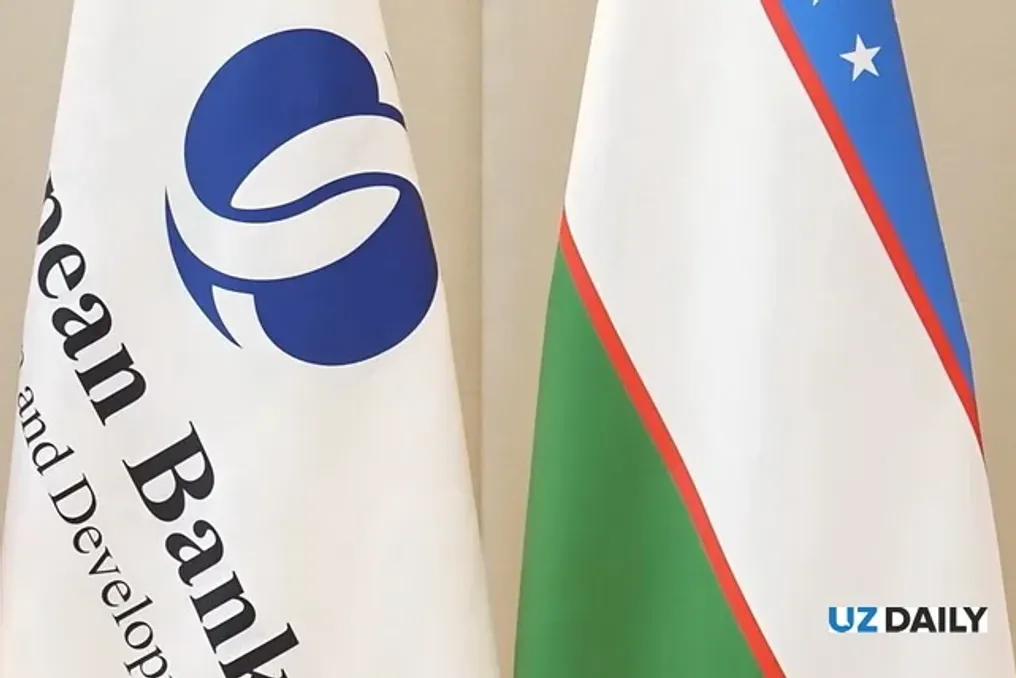
EBRD and Green Climate Fund launch green financing program in Uzbekistan
Read more
UzDaily
uzdaily.uz

EBRD and Green Climate Fund launch green financing program in Uzbekistan

The European Bank for Reconstruction and Development (EBRD), together with the Green Climate Fund (GCF), has initiated the launch of a green financing program in Uzbekistan. The goal of this program is to expand access for enterprises and households to financing for projects related to climate and the environment.

Hamkorbank became the first financial institution in Uzbekistan to join the program. It will be provided with a financing package of up to 20 million US dollars to support private sector investments in climate change adaptation, energy efficiency improvement, and agricultural land irrigation.

The financing can be provided either through a synthetic loan pegged to the Uzbek sum or in US dollars. These funds will be directed towards supporting projects across the country, including climate technologies and more efficient resource use.

This package includes a loan from the EBRD of up to 18 million US dollars and concessional financing of up to 2 million US dollars from the Green Climate Fund. Projects supported by this program are expected to reduce carbon dioxide emissions by approximately 5,685 tons annually.

This new initiative continues the work of the Uzbekistan Green Economy Financing Program, previous stages of which started in 2018 and 2023. In total, these stages have created a mechanism for green investment financing amounting to 160 million US dollars and supported 425 projects through five participating financial institutions.

Under the program, enterprises have gained the opportunity to receive financing for implementing climate technologies such as energy-efficient equipment, electric vehicles, solar photovoltaic systems, and solutions for reducing industrial emissions. Notably, almost 10% of the supported projects were implemented by businesses owned or led by women.

According to the EBRD, previous phases of the program have resulted in an annual energy saving of about 1.1 million gigajoules and reduced carbon dioxide emissions by approximately 53,000 tons per year. Furthermore, the initiative has contributed to the installation of over 14.3 MW of renewable energy capacity and helped local financial institutions strengthen their expertise in green finance.

The 'Greening Green Finance Systems' program aims to expand climate financing and encourage the financial sector of Uzbekistan to adopt lending and investment practices aligned with climate goals. Priorities of the program include more rational water use, sustainable land management, and improving overall resource efficiency.

According to the EBRD, Hamkorbank is the third-largest lender in Uzbekistan. Overall, the EBRD has invested nearly 7.3 billion US dollars in Uzbekistan through 219 projects, a significant portion of which has been directed towards supporting private business.

Similar stories

Uzbekistan to receive over 103 million euros from the Green Climate Fund for land restoration
Read more
podrobno.uz

Uzbekistan to receive over 103 million euros from the Green Climate Fund for land restoration

The Green Climate Fund Council approved the regional program CLiCA, aimed at increasing the resilience of Central Asian landscapes to the effects of climate change. Under this program, Uzbekistan will receive 103.7 million euros, which is the largest share among all participating countries.

These funds are intended to support farmers and restore ecosystems. The total budget for the entire program is 264.4 million euros. The project was developed by the German Agency for International Cooperation (GIZ) in collaboration with Uzbekistan, Kyrgyzstan, and Tajikistan. Coordination of the work on the Uzbek side was carried out by the National Center for Climate Change under the Committee on Ecology.

In Uzbekistan, this initiative plans work across an area of 164 thousand hectares, including forests, pastures, and agricultural lands. Methods that promote the conservation of natural resources and increase the sustainability of agriculture against climate shifts will be applied there.

A significant portion of the allocated money will go towards supporting farmers, providing them with additional opportunities to attract financing needed to implement new technologies and adapt their farms to the changing climate. The project is expected to protect 342 thousand residents of Uzbekistan from climate threats, with about half of them being women.

Furthermore, the program provides for reducing greenhouse gas emissions and increasing their absorption by 1.07 million tons of CO₂ equivalent. The CLiCA program unites the efforts of Uzbekistan, Kyrgyzstan, and Tajikistan in nature conservation and land restoration tasks, paying special attention to territories and residents most vulnerable to the consequences of climate change. Previously, Uzbekistan had proposed using artificial intelligence to combat poaching and create a network of reserves in Central Asia.

World Bank to provide Uzbekistan with $100 million for power grid modernization
Read more
podrobno.uz

World Bank to provide Uzbekistan with $100 million for power grid modernization

The World Bank has approved a loan of $100 million to carry out the modernization of Uzbekistan's power grids. These funds will be used to update and digitize 60 substations across the country.

This project aims to reduce energy losses, increase the stability of electricity supply, and enable the connection of new renewable energy facilities, such as solar and wind farms. Furthermore, the implementation of the project is expected to create approximately 11,700 new jobs.

By 2031, the modernized substations are expected to allow for an annual reduction in electricity losses by 20,000 megawatt-hours. Moreover, the power grid will gain the capacity to accept at least 3.3 gigawatts of power from renewable sources. It is projected that this project will lead to an annual reduction in greenhouse gas emissions of nearly 23,000 tons.

The total cost of the entire program is $371 million. In addition to the World Bank's contribution, the Asian Development Bank will provide another $200 million, having approved the project financing in September. An additional $71 million will be allocated by the Government of Uzbekistan from the state budget.

The need to update the infrastructure is driven by increasing electricity consumption. A significant portion of the distribution networks was built many decades ago, and many substations operate under overload. This causes energy losses and outages that affect not only residential and commercial buildings but also social institutions, including hospitals and schools.

Infrastructure modernization is critically important for Uzbekistan to achieve its goal of increasing renewable energy capacity to 25 gigawatts by 2030. To do this, the country requires a power grid capable of efficiently receiving energy from wind and solar installations and reliably delivering it to end consumers.

AO 'National Electric Networks of Uzbekistan' is responsible for implementing the program. In addition to updating the infrastructure itself, the project includes digitizing processes at substations, strengthening cybersecurity measures, and improving the financial management system. An increase in the proportion of female employment in the energy sector and improved compliance with environmental and social standards are also planned.

The World Bank emphasizes that stable power supply is a fundamental condition for the life of the population, the functioning of businesses, and ensuring sustainable economic growth of the state. Specifically, ten substations in Tashkent are planned for modernization to increase their throughput capacity and stabilize electricity supply. After replacing power transformers, the total additional capacity will amount to 333.2 megavolt-amperes.

Popular