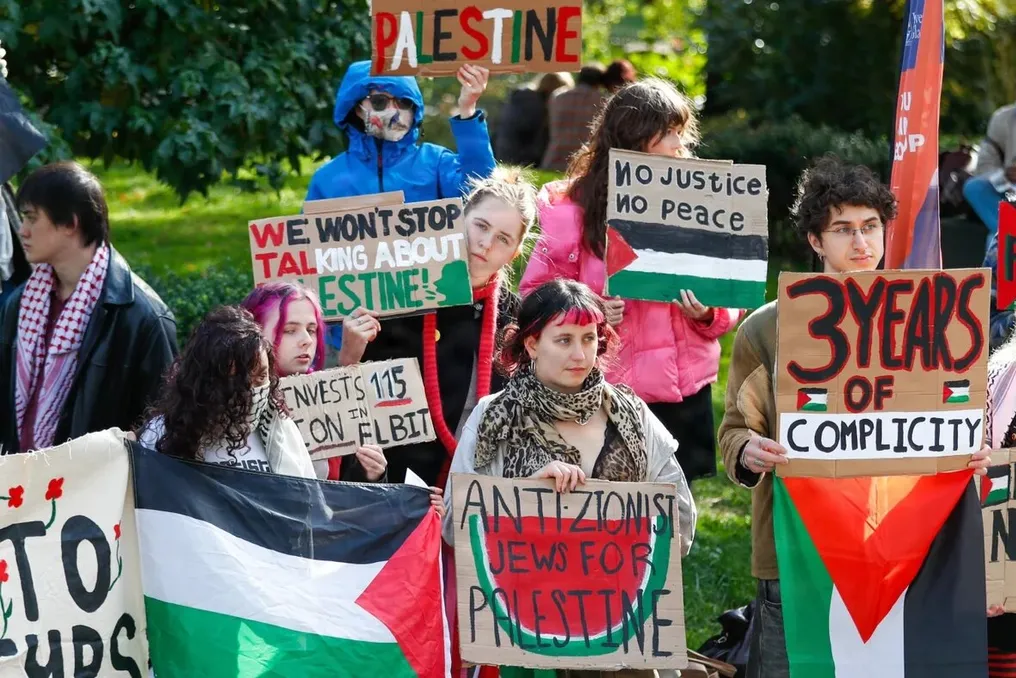
The idea that young people witnessing genocide cannot ask questions or protest what is happening raises serious concerns. Last week, the UK Department for Education conducted an independent review of antisemitism in schools and colleges.
Following the publication, the government agreed to all 27 recommendations put forward by former school inspector Sir David Bell aimed at eradicating antisemitism in educational institutions. These recommendations included strengthening guidance on political impartiality, such as restricting teachers from wearing pro-Palestine badges; incorporating antisemitism into school student protection policies; encouraging schools to adopt the International Holocaust Remembrance Alliance's (IHRA) working definition of antisemitism; and collaborating with the Home Office and Prevent programme to help schools identify instances where antisemitism may be linked to radicalisation.
Such large-scale steps to control speech and attempt to regulate political rhetoric in educational settings are not new. Previously, the British government mandated that schools teach British values: democracy, the rule of law, individual liberty, and tolerance. These values were integrated into the UK's Prevent strategy to counter radicalisation. The government insisted that this included protecting all students who might be at risk of radicalisation; however, data shows that Muslims continue to feature disproportionately in Prevent referrals.
This is an important point for understanding why linking antisemitism to the Prevent programme is ominous: the underlying assumption is that students typically associated with Palestine-related activism are Muslim. If we value the rule of law, then young people deserve the right to ask questions or discuss legal aspects, such as the genocide case brought by South Africa to the International Court of Justice. If schools must follow these recommendations, will they penalise young people for an interest in the rule of law? Will this be considered antisemitism?