Discussion with Gambhir and focus on Vaibhav ahead of the fourth T20 in Auckland
Read more
Aaj Tak
www.aajtak.in

Discussion with Gambhir and focus on Vaibhav ahead of the fourth T20 in Auckland

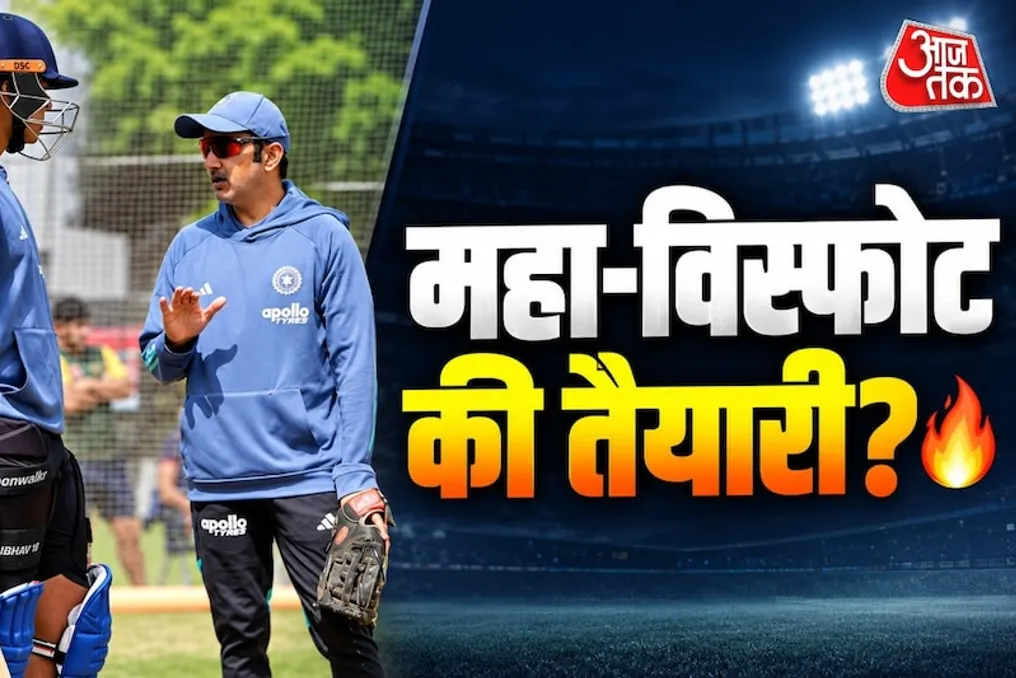
New Zealand bowlers experienced the storm created by Abhishek Sharma's batting in Wellington. Now all eyes are once again on Vaibhav Suryavanshi ahead of the fourth T20, which will take place in Auckland on Friday. A photo from the training session amplified this interest: India's head coach Gautam Gambhir is explaining something to Vaibhav, who is listening intently.

The question arises whether this young batter can create another storm with his batting in Auckland.

Before the fourth T20, the Indian team faces a serious question regarding Ishan Kishan's availability. Due to groin injury, Ishan has not played in the last two matches, and his return is still undecided. If he is not fit for this match, Vaibhav Suryavanshi might feature again in the squad.

In Wellington, Vaibhav started the innings alongside Abhishek Sharma, but Vaibhav's innings did not attract as much attention as Abhishek's explosive play. Nevertheless, the Indian team has a chance to utilize the aggressive style of this 15-year-old batter. If Vaibhav starts again, India's start in the powerplay could be extremely aggressive.

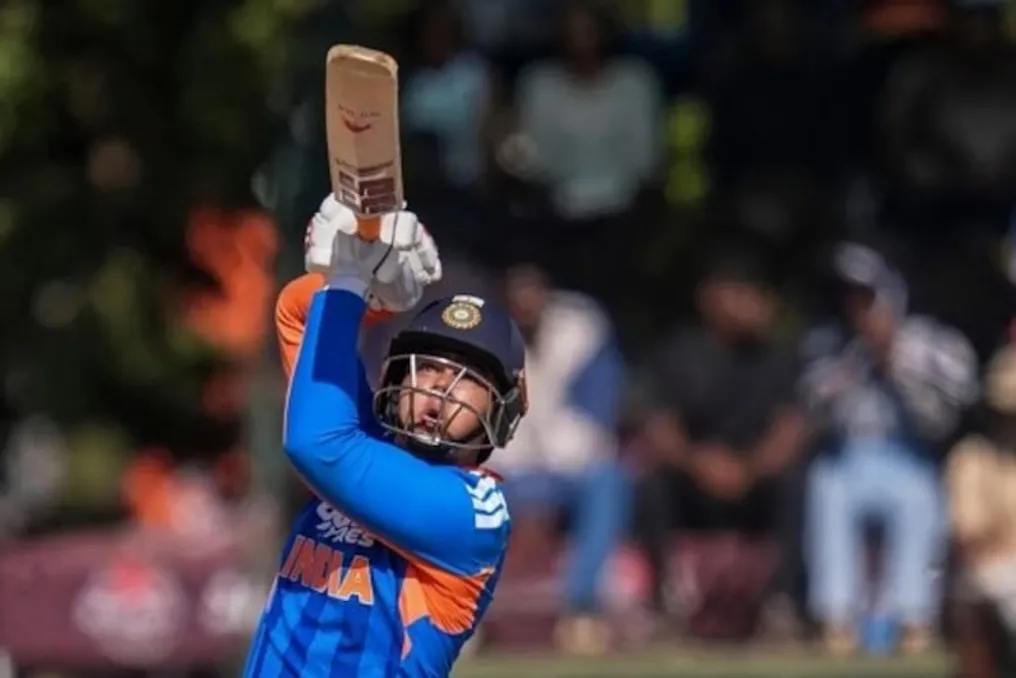
In fact, in the third T20, Vaibhav and Abhishek Sharma built the opening partnership for 133 runs, using only 43 balls. Vaibhav scored 4 fours and 4 sixes, while India reached the target of 199 runs in 13.2 overs.

The conversation between Gambhir and Vaibhav during practice attracted everyone's attention. Gambhir seems to be explaining something with hand gestures, and Vaibhav is listening. However, it is unclear what exactly was discussed in this conversation, so rushing to interpret it as an indication of any specific strategy or team composition would be premature.

Nevertheless, the discussion about Vaibhav's role before the fourth T20 is natural. The Indian team constantly puts pressure on opponents through aggressive batting. In that case, if Vaibhav is given the opportunity, he is capable of changing the course of the match from the very first ball.

Vaibhav's playing position also sparks discussions regarding Sanju Samson's batting spot. In Wellington, Vaibhav and Abhishek started the innings, while Sanju had to come in at number three. If the team maintains this combination, Sanju might also be at number three in Auckland.

However, the final decision will depend on Ishan's physical condition and the team management's strategy. The Indian team has options in the batting order, but the question is whether it will trust the aggressive combination used in Wellington again?

The fourth T20 in Auckland could be another opportunity for Vaibhav. The conversation with Gambhir has certainly raised expectations, but the real picture will only become clear after the team selection is announced. Now it remains to see if Vaibhav gets a place in Auckland. If so, can he once again destroy the New Zealand bowlers alongside Abhishek Sharma?
Similar stories

Discussion of Vaibha Suryavanshi's position in the Indian squad ahead of the third T20 match against New Zealand
Read more
www.aajtak.in

Discussion of Vaibha Suryavanshi's position in the Indian squad ahead of the third T20 match against New Zealand

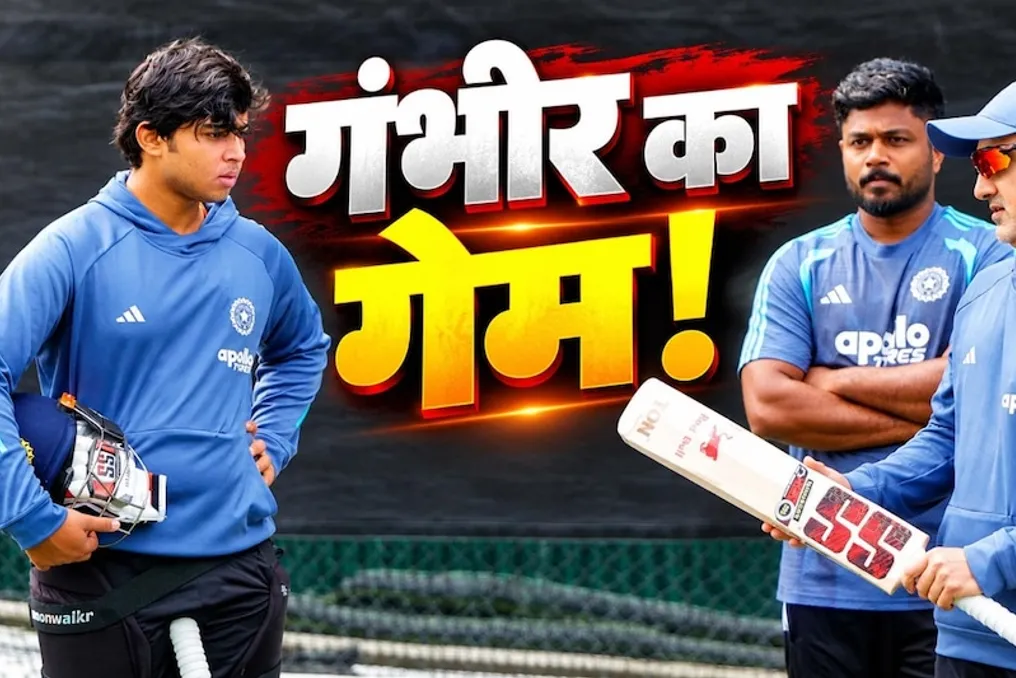
The photograph shows India's coach Gautam Gambhir holding a bat, next to which stands 15-year-old Vaibha Suryavanshi, looking intently at it. Sanju Samson is also present in the frame. Although the exact meaning of this scene remains unclear, it has raised an interesting question ahead of the third T20 between India and New Zealand: will Vaibha's batting position be changed?

Is it possible for him to get another chance in the starting XI as an opener, or will the team management keep him at number three? The relevance of this question increases because he got a chance to play in the second T20 but failed to make an impression. Now he will have another chance in the third match, which will take place in Wellington on October 27 against New Zealand. India leads the five-match series 2-0 and aims to win the entire series.

The picture shows Gambhir holding the bat, while Vaibha stares intently at it, with Sanju Samson nearby. It gives the impression that Gambhir is giving Vaibha advice on the game. Nevertheless, it is unclear from the photo itself what they are discussing. Despite this, this picture has generated increased interest regarding Vaibha's batting position before the match.

Vaibha's playing style is characterized by an aggressive desire to attack bowlers from the very beginning. He is only 15 years old, but he has already created a recognizable image thanks to his assertive style at such a young age. The question of where to place such a batsman is a strategic one for the team management.

In the second T20, in the absence of Ishan Kishan, Vaibha was included in the squad, but the team sent him to the third position instead of opening. He was dismissed after scoring only four runs off eight balls. Although it was a short innings, his batting position was actively discussed afterward.

Previously, Vaibha opened in the Asian Games alongside Abhishek Sharma, while Sanju Samson played at number three. This raised the question of whether India should revert to the same combination that would allow Vaibha to start the innings.

Former Indian spinner Ravichandran Ashwin also questioned the decision to send Vaibha to the third position in the second T20. He believed that the young batsman would be better suited to a role where he could utilize his natural aggression. Former Indian spinner Murali Kartik also noted that Vaibha's strength lies in the opening, and the role of a middle-order player is relatively new for him.

India received a blow before the third T20: Ishan Kishan will not be able to participate in this match against New Zealand due to injury. According to BCCI information, he suffered a right thigh strain during the first T20. He has not fully recovered yet, and the medical team is monitoring his recovery.

Thanks to Ishan's absence, the probability of Vaibha getting another chance has increased. However, getting a chance and playing in a preferred position are two different things. India has proven options for the opening slot in Abhishek Sharma and Sanju Samson. Both played useful innings in the first match of the series. Therefore, the team management might want to avoid changing this successful combination.

But if Vaibha remains at number three, it will mean that he will have to adapt to his role again. There is also the question: should his position be determined based on a short innings, or should the team give him a chance to play in the position where he previously demonstrated his aggressive play?

India won the first two T20 matches 4-4. A victory in Wellington will give the Indian team an undisputed advantage of 3-0 in the five-match series. Thus, the captain and coach have a golden opportunity to win the series, but there are also some questions regarding the team composition.

Will the opening pair of Abhishek and Sanju remain? Or will Vaibha have to play at number three again? Or will the team management decide to give him a chance to open to fully utilize his strength? The photograph does not answer these questions yet. The bat in Gambhir's hands and Vaibha's intense gaze are just an interesting moment. The real answer will be known by the squad selection and batting order in the third T20. Regardless of the secret of this photograph, everyone will be closely watching Vaibha's role in the third T20.

Questions about the possible inclusion of Vaibhav Suryavanshi in the squad after Ishan Kishan's injury
Read more
www.aajtak.in

Questions about the possible inclusion of Vaibhav Suryavanshi in the squad after Ishan Kishan's injury

It is not easy for young players in the Indian team to secure a spot, and the lack of chances in the starting lineup, even after making the team, presents a serious challenge. Vaibhav Suryavanshi is currently going through such a period. Attracting attention with his explosive batting, Vaibhav awaits his chance during the tour to New Zealand, but this wait is getting longer.

Whether it is the series against Afghanistan, matches against West India, or the current tour in New Zealand, Vaibhav constantly has to sit on the bench. The question is not whether Vaibhav can replace Sandeep Samson and Abhishek Sharma at the top order. The question is whether there is another way for Vaibhav if the team management does not want to part with this pair.

Before the second match of the five-match T20 series against New Zealand, the Indian team received a blow: wicketkeeper-batsman Ishan Kishan was ruled out due to a hamstring strain. This injury occurred during the first T20 match of the series. Following Ishan's injury, the possibility of Vaibhav playing naturally comes up, as a batsman's spot has opened up. However, there is no convincing reason to believe he will immediately be brought into the starting XI.

The team management could give a chance to another available player instead of Ishan. The pair of Sandeep and Abhishek played a key role in India's victory by four wickets, chasing a target of 226 runs in the first T20. Therefore, the decision to break up this pair will not be easy.

But here arises an important question: is opening batting the only path for Vaibhav? Why shouldn't he play at number three or four?

The team management's strategy regarding Vaibhav can be understood. Sandeep Samson and Abhishek are both in good form and have proven their usefulness in chasing big targets. Thus, changing a successful combination just for one young player could be a risky move.

However, the team composition does not mean that all paths are closed for the young batsman. If Vaibhav is considered part of future plans, then the possibility of testing him at number three or four should be considered.

Undoubtedly, there is a difference between opening and batting in the middle order. Facing a new ball and coming onto the field in the middle of an innings are two different types of tasks. Preparing Vaibhav for this role will also require time. But until he is given a chance, the question of assessing his multi-faceted abilities will not arise.

The team management needs to clarify whether Vaibhav is exclusively a future opener or if the team has plans to use him in various situations.

Vaibhav has another option. Ranji Trophy matches are being held in India. If he does not see a real chance to play in the New Zealand series, the team should consider the benefit of constantly sitting on the bench. Fielding Vaibhav for Bihar in the Ranji Trophy could give him an opportunity to play competitive cricket. First-class cricket, long-form games, and testing technique in different conditions would be beneficial for his development.

Nevertheless, sending him back to India mid-series is not a simple decision. This requires considering the team's needs, selectors' plans, and the schedule of matches in Bihar. But the general question remains: is it better to stay in the team without playing, sitting in the dressing room, or to play?

For a young player like Vaibhav, training is extremely important. Net practice is not enough to unlock talent; the real test happens on the field, where decisions must be made with every delivery and the innings managed under pressure.

Constant lack of opportunities does not automatically prove that the team management is against him. In international cricket, a place is determined by performance, team needs, and squad composition. The good play of Sandeep and Abhishek gives them a solid foundation to retain their spots in the starting XI.

However, the role of the young player in the team and the future plan must be clearly defined. If Vaibhav cannot be given a spot at the top order now, will he be prepared for the middle order? And if there is no chance in the near future, will the possibility of releasing him from the team to participate in competitive matches be considered?

Following Ishan Kishan's injury, all attention is now focused on the team management's decisions. Whether Vaibhav will be given a chance will be known later, but the team must explain when and how his talent will be utilized.

New Zealand Captain Discusses Potential of Young Indian Player Vaibhav Suryavanshi Ahead of T20 Series
Read more
www.aajtak.in

New Zealand Captain Discusses Potential of Young Indian Player Vaibhav Suryavanshi Ahead of T20 Series

New Zealand captain Michelle Santner highly praised the aggressive play of young Indian player Vaibhav Suryavanshi, noting that he would be difficult to stop if given the opportunity to play in the five-match T20 series. Nevertheless, the New Zealand team has prepared its strategy against this 15-year-old athlete. The first match of the T20 series between India and New Zealand will take place on Thursday.

Since being included in the Indian squad for the tour of England, Vaibhav has been given a limited number of playing minutes. The main reason for this was the outstanding performance of regular batsman Abhishek Sharma and Sanju Samson. Previously, in the last T20 series against the West Indies, Vaibhav also failed to make the starting lineup.

At the press conference before the series, Santner commented on Vaibhav's game, stating that the New Zealand team is well acquainted with his abilities and has developed a corresponding tactic. He emphasized that even though Vaibhav did not participate in the last series, they know what a good player he is because they have seen his performances in the IPL. Santner added that Vaibhav has a chance to play an important role in the Indian team, both in this series and in the future.

He continued that he had observed what he is capable of doing if given a chance in the current series, and noted that he was quite difficult to stop. Santner recalled how bowlers in England often used short balls against Indian batsmen, and also saw in the IPL how aggressively Vaibhav can play. He assured that they have certain plans in case he takes the field.

Santner also shared his opinion on the return of experienced fast bowler Bhuvneshwar Kumar to the Indian T20 team after almost four years away. The New Zealand captain believes that the conditions in New Zealand might suit Bhuvneshwar, who masterfully controls spin and movement in the air. Santner suggested that Bhuvneshwar could benefit if the pitch slightly assists the ball, noting that he also made the ball spin on flat Indian surfaces. He added that on a new ball, he could become a serious problem for New Zealand batsmen.

He mentioned that in India, T20 matches often end with large scores and easy chases. Santner stated that conditions for bowlers in India have become difficult, whereas in New Zealand, Bhuvneshwar might face more favorable conditions.

Santner hopes that bowling dominance will prevail in the T20 series. However, he acknowledged that conditions can change rapidly depending on the pitch and weather. He suggested that bowlers might gain an advantage in the first match, while the reuse of the same ground in the second match could ease the batting for the batsmen. Therefore, both teams will have to change their strategy according to changing circumstances.

Santner called the Indian team strong, noting that Team India has been performing well for a long time. Nevertheless, he reminded that the bouncy pitches in New Zealand will differ from home conditions for Indian players. He also mentioned that India recently defeated New Zealand in a T20 series by a score of 4-1. Following the five T20 matches between India and New Zealand, there will also be five ODI matches and two Tests. According to Santner, under a tight schedule and constantly changing circumstances, both teams will need to effectively utilize their entire squad to achieve good results.

Popular