First gas discovery in Tanzania in a decade is small, but timely for economic development
Read more
IOL
iol.co.za

First gas discovery in Tanzania in a decade is small, but timely for economic development

A recent gas field development in Tanzania, the first in the last decade, has modest volumes, but its appearance is seen as timely for the country's needs.

This field is jointly operated by the state corporation Tanzania Petroleum Development Corporation (TPDC) and the French operator Maurel & Prom (M&P), which holds a 60% stake in the license. According to a previously published M&P report, production is estimated at approximately 200 billion cubic feet gross, of which 120 billion belongs to the company, and the potential gross production is 50 million cubic feet per day. Production is expected to begin in early November, and the gas will be intended for domestic use, industry, and transport.

Small addition to existing reserves

Tanzania's discovered reserves amount to 57.54 trillion cubic feet, so the new find increases this volume by only about 0.4% according to calculations. Furthermore, it represents only about 8% of the largest find in the country, which was made in 2016 and amounted to 2.7 trillion cubic feet. In the coastal blocks managed by Equinor and Shell, there are tens of trillions of cubic feet, and the long-awaited LNG plant in Lindi is planned with a capacity of 10–15 million tons per year.

The advantage provided by the Mnazi Bay field is its proximity. It is located onshore, near existing infrastructure in Mtwara, and regional pipelines already supply power stations in Dar es Salaam. In 2024, gas supplied almost 80% of Tanzania's electricity, and Mnazi Bay is one of the fields behind this figure. M&P's average output at this site in the first nine months of 2026 was 67 million cubic feet per day, which is 12% higher than the previous year, allowing for the rapid connection of new volumes.

Gas demand issue

A more important question is who will buy this gas. Energy may not be the only consumer. The Julius Nyerere hydroelectric power plant, with a capacity of 2115 MW, commissioned in August, increased the installed capacity to 4646 MW with a peak demand of 2271 MW, creating a surplus of over 2300 MW. Homer himself emphasized that this discovery should contribute to industrial growth, not just energy, noting that demand is growing 'especially during' periods of economic activity expansion.

This points to other areas of application. Compressed natural gas is already used to fuel vehicles in Dar es Salaam, and drivers who have switched to dual-fuel systems save money because local gas is cheaper than gasoline. TPDC reports that it is negotiating with four potential investors on small-scale LNG projects, which will allow gas to be delivered to areas not reached by pipelines. Supply security is also important: at the end of September, Orca Energy warned that its operations at the Songo Songo field might end after the expiration of the license on October 10, pending approval of the sale. A new gas source is welcomed into a system that still heavily relies on a few fields.

LNG shadow

Everything related to Tanzanian gas is assessed relative to the $42 billion Lindi LNG project, which Equinor and Shell have been discussing for many years. This project has been postponed for over a decade due to disputes over taxation, local content requirements, and domestic gas obligations. In January, a high-ranking minister told Reuters that Tanzania expects to sign an agreement by June, with production starting in about eight years.

The find of 223 billion cubic feet will not replace this large project. However, it demonstrates that the country is still capable of successfully conducting exploration after a period of lull in exploration that raised doubts about the future of the coastal basin. If this find helps shape an internal market for gas, including industrial buyers, LPG, and small-scale LNG, it could strengthen the arguments for larger investments. Now the key is whether pricing and regulation will allow this market to develop.

Similar stories

ADR Analysis: Jan Suraaj Party Received ₹101.32 Million in 2024-25, Spent Only ₹9.2 Million
Read more
timesofindia.indiatimes.com

ADR Analysis: Jan Suraaj Party Received ₹101.32 Million in 2024-25, Spent Only ₹9.2 Million

According to the Association for Democratic Reforms (ADR) analysis, the Jan Suraaj party, which participated in 238 Bihar assembly elections in 2025 but won no seats, declared an income of ₹101.32 crore during the 2024-25 period. This income included donations amounting to ₹99.40 crore.

The party's expenses totaled ₹9.2 crore. Since then, the party has secured one seat in the assembly thanks to the victory of its founder, Prashant Kishor, in a by-election held in July, and has also won one seat in the Bihar Legislative Council.

The analysis revealed that the top 10 donors among 10 registered unrecognized political parties (RUPPs) contributed a total of ₹120 crore through 445 transactions. The Jan Suraaj party dominated in receiving funding from these top 10 donors, declaring ₹97.72 crore from 104 donations. This accounted for 80% of the contributions from the top 10 donors across all ten parties.

Specifically, Vedhas Ventures donated ₹85 crore to Jan Suraaj through 85 transactions, while Kishor donated ₹10 crore through 10 transactions. The remaining nine parties collectively received only ₹23.26 crore from their top 10 donors.

The ADR analysis also showed that annual audit reports and contributions for the 2024-25 financial year are not publicly available for a significant 65% or 1330 out of the total RUPPs. Among the top 15 RUPPs, approximately ₹1064 crore was declared in high-value donations (less than ₹20,000), and a total income of ₹973.93 crore was reported, with none of them winning any seats in the elections they participated in.

A comparison of disclosure data demonstrates that national parties control the vast majority of financial resources, generating a total income of about ₹7960 crore. This amount is more than 6.6 times greater than the income of 36 regional parties (₹1192.944 crore) and 8.1 times greater than the income of the top 15 unrecognized parties (₹973.93 crore).

Nissan Sentra SE-R Spec V: A sporty competitor missing from the Brazilian market
Read more
flatout.com.br

Nissan Sentra SE-R Spec V: A sporty competitor missing from the Brazilian market

It is currently difficult to name a sporty sedan available for purchase, as examples like the BMW M3 or Dodge Charger Scat Pack are considered ultra-specialized. This difficulty causes common-use sports cars to lose the relevance they once had, which is regrettable.

This week, Nissan presented a modified Sentra as part of its projects for the SEMA Show 2026. This vehicle is based on the ninth generation, launched late last year, a version that is unlikely to be commercialized in Brazil.

The previous generation was discontinued last August after unsatisfactory sales performance, registering only 341 units from January to June, while the Toyota Corolla sold 13,021 units in the same period. Because of this, there is no prospect of seeing the new Sentra in the country, which currently offers the lineup composed of the Kait and Kicks SUVs, in addition to the Versa. There are rumors that Nissan plans to introduce an electric successor of Chinese origin, but this still lacks official confirmation.

It is notable to see a Versa prepared for SEMA, especially considering that it uses a 304 hp 2.0 turbo engine, equipped with a Garrett turbocharger, intercooler, and forged internal components, coupled with a six-speed manual gearbox. Its look resembles special Nismo models, with white paint and red details on the body kit, in addition to a prominent rear spoiler. The brakes and seats are sourced from the Nissan GT-R Nismo, and the 19-inch wheels use high-grip tires. With a limited-slip differential, this Sentra promises to be a pleasure to drive, and the most optimistic expect it to inspire a sporty version of the sedan in the United States.

What is most regrettable is knowing that the Sentra once had a genuine sporty version, which was a worthy rival to the legendary Honda Civic Si in the early 2000s.

The mid-size sedan segment has never been the most attractive in the industry. Generally, enthusiasts viewed the mid-size sedan as a sensible option: a practical, functional, and sensible car, ideal for those who need to balance family life with daily commuting, offering a large trunk, rear space, and smooth driving for long trips. Although design was important, it rarely was the decisive factor, and sportiness usually was limited to more aggressive aesthetic packages.

In Brazil, the most notable exception in this segment is the eighth-generation Honda Civic Si, launched in 2007. Manufactured in Sumaré (SP), it is revered as one of the best national sports cars. The Si featured the K20Z3 engine, a two-liter four-cylinder with i-VTEC camshaft, capable of reaching 192 hp at 8,000 rpm. Combined with a precise six-speed manual transmission, a limited-slip helical differential, it could accelerate from 0 to 100 km/h in about 7.9 seconds. Furthermore, it was an excellent base for modifications, consolidating it as an expensive cult classic in the used market.

While Honda prospered with the Civic Si, other mid-size sedans in the country seemed content with a more conservative profile. The Nissan Sentra, officially imported starting from the fifth generation in 2004 and receiving the sixth in 2007, offered a solid and rational proposal, with good build quality, efficient sound insulation, and abundant equipment. However, it never managed to challenge the market leadership of the Corolla and the Civic, partly due to the popularity of these rivals and the stigma of being a 'dad's car'. Nissan itself used advertising campaigns to joke about this reputation, trying to change the perception, but this did not arouse the enthusiasm of enthusiasts.

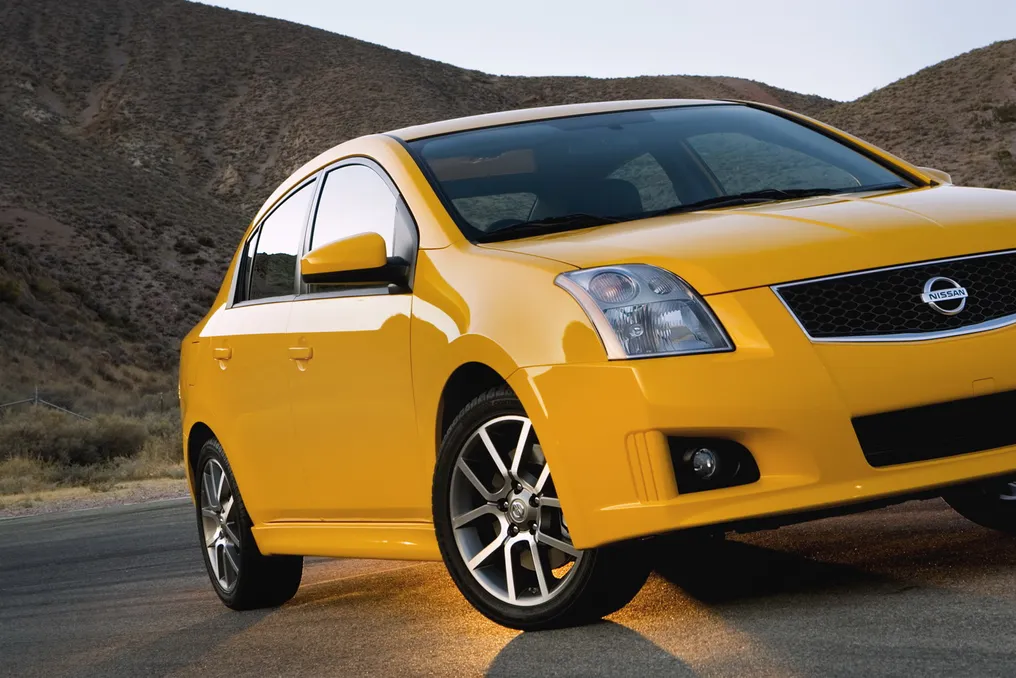
The history of the Sentra in Brazil could have been different, because the necessary element to change this view already existed and was popular in the United States since 2001: the Nissan Sentra SE-R.

In 2000, Nissan launched the fifth generation of the Sentra. In the US, European, and Japanese markets, it began to be classified as a compact sedan, equivalent to a mid-size sedan in the Brazilian market. The versions imported to Brazil used the QG18DE engine, a 1.8-liter four-cylinder with 115 hp, focused on comfort and economy, usually with a four-speed automatic transmission.

In the United States, the Nissan division maintained a strong legacy with the acronym 'SE-R'. In the B13 generation (early 90s), the SE-R with the 2.0-liter SR20DE engine was an icon, compared to the '90s BMW 2002' due to its light chassis and rotary engine. After a pause in the acronym in the B14 generation, Nissan sought to revive the sporty spirit on the B15 platform, launching the Sentra SE-R Spec V at the end of 2001.

The difference lay in the engine: instead of the 1.8L, engineers installed the QR25DE, the largest available four-cylinder. The 'QR' engine family was developed in the early 2000s to replace the SR family. The QR25DE, a 2,488 cm³ four-cylinder, had an architecture focused on low and mid-range torque and efficiency. In its normal applications (such as in the Frontier pickup and Altima), it delivered about 154 hp and 24.1 kgfm of torque.

For the Sentra SE-R Spec V, Nissan tuned the engine: the compression ratio increased from 9.5:1 to 10.5:1, the cam profile was modified to lengthen the breaths, and the exhaust system received an optimized manifold. This resulted in an increase to 177 hp at 6,000 rpm and 24.9 kgfm of torque at 4,000 rpm. The Spec V received a short-ratio six-speed manual transmission and a locking differential to direct power to the front wheels.

The name 'Spec V' was a subtle reference to the V-Spec versions of the Skyline GT-R, which also inspired the design of the front bumper air intakes. Externally, the car featured prominent side skirts, blacked-out headlights, exclusive 17-inch alloy wheels, and a functional rear spoiler. The suspension was stiffer, with firmer dampers, PU bushings at the rear, and a front sway bar. The brakes included ABS on all four wheels, with an option for a four-piston Brembo setup up front.

Internally, the seats had greater side support inspired by the Skyline, the gear lever was leather-wrapped with an aluminum top, and the three-spoke steering wheel was thicker. The B15 generation Sentra SE-R Spec V was a legitimate sports sedan, capable of reaching 100 km/h in about 7.1 seconds and completing a quarter mile in approximately 15.2 seconds, although it is little known outside the US.

When Nissan launched the sixth generation of the Sentra (B16) in 2006, there was a notable evolution, utilizing the global C platform of the Renault-Nissan alliance. The sedan became larger, wider, stiffer, and more sophisticated. Nissan also prepared a Spec V variant for this new generation, paying special attention to the engine, which was completely redesigned.

The intake received a redesigned polymer manifold with direct flow ducts and a larger throttle body. The camshafts had a more aggressive profile and reinforced springs. To support the high rev limit of 7,000 rpm, the pistons received reduced skirts and a special molybdenum resin coating to reduce friction, along with lightweight and balanced forged steel connecting rods. With reworked combustion chambers and new electronic programming, the engine reached 203 hp at 6,600 rpm and 24.9 kgfm of torque at 5,200 rpm, allowing it to accelerate from 0 to 100 km/h in 6.7 seconds with the six-speed manual transmission and helical locking differential.

Improvements to the suspension and brakes were similar to the previous generation, but added a 'V' brace in the trunk. The 17-inch alloy wheels had ten spokes and housed 12.6-inch (320 mm) front discs, larger than those on the contemporary Nissan 350Z. Visually, the B16 Spec V featured exclusive bumpers, integrated side skirts, a dark front grille, a trunk spoiler, and a large-diameter chrome exhaust tip. The interior included red seatbelts, sporty seats with pronounced side supports, 'SE-R' embroidery, aluminum pedal covers, and additional gauges on the center panel to measure G-force and oil pressure.

At that time, Nissan Brazil had already recognized the success of the Honda Civic Si and planned its launch in the country between 2008 and 2009. The Brazilian market was rapidly expanding, and the brand needed to dissociate the Sentra from the image of a 'dad's car'. The strategy seemed ideal: importing the car directly from the Aguascalientes factory in Mexico, where the versions already came from.


BAIC launches Arcfox T1 in two versions, with prices starting from R$ 129,900
Read more
autopapo.com.br

BAIC launches Arcfox T1 in two versions, with prices starting from R$ 129,900

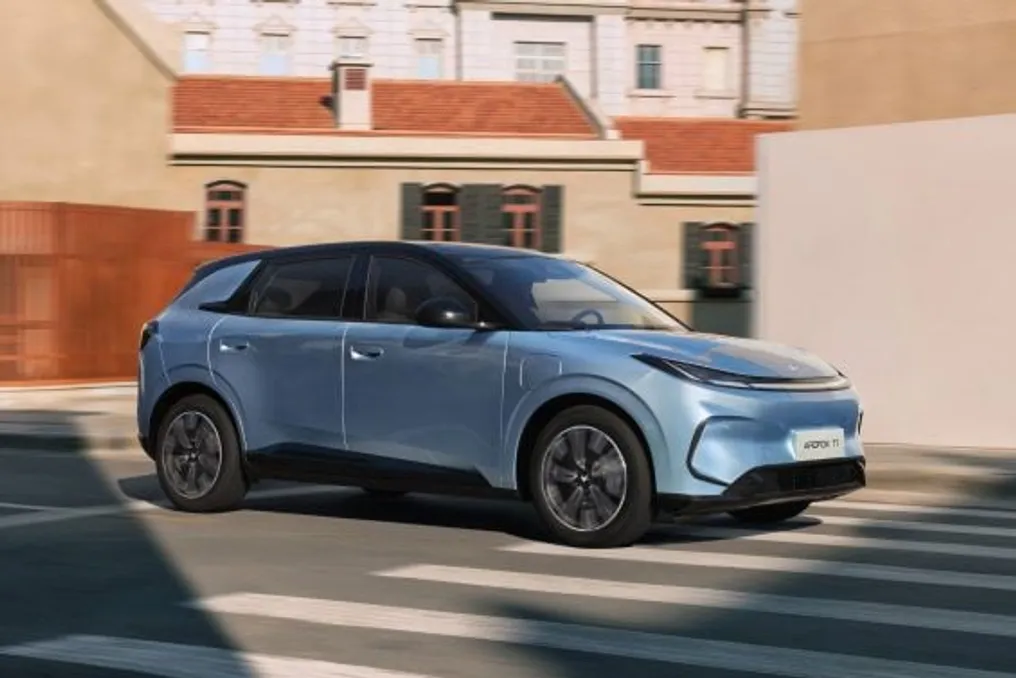
Following its official presentation at the Interlagos Festival, BAIC has begun operations in Brazil. The first vehicle to be introduced to the market is the Arcfox T1, which will be available in Pro and Max versions starting in November.

This model is classified as a compact crossover but will compete in the market against established vehicles such as the Geely EX2, GAC Aiont UT, MG4 Urban, and BYD Dolphin. Prices have been disclosed, with the Pro version price being promotional until December 31, 2026, or while the first 600 units last, while the Max version price is the definitive one.

BAIC has already started its presence in Brazil with a network of 50 dealerships. Furthermore, the brand offers 24-hour support, a parts distribution center, and a concierge service accessible by phone or WhatsApp to customers.

The company's plan foresees expanding this authorized network to 150 points by the end of 2027, emphasizing its commitment to post-sale service quality, an aspect considered crucial in the acquisition of a new car.

In terms of dimensions, the Baic Arcfox T1 has a length of 4.33 meters, a width of 1.86 meters, a wheelbase of 2.77 meters, and a height of 1.57 meters, presenting a size similar to a mid-sized hatchback and its competitors.

A strong point of the vehicle is the trunk, with a capacity of 459 liters, although the measurement method was not specified; there is a temporary spare tire under the floor.

Both versions share the same mechanical package, equipped with a 95 hp and 17.9 kgfm engine. This engine drives the front axle and allows the Arcfox T1 to reach 100 km/h in 12.4 seconds.

The 42.3 kWh battery guarantees an autonomy of 283 km according to the Inmetro cycle. Regarding energy, slow charging operates at 6.6 kW, and fast charging reaches 89 kW. The rear suspension uses a torsion axle.

Following Geely's example, BAIC differentiated the Arcfox T1 versions solely by the equipment list. While the Pro version presents certain items, the Max model includes extra comfort features and stands out with the ADAS package.

The compact will be available in four shades: Eclipse Gray, Polar White, Aurora Silver, and Electric Silver, with interior options in white or black. The brand is already preparing future launches, with the next being the medium-sized Arcfox T5 model.

Popular