Screens' Influence on Vision and Myopia Growth in Children Discussed at Healthwealth Summit
Read more
Aaj Tak
www.aajtak.in

Screens' Influence on Vision and Myopia Growth in Children Discussed at Healthwealth Summit

With the increasing use of mobile devices and laptops, there is a rise in vision problems among children and young people. Common complaints include the need for glasses at an early age, blurred distance vision, and dry eyes. This raises the question of whether screen viewing causes vision deterioration or if other factors are responsible.

At the Healthwealth Summit in Medan, in the ophthalmology department, Dr. Sudipto Pakrasi, the chairman, commented on this situation. He noted significant technological progress in eye surgery over the past decades. Thanks to the use of minimally invasive methods, such as small incisions, phacoemulsification, and modern lenses, patients' ability to recover and see after cataract operations has improved.

Nevertheless, despite technical progress, new vision problems are emerging, particularly myopia and dry eye syndrome, which are now observed in children. One of the contributing factors is the increased use of screens.

Myopia, or nearsightedness, means that a person can see objects clearly up close, but distant objects appear blurry. This usually happens because the structure of the cornea and the eye's lens focuses light in front of the retina instead of on it. Although genetic factors play a role in the development of myopia in children, lifestyle factors also have a significant impact. Risks are associated with prolonged reading or using mobile devices at close range, as well as insufficient time spent outdoors.

Dr. Sudipto Pakrasi emphasized that eye health is affected not only by screen radiation but also by the way we look at the screen itself. Excessive closeness to the screen negatively affects eye condition. During prolonged continuous screen viewing, the blinking rate decreases, leading to reduced moisture on the eye surface. This can cause irritation, dryness, blurred vision, and headaches. To reduce the risk of developing myopia, it is recommended to keep the screen at least an arm's length away. It is also important to monitor lighting: reading books, watching videos, or working on a laptop in low light conditions creates additional strain on the pupils, increasing the likelihood of myopia.

The following measures are suggested to protect the eyes: follow the 20-20-20 rule (every 20 minutes, look at an object about 20 feet away for 20 seconds); maintain distance from the screen, keeping a mobile phone at least 30 centimeters away and a computer about an arm's length away; increase the time children spend outdoors by at least 1-2 hours per day; and take regular breaks while viewing screens to allow the eyes to rest, rather than looking continuously.


Similar stories

Study shows concentration of private equity capital in India's healthcare sector in western and southern states
Read more
timesofindia.indiatimes.com

Study shows concentration of private equity capital in India's healthcare sector in western and southern states

The study revealed that private equity investments in India's healthcare sector are predominantly concentrated in urban hospitals of the southern and western states. As a result, rural and underserved areas remain largely neglected.

Mapping private equity investments in Indian healthcare over the last eighteen years has shown that the vast majority of these investments have been directed towards multi-specialty hospitals in urbanized southern and western states. Meanwhile, extensive rural and sparsely served regions have attracted very few or no investments at all.

Mother from Altona Earns Master's Degree While Battling Cancer for Her Children's Hope
Read more
iol.co.za

Mother from Altona Earns Master's Degree While Battling Cancer for Her Children's Hope

When Megan Brink learned of her cancer diagnosis, she saw worry on her children's faces. Instead of abandoning her pursuit of a master's degree, the mother from Altona continued her studies during chemotherapy, determined to give them confidence that everything would be alright with her.

The forty-three-year-old resident of Hasendal, diagnosed with non-Hodgkin's B-cell lymphoma in August 2025, completed her studies on October 9, 2026, after a five-year journey to qualification. Now in complete remission, Brink notes that finishing her studies was more than just receiving a diploma.

Searching for Answers

Brink's first symptoms appeared as unexplained bruises, constant fatigue, and breast issues. Initially, she attributed the exhaustion to working full-time, studying, and raising her children.

After several medical consultations and treatment for tonsillitis and bronchitis, an X-ray revealed fluid in her lungs. Further examination discovered a mass in her chest. She recalls: 'When I heard the diagnosis, I didn't react. I was simply happy to have an answer because for months, no one could give me any answers or solutions.'

Reality became harsher when hair loss began during treatment. She shared: 'Standing in the shower and watching my hair float at my feet, sticking to every part of my body. I cried so much; my shower saw many tears that others did not see.'

Studying Amidst Uncertainty

Brink reported undergoing six cycles of R-CHOP chemotherapy before starting radiation therapy in the new year. Chronic fatigue and loss of appetite made daily life difficult. Nevertheless, she continued her master's studies in education, adult learning, and global change, striving to reassure her children.

She explained: 'I resumed my studies during treatment because I needed my children to see that I would be okay. I saw the worry on their faces. We needed normalcy; our home shouldn't be dark and sad.'

Her qualification took five years instead of the planned three. After the diagnosis, she considered giving up, but completing her studies became a symbol of resilience. She emphasized: 'It was about getting the diploma while going through a dark and difficult time, facing death.'

Brink's sister stayed with her and the children, helping manage their schedule and routine, while her three brothers provided logistical support. Friends and family provided food and practical assistance. She noted: 'People prayed for us, and that was the most important thing for me.'

Brink received her diploma on Friday, October 9, and was grateful for the opportunity to return to work and spend time with her children. She said: 'I am getting a second chance in life, and it cannot be wasted.'

Alongside her treatment, Brink changed her diet, switching to anti-inflammatory foods, eliminating sugar, reducing carbohydrates, and eating more greens. Chemotherapy affected her appetite so severely that she mostly subsisted on smoothies and liquids. Even drinking water sometimes caused nausea, so she drank lemon and cucumber-infused water.

Furthermore, she limited contact with other people because the treatment weakened her immune system.

The Power of Support

Brink's sister stayed with her and the children, managing their schedule and routine, while her three brothers helped with logistics. Friends and family provided food and practical help. She added: 'People prayed for us, and that was the most important thing for me.'

Brink received her diploma on Friday, October 9, and expressed gratitude for the opportunity to return to work and spend time with her children. She concluded: 'I am getting a second chance in life, and it cannot be wasted.'

Doctors celebrate Ebola patient discharge in Mongbwalu, Democratic Republic of Congo
Read more
noticiasaominuto.com

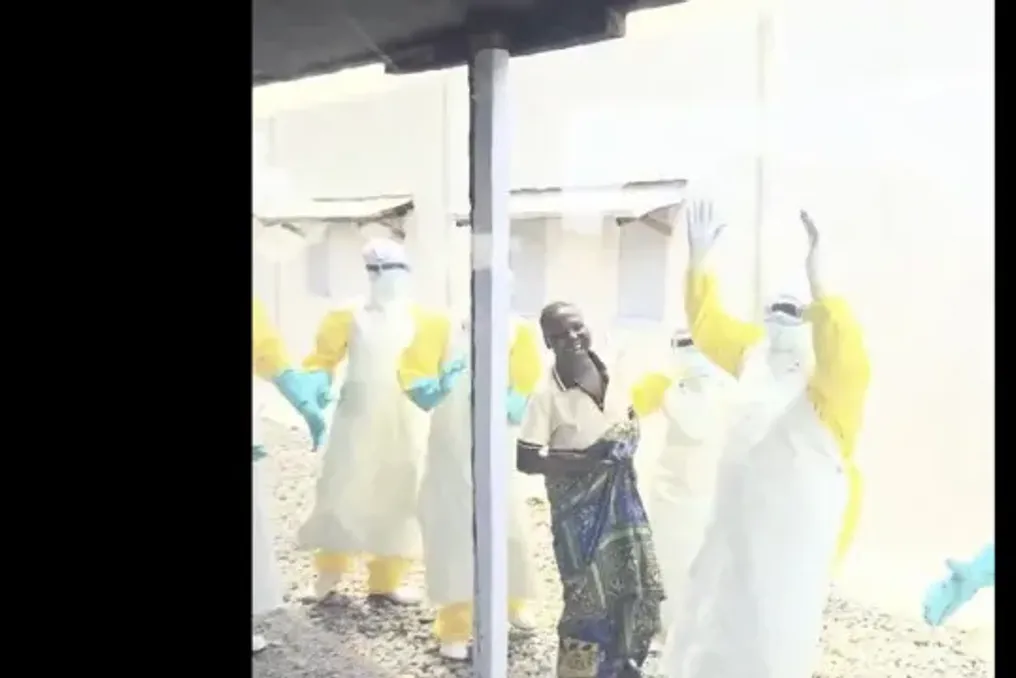
Doctors celebrate Ebola patient discharge in Mongbwalu, Democratic Republic of Congo

Health professionals in Mongbwalu, located in the northeast of the Democratic Republic of Congo, held a celebration after the discharge of the last patient hospitalized with Ebola. This event marked a significant victory against the local epidemic.

The team, which operates in a facility managed by Médecins Sans Frontières (MSF), began singing and dancing to commemorate the patient's recovery and return home. In a video shared on social media, the organization highlighted moments of great joy in Mongbwalu, in the Ituri province, following the discharge of the last confirmed case at the MSF treatment center.

Despite the celebration, an alert was issued stating that the epidemic is not yet under control, given that over ten thousand cases have been registered. Médecins Sans Frontières teams remain active in the area of operation.

Congolese authorities announced on Tuesday that the Ebola epidemic, declared on May 15 in the Democratic Republic of Congo, has surpassed the mark of ten thousand confirmed cases, including 4,887 deaths. A recent report from the DRC's National Institute of Public Health (INSP), based on data collected up to October 25, points to 10,060 confirmed cases, with a fatality rate of 48.6%.

According to the same document, 2,684 individuals recovered from the disease by that date, and the contact tracing rate reached 81.6%. The eastern provinces of Ituri and North Kivu are the most affected in the country, registering 32 and 58 new cases, respectively, in the last 24 hours.

In total, the epidemic affects eight of the 26 provinces of the DRC, including Ituri, North Kivu, Tshopo (north-central), Bas-Uélé (north), Haut-Uélé (northeast), South Kivu (east), South Ubangi (northwest), and North Ubangi (north).

This outbreak, classified as the second deadliest and most contagious in world history, surpassed what occurred in the same Congolese region between 2018 and 2020. However, it still falls short of the most severe episode recorded so far, which resulted in approximately 11,000 deaths and 28,000 infections in West Africa between 2014 and 2016.

The Bundibugyo strain, responsible for the current epidemic, has no known specific treatments. However, the World Health Organization (WHO) is developing two vaccines that entered Phase 1 clinical trials in humans and which, so far, have shown safety, although their development may take several months.

Additionally, the DRC implemented an Ebola immunization campaign at the end of August, using the Ervebo vaccine, which is the only one available on a large scale. Although originally created for the more common Zaire variant of the virus, this vaccine showed promising results against the Bundibugyo variant in animal tests.

The WHO also announced the start of a clinical study in the DRC last Friday to evaluate various candidate vaccines against this strain. The Ebola virus is transmitted through direct contact with the body fluids of infected people or animals and causes severe symptoms such as hemorrhagic fever, vomiting, diarrhea, and internal bleeding.

Popular