
Overview of Franchising Investments in South Africa: Costs, Funding Sources, and Regulation
Read more
IOL
iol.co.za

Overview of Franchising Investments in South Africa: Costs, Funding Sources, and Regulation

Franchising holds a significant share of South Africa's formal business activity. Industry estimates suggest this sector approaches 1 trillion rand, with over 800 systems supporting tens of thousands of sales points and employing hundreds of thousands of people. The most common sectors are fast-food restaurants, followed by retail, education, logistics, and coffee concepts. This model continues to attract entrepreneurs looking to enter business, although capital requirements, the need for due diligence, and regulatory obligations remain substantial.

Typical Investment Process

Prospective franchisees usually begin by assessing their personal suitability and alignment with the chosen sector. Professional associations, such as the Franchise Association of South Africa (FASA), provide self-assessment tools and maintain catalogs of accredited systems. Following preliminary screening, direct contact is made with franchisors to request official disclosure packages.

According to the Consumer Protection Act, franchisors are obliged to provide potential franchisees with a written disclosure document no later than 14 days before signing the franchise agreement. Standard vetting steps include interviews with current and former operators, site visits, and independent legal and financial audits. Most recognized brands require applicants to demonstrate that 40–50% of the total investment amount is available in unencumbered cash.

Approval processes are conducted concurrently for the individual, the proposed location, and the financial plan. Training programs, which can last from several weeks to several months, are a standard prerequisite before opening.

Investment Levels in Franchises by Category

The cost varies depending on the store format, location, fit-out specifications, and whether the opportunity is to open a new unit or acquire an existing one. Industry catalogs and franchisor materials list the following approximate ranges. These amounts typically cover the initial franchise fee, construction or equipment, starting inventory, training, deposits, technology systems, and initial working capital. Monthly royalties and marketing fees are additional and are usually calculated as a percentage of turnover.

In the fast-food and quick-service restaurant segment, for example, KFC outlets typically require over 6 million rand, with new franchises being strictly limited, and most opportunities arising through the sale of existing stores. Chicken Licken quotes franchise fees around 180,000 rand, with total investments ranging from 4.8 million rand for linear formats to 6.8 million rand for drive-thru locations. McDonald’s lists registration fees of about 37,500 rand and franchise fees of 250,000 rand, with the total investment varying approximately from 2.8 million to 6.7 million rand depending on the configuration. Nando’s requires about 285,000–290,000 rand for registration and franchise, with total project costs between 5.25 million and 7 million rand. Steers, part of the Famous Brands group, shows franchise fees from 68,000 to 130,000 rand and total investments from 1.95 million to 3.75 million rand. Debonairs Pizza, also part of Famous Brands, offers formats from container solutions costing around 1.5 million rand to standard and mall locations for 2.05–2.4 million rand, with initial fees from 50,000 to 68,000 rand. Romans Pizza has a franchise fee of nearly 90,000 rand and a total cost of about 2.3 million rand. Fish & Chip Co opportunities start at approximately 599,000–650,000 rand. Galito’s reports entry fees of about 130,000 rand and setup costs of about 2 million rand. RocoMamas indicates franchise fees of 145,000 rand and a total amount of about 4.5 million rand. Wimpy investments range from 1.75 million to 2.4 million rand. Simply Asia requires 900,000 to 1.3 million rand after paying a franchise fee of 100,000 rand. Mochachos, known for its Mexican chicken, reports an initial franchise fee of 199,000 rand and a total investment level of 1.9 to 2.5 million rand, depending on the size and condition of the premises.

Coffee Shops and Cafes

Investments in Vida e Caffè range from 950,000 to 1.4 million rand, including a franchise fee of about 150,000 rand. Mugg & Bean restaurants require approximately 3.7 million rand, while On the Move formats cost from 1.3 to 1.6 million rand, with franchise fees from 45,000 to 95,000 rand. Bootlegger Coffee Company reports franchise fees of 120,000 rand and total project costs from 2 to 3 million rand.

In the education, logistics, and other service sectors, Kumon educational centers require investments from 60,000 to 100,000 rand. Fastway Couriers territories start at approximately 50,000 rand. Battery Centre automotive points have franchise fees of about 150,000 rand and setup costs of about 500,000 rand plus working capital. Cash Converters retail stores start at approximately 3.5 million rand. More accessible formats—mobile, kiosks, and service services—continue to appear in catalogs like whichfranchise.co.za, some costing less than 500,000 rand. Contact channels for most brands are via official websites or FASA and whichfranchise catalogs.

Potential Funding Routes for Franchisees

Franchising departments at banks such as Absa, Standard Bank, FNB, and Nedbank remain primary sources of debt financing. These divisions typically require franchisor approval, a detailed business plan, cash flow forecasts, and confirmation of the required equity contribution. Another major channel is development institutions. SEDFA provides funds to cover setup, equipment, and working capital expenses, with limits up to 15 million rand and a specialized focus on FASA-developed franchisees. The National Empowerment Fund supports applicants who are Black or have received Black support (minimum 50.1% Black ownership), providing loans up to 10 million rand, structured according to the franchise term and interest rates tied to the base rate. Business Partners and Masisizane Fund offer additional options for structured financing. Occasionally, private angel investors and, for large multi-site deals, private equity participate in projects. Some franchisors offer limited internal funding or payment plans for the initial deposit. Real grants for retail and service franchises remain rare. Typical application timelines can stretch to three to six months, emphasizing the importance of early preparation.

Regulatory Framework, Taxes, and Compliance Obligations

South Africa lacks a dedicated franchising law. Main rules are established by the Consumer Protection Act 68 of 2008. Contracts must be drafted in plain language, and franchisors are required to provide a disclosure document covering financial history, litigation, contacts of current franchisees, and investment details no later than 14 days before signing. A ten-day cooling-off period applies. The law also restricts unfair terms and requires clear disclosure of fees, territories, and supply obligations.

Additional legislation includes the Companies Act for the formation and management of legal entities, the Competition Act regarding restrictive practices, and a full set of labour laws. Specific industry requirements relate to food safety, municipal trading licenses, and sanitary standards. Issues of broad economic empowerment of the black population influence access to certain funding products and corporate procurement opportunities. Taxation adheres to standard company rules. Corporate income tax is 27%. Value Added Tax (VAT) of 15% becomes mandatory once taxable supplies exceed 2.3 million rand within any 12-month period; voluntary registration is available from a threshold of 120,000 rand. Employers are required to register for PAYE, Unemployment Insurance Fund contributions, and skills development levies. Annual CIPC reports and beneficial ownership disclosures are mandatory. A clean tax compliance status is regularly required for funding applications and official tenders.

Thus, franchising investments in South Africa combine the advantages of recognized brands and operational systems with substantial requirements for capital, thorough vetting, and regulatory compliance. Figures and availability change depending on market conditions, so current disclosure documents and direct interaction with the franchisor remain authoritative sources for any specific opportunity.
Similar stories

Long commutes to work in South Africa contribute to the persistence of poverty among workers
Read more
iol.co.za

Long commutes to work in South Africa contribute to the persistence of poverty among workers

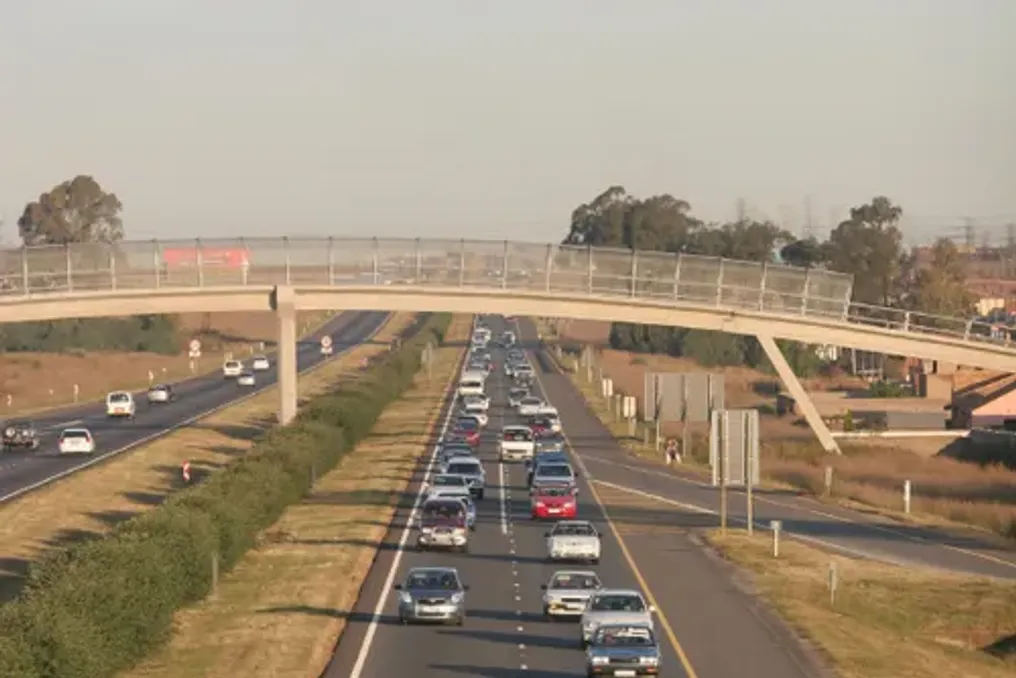
Nearly a quarter of South African workers leave their homes before six in the morning, and this is not because work starts at that time, but because of the commute itself.

The average travel time by train is 107 minutes one way, by bus is 84 minutes, by taxi is 63 minutes, and by car is 44 minutes. These figures are averages, and many people spend significantly more time traveling, with the duration of their journeys constantly increasing.

The time spent commuting means the loss of numerous opportunities: homework is glanced at instead of being done for an hour, meals may be eaten standing up or skipped entirely, and conversations are postponed until the weekend, joining a host of other deferred tasks.

Researchers from the Harvard Growth Lab assessed this problem. The cost of travel and fuel amounts to about 17% of net income. They then assessed the travel time itself, assigning the value of the employee's hourly wage to each hour spent in transit. Thus, a person who spends three hours a day commuting during an eight-hour workday has effectively worked eleven hours for eight hours of pay. Combined, this accounts for 57% of their salary.

Money constitutes a smaller part of this burden, while hours constitute a more significant one, and no one bills them for it.

These hours do not disappear without a trace. The difference between the average train passenger and the average car driver is just over two hours per day, which equates to more than 500 hours over approximately 250 working days a year. This is enough time to gain qualifications, start a side business, or for a parent to participate in their child's upbringing. One person can invest this time, while another spends it sitting idly, and this gap widens every year without measures to eliminate it.

The situation closes into a vicious cycle: finding a job requires time and money, which become increasingly scarce the further a person lives from the city center. As a result, people take the jobs they can reach, rather than the ones they could perform, keeping their income low and preventing them from changing their location.

The International Monetary Fund found in March that in areas where the usual commute takes more than an hour, the unemployment rate is higher than in areas where it lasts less than 15 minutes, by more than 20 percentage points.

Distance does not just complicate the journey to work; it complicates the very possibility of getting a job.

None of this is a natural phenomenon; distances were designed. According to the Group Areas Act of 1950, people were evicted from parts of the city where workplaces were located and relocated to settlements on the distant outskirts, leaving strips of industry and open land between them to segregate groups. Distance was not a byproduct of this plan, but its tool.

Less discussed is what happened afterward.

Since 1994, the state has built about two million houses, mainly where land was cheap, and cheap land is located on the periphery of cities, far from workplaces. This time, the motive was not ideological but budgetary, supported by goals based on the number of units built rather than the distance to work. However, a house is not just a structure; it is also a location, and the location determines the cost of living. Thus, a program intended to correct spatial injustice reproduced its geography for reasons that looked rational in a data table.

It must be acknowledged that no one intended to repeat past mistakes, and policy has changed conscientiously multiple times. What has not changed is the price of land. It is high near the city and cheap on the outskirts, and a budget evaluated by the number of houses built will always lean towards the cheaper option.

By placing people far away, we pay annually for their round trips. Next year, nearly 10 billion rand will go to subsidizing suburban rail transport, and over 8 billion rand to bus contracts, while the housing settlement budget, which could reduce distance, shrinks for the third consecutive year.

Meanwhile, the cheapest form of transport has quietly disappeared. In 2013, the railway served about 49 million passenger journeys in one month, and by 2022, this figure had dropped to about one million, with those who used it switching to taxis, which cost almost twice as much.

No one pays double willingly. Where trains run, people use them. Our trains stopped running. Lines were closed, carriages were dismantled, and the schedule became a recommendation, and what remained seemed unsafe. Nearly two-thirds of train users reported dissatisfaction with safety on board to the South African Statistics Agency, and more than seven out of ten reported dissatisfaction with safety on the way to the station. A service that is unreliable and unsafe is never cheap.

This shows what choices exist. The cheap option does not work; the one that works costs more than many people earn, and reliability here is what needs to be bought. The further you live, the more you need it and the less you can afford.

People did not wait. Informal settlements and backyard rooms, which were unplanned, are often better situated than state-built homes, as those who built them preferred proximity to ownership, giving up title deeds for an hour a day. It took until the mid-2000s for policy to begin viewing this as a rational trade-off and to start improving these settlements in situ.

In July, the Constitutional Court stated something similar. The ruling states: 'Spatial inequality has condemned many South Africans to extremely long commutes, requiring multi-hour journeys every day, often before dawn.' The court ruled that the housing system, which is built only on the city outskirts, is unconstitutional. The court noted that the location of a home is not just one of many factors, but a necessary factor.

Now every government in the country is bound by this, and it is not leading to the construction of a single new home.

It only determines whether all of this was inevitable. For more than seventy years, we viewed distance as a feature of the landscape, and the commute as the cost of living away from the center, when someone deliberately created this distance and then, over three decades, restored it by mistake.

Whether this changes will be seen not in a court ruling. It will be seen in where the next houses are built, and whether the person leaving home tomorrow before six in the morning does so because of a map drawn by someone, or because of a map that no one could redraw.

South Africa's gas transition strategy for power generation faces price and currency risk challenges
Read more
iol.co.za

South Africa's gas transition strategy for power generation faces price and currency risk challenges

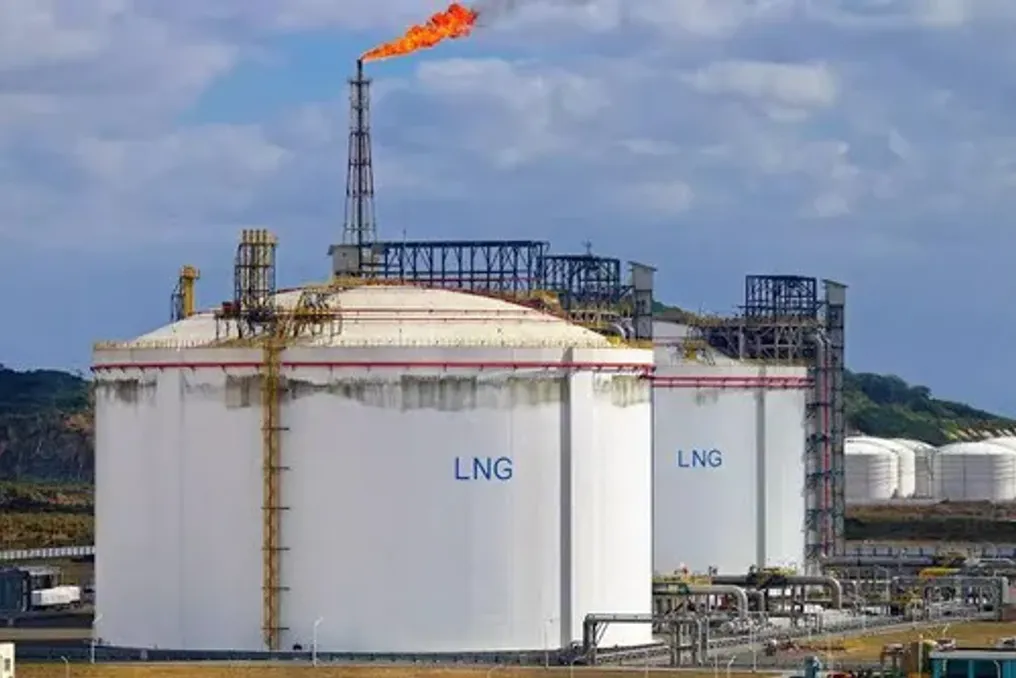
An integrated energy solution for South Africa, incorporating solar collectors, wind turbines, water desalination, green hydrogen, and liquefied natural gas (LNG) within the power generation cycle, was presented in an engineering study published by Fuel.

However, the analysis notes that the price of imported LNG, set in the study at approximately $7.37 per million British thermal units (BTU), was derived from an unrelated system analysis and has never been verified. The sensitivity analysis varies methane and electricity prices but does not account for the gas price or mention the South African Rand.

The author emphasizes that the problem is that in any model concerning South Africa's gas-to-power strategy, the final price of LNG in Rand terms is a variable determined by someone else.

On October 7, Minister of Electricity and Energy Kgosiyenso Ramokgopa announced the first determination of procurement under IRP 2025: plans include procuring 4,600 MW of energy storage systems and 5,000 MW of gas generation capacity, with no provision for building new wind or solar facilities. The IRP document mandates the use of 6,000 MW of gas by 2030.

Operating this fleet at a capacity factor of 51% will require approximately 3.4 million tonnes of LNG annually, which will be fully imported and priced in US dollars relative to Asian benchmarks. The planned target is set at $10 per million BTU. Furthermore, NERSA's MYPD6 determination approved a primary energy budget of 120.9 billion Rands for 2026, but it contains no provision regarding LNG.

Industry analysis in the gas sector raises valid questions about the quantity, delivery points, and cost of gas for buyers. However, it is critically important to consider how price spikes affect tariffs, inflation, and the Rand exchange rate. Currently, peer-reviewed engineering literature models South African LNG using borrowed prices and excludes it from stress tests.

The author presents calculations based on their own working paper, which covers the full 6,000 MW capacity under the IRP, using market prices. At a base level of $10 and an exchange rate of 17.50 Rands per dollar, fuel costs amount to about 31 billion Rands annually. To cover these costs through tariffs, an increase of approximately 6.6% would be required, and this is before accounting for any price spike and with a budget that lacks a corresponding expense item.

At a price of $20, corresponding to late 2021 European prices, and a Rand exchange rate of 18.50, the fuel bill rises to 65.8 billion Rands, requiring a tariff increase of approximately 14%. At a price of $40, as in the first half of 2022, and a Rand exchange rate of 21, the fuel bill reaches 149 billion Rands, exceeding the entire approved NERSA primary energy budget. This implies a tariff increase of nearly 32%, approaching the scale of the 2009 interim determination and subsequent shocks.

These figures represent not forecasts, but prices already set by the market. Most of the 5,000 MW currently determined forms the basis of this exposure. The situation is exacerbated by the Rand exchange rate: LNG is paid for in Rands but priced in dollars, and there are no guarantees of maintaining the exchange rate amid rising gas prices. Since electricity is fundamental to most processes, a tariff shock translates into an inflationary shock, and subsequently into a Reserve Bank problem.

Moreover, the contracts themselves create long-term obligations. Gas plants of this scale become anchor customers necessary for LNG import terminals to attract financing. Contracts sufficient to finance a terminal typically run for 15–20 years. A contract signed during the construction period from 2026 to 2030 will remain binding in 2031 when the Electricity Regulation Amendment Act begins transitioning pricing to market conditions. Thus, exposure to dollar-indexed fuel costs is fixed, surviving the current regulatory mechanism intended to absorb it.

The Department of Electricity and Energy acknowledges this weakness, citing 'uncertain path of gas generation development' among institutional shortcomings in its Strategic Plan for 2025–2030. The plan mentions 'contract-for-difference' mechanisms that could 'protect consumers from fuel/currency price spikes,' but the approval of these mechanisms remains a stated next step rather than an implemented safeguard.

The author argues that this is not against gas, as grids will require flexible capacity as coal power stations are phased out. The issue lies in committing to gas obligations without possessing the data that determines its availability. To bridge this gap, three steps are proposed: firstly, no project under this determination should finalize financial closure without publishing an LNG price and exchange rate stress test based on actual market prices; secondly, consumer protection must extend beyond existing programs for low-income households, as LNG price spikes affect all households and businesses; and thirdly, NERSA must require that any applications reflect the impact of LNG costs on tariffs so that the Reserve Bank is not the last to know.

Popular