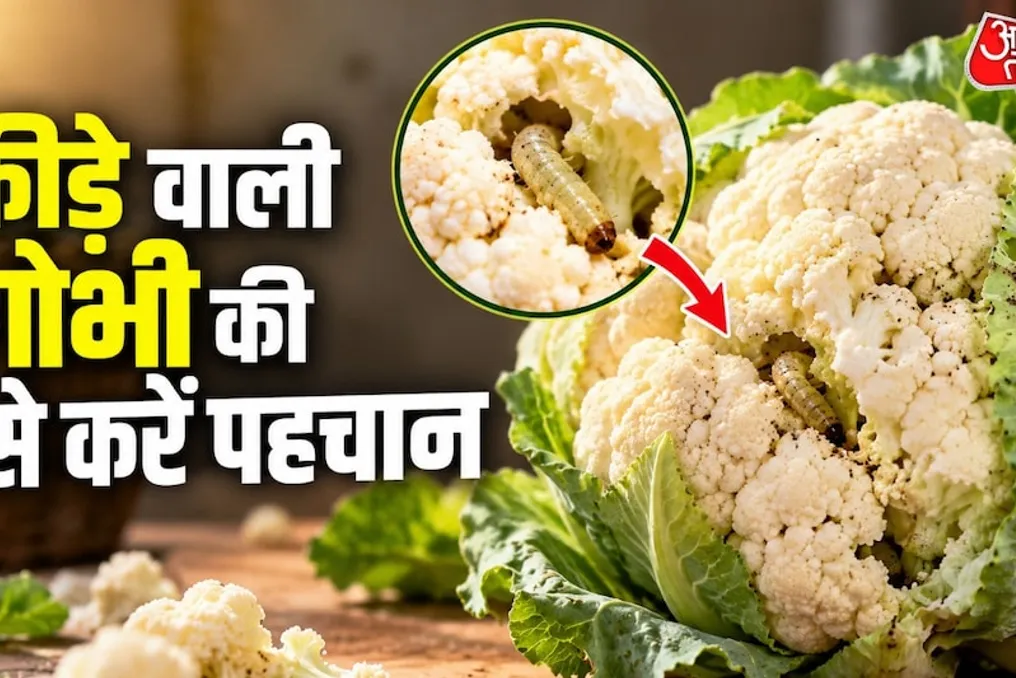
With the arrival of winter, fresh white cauliflower appears in markets. Cauliflower is a favorite vegetable in many families, used to prepare dishes such as potato and cauliflower, lentil patties, or hot donuts.
However, the main difficulty when buying cauliflower is detecting small insects hidden inside. Even outwardly attractive and snow-white cauliflower can contain pests, which leads not only to financial loss but also to a health risk. If you encounter this problem, you can choose the right and pest-free cauliflower by paying attention to several simple points during your purchase.
Methods for checking cauliflower for pests (detailed)
Examine the structure of the florets: Fresh, pest-free cauliflower has tightly clustered florets. If there is a lot of empty space between the florets or they look scattered, you should avoid that cauliflower. Insects and dirt can easily hide in loose cauliflower.
Check the color and freshness of the leaves: The green leaves located at the bottom of the cauliflower are the main sign of its freshness. If the leaves are bright green, firm, and fresh, it means the cauliflower is fresh. If the leaves are dry, yellow, or wilted, it may indicate that the cauliflower is old and more likely infested with insects.
Pay attention to color and dark spots: Good cauliflower should be light cream or absolutely white. The presence of black, brown, or yellow spots on the cauliflower is a signal to refuse the purchase, as this may indicate mold or insects.
Check for small holes: Carefully inspect the cauliflower florets. If tiny holes or a cluster of fine brown powder (insect excrement) are visible on the top part or stem, it means there is a pest inside.
Check weight and stem: Cauliflower that looks large but is very light may be hollow or damaged by insects inside. Always choose cauliflower that matches its size by weight. Additionally, the lower stem of the cauliflower must be firm and free of cracks.