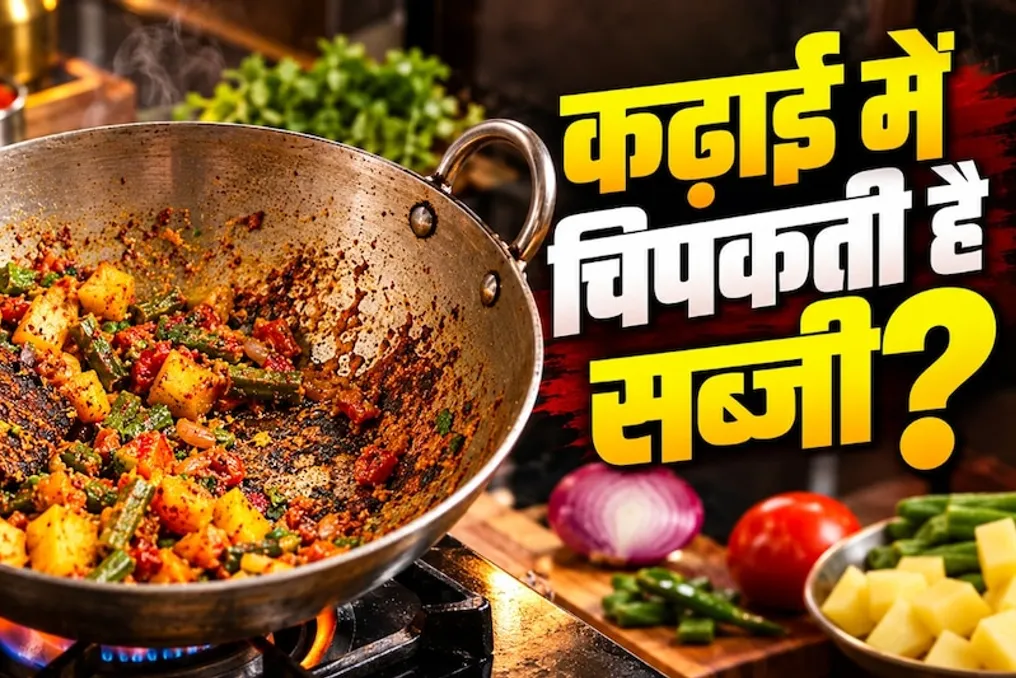
How to prevent food from sticking: 5 tips for cooking with less oil
Read more
Aaj Tak
www.aajtak.in

How to prevent food from sticking: 5 tips for cooking with less oil

Cooking brings pleasure to many, but sometimes minor difficulties can spoil the mood. It is particularly unpleasant when a dish starts sticking to the bottom of the pan. This can happen, for example, when onions or spices burn, or when the vegetable itself starts to scorch. As a result, the taste of the dish may suffer, and cleaning the pan will require significant effort.

To avoid this problem, many people use an excessive amount of oil when cooking, but this is not always the right solution. The good news is that this problem can be significantly reduced by paying attention to a few simple points while cooking. You can prevent the dish from sticking to the pan by using these five kitchen tricks without adding much oil.

Firstly, before starting to cook, you should apply a thin layer of oil to the bottom and edges of the pan, distributing it evenly with a spoon or silicone brush. This light layer of oil reduces the likelihood of the dish sticking.

Secondly, if onions or spices start sticking to the bottom while frying, it is enough to add one or two tablespoons of water. This helps to loosen the spices and reduces the risk of them burning; however, in dry dishes, water should be added in limited quantities.

Thirdly, when adding tomatoes, it is recommended to use tomato paste in the required amount. This gives the dish some moisture and thickness, improving the interaction of spices, which is especially useful for saucy dishes.

The fourth rule states: first, you need to lightly preheat the pan, and then add the oil. After the oil has heated up, you should add vegetables or spices. It is important to avoid overheating the pan, especially when using non-stick cookware, as strong heating of empty cookware is undesirable.

Finally, to prevent sticking, you must stir the dish periodically. If you leave the food without stirring for a long time, it can stick to the bottom. Therefore, you should stir the dish regularly while maintaining medium heat. When working with non-stick pans, it is recommended to use wooden or silicone spatulas to avoid scratches.

Similar stories

Ways to cook and store roti so they remain soft throughout the day
Read more
www.aajtak.in

Ways to cook and store roti so they remain soft throughout the day

Making roti is a daily chore in many households, but keeping them soft for an extended period presents a challenge. Roti made in the morning or during the day often begin to harden within a few hours. Sometimes they become so tough that reheating does not restore the original taste of fresh baking. This issue is particularly relevant for people who need to pack lunch boxes.

Those who prepare a large batch of roti at once face this problem. Some believe that improper frying technique is the cause of hardening. However, there are many factors affecting the softness of roti, including errors in dough kneading and subsequent storage methods.

To keep roti soft for several hours, it is necessary to follow a number of simple rules concerning the entire process—from kneading the dough to storage methods.

  1. Pay attention to the dough kneading: For consistently soft roti, it is important that the dough is neither too stiff nor too wet. When kneading, water should be added gradually until elasticity and ease of rolling are achieved. Slightly warm water can be used.
  2. Let the dough rest: Instead of rolling out the dough immediately after kneading, it should be covered and left for 15–20 minutes. This period allows the dough to absorb moisture, which simplifies the rolling process. It is important not to leave the dough uncovered so that it does not dry out.
  3. Fry roti over the correct heat: Before starting to fry, preheat the pan thoroughly. Then, the roti should be cooked over medium or high heat. It is necessary to avoid leaving the roti on the pan for too long, as this can lead to moisture loss and hardening.
  4. Cover the roti immediately after cooking: Cooked roti should not be left open. They should be stacked on top of each other and covered with a clean cotton cloth or stored in an airtight container. This will help retain moisture and maintain softness.
  5. Proper storage: It is best to wrap the roti in a cotton cloth and place it in a lidded container to minimize contact with air. If foil is used, it should only be applied after the roti has cooled down slightly to prevent excessive steam formation.
  6. How to reheat before eating: If the roti has become hard, it can be gently reheated by covering it and letting it sit, or by giving it a light steaming, which will help restore its softness. Nevertheless, for long-term storage, the refrigerator is preferable to keeping the roti at room temperature.

Popular