Beijing-based company BioGeometry has raised $100 million in a Series A+ extension round, increasing the total Series A funding by over $100 million. The startup develops artificial intelligence models capable of finding new promising drug compounds in weeks rather than years, which could potentially change the economics of drug discovery.
China Life Capital led the latest round. BioGeometry, which has been operating for about four years, uses its AI models to search for novel molecular compounds. Existing shareholders, including Shanghai Biomedical Industry Fund, which participated in the first round, also contributed additional funds. Participants in the round included China Development Venture Capital, Reliance Investment, and Guofang Venture Capital, as well as several biomedical industry players; Dacheng Wealth Capital also increased its stake. Index Capital served as the exclusive financial advisor.
China Life Capital called BioGeometry 'a benchmark company in China's AI-based biotechnology industry,' noting that this represents progress compared to 2024, when the company closed a pre-A round led by Jiangmen Ventures with participation from Zhipu AI and Gaorong Capital.
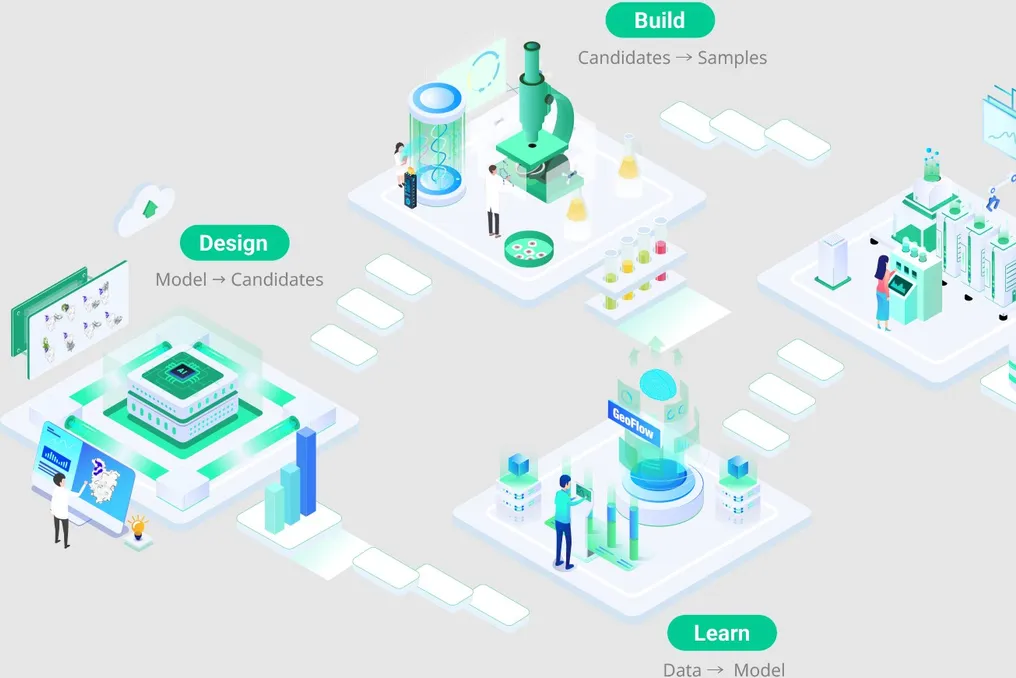
BioGeometry's work is based on two AI engines, each functioning at a different scale. The GeoFlow model works with molecules; it is an atomic model that predicts biomolecular structures and creates new ones from scratch. The first version of GeoFlow, launched in June 2024, demonstrated alignment with AlphaFold 3 in predicting protein complexes. Its capabilities then grew: version V2 appeared in April 2025 and became the first Chinese AI model capable of performing de novo antibody design.
Version V3 was introduced in October 2025 and added a generation, evaluation, and optimization cycle. When working with over twenty targets, it achieved an average hit rate of 20% and found promising compounds within three weeks. A larger version, V4, is under development. The other engine, GeoCell, focuses on the cellular level. This is a virtual cell model that predicts how cells react to genes, drugs, or combinations, helping teams select targets, diseases, and suitable patients.
These two models are integrated using an AI agent that connects them to an automated laboratory, ensuring that every experiment provides new knowledge to the system.
The new capital will be used to upgrade GeoFlow and GeoCell, as well as to expand high-throughput automated laboratories and advance proprietary drug programs to market. Numerous projects in drug discovery and synthetic biology are already planned. Several bispecific antibody programs are expected to enter IND submission in 2027. Synthetic biology may generate revenue sooner.
One project stands out—natural borneol, a compound used in traditional medicine. BioGeometry claims to be the first to be able to biosynthesize it with approximately 80% lower costs compared to plant extraction. Significant revenue from this project is expected in 2027.
Despite the slow and expensive process of drug discovery, most candidates fail. AI promises to improve chances by developing more advanced molecules from the outset. BioGeometry is betting on realizing this potential while simultaneously generating revenue through synthetic biology. For investors, this is a rare combination of ambitious goals and short-term income. Furthermore, the AI biotechnology scene in China is rapidly developing, even amid tightening US regulations on deals in this area. Global pharmaceuticals will closely watch who can compete with tools at the AlphaFold level.