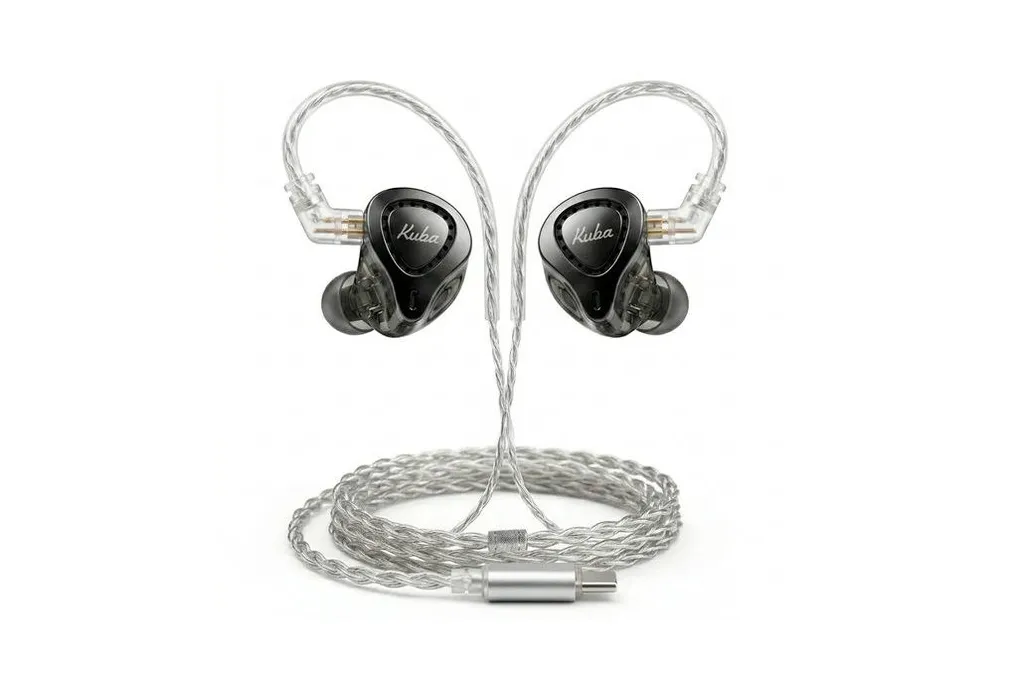
Kuba Auri headphones feature equalization developed in Brazil and offer multiple sound personalities
Read more
Super Abril
super.abril.com.br

Kuba Auri headphones feature equalization developed in Brazil and offer multiple sound personalities

Wired headphones are gaining popularity, driven by both aesthetics, often inspired by celebrities, and sound quality, which can surpass that of wireless models. One advantage of wired headphones is the smaller number of components, allowing manufacturers to invest more in drivers, which are responsible for sound generation. Furthermore, the larger internal space facilitates the speakers' work, unlike true wireless models, where reduced space impacts acoustics.

In recent years, the wired headphone market has been transformed by Chinese companies such as KZ, Moondrop, and Truthear, which introduced affordable and high-performance models. This movement, known as Chi-Fi (derived from Hi-Fi, meaning high fidelity), also saw the emergence of partnerships between manufacturers and audio reviewers, such as the Singaporean Crinacle (who has the brand CrinEar) and the American HBB.

These two trends converged in Brazil with the launch of the Kuba Auri headphones. Kuba, a company established several years ago, is known for its Disco headphones and was founded by Carioca Leonardo Drummond, creator of the Mind the Headphone channel, dedicated to audio analysis and boasting 438 thousand subscribers on YouTube.

Although the Auri are produced in China and based on a Chinese model with a USB-C cable and dynamic driver per side, they feature a distinctive characteristic: their equalization was created in Brazil by Kuba. This equalization resulted from an online survey conducted with over a thousand people to determine the Brazilian public's preference regarding the balance of bass, mids, and treble.

Based on this investigation, Drummond developed an equalization curve for the headphones. This process involved technical challenges, such as compensating for deviations and natural resonances of the drivers, in addition to negotiations with suppliers to achieve the ideal result. The final result is a pleasant sound, characterized by abundant bass, but without compromising the clarity of the mids or the brightness of the highs. The Auri reveal many musical details and possess remarkable spatiality, giving the sensation that the sound is around the head, rather than contained within it, as occurs in in-ear headphones.

For those who are not audiophiles and are only used to true wireless headphones, the Auri can represent a great discovery. For audiophiles, there is an additional feature: an online interface that allows applying ten distinct equalization curves. By connecting the headphones to a PC or Mac and accessing the website equalizador.kuba.audio, the user can select and activate the desired curve. This setting is saved on the cable, working even when the audio is played on mobile devices, although changing the equalization is not possible via mobile.

Besides the main curve, the website offers options such as Natural (with less bass), Basshead (with more bass), and Energetic (ideal for rock). These equalizations are based on the actual performance of the drivers and include precise corrections to approximate target curves, being more accurate adjustments than those obtained with generic applications like Wavelet. The site also presents curves popular among audiophiles, such as Harman (developed by Samsung since 2017), JM-1 (more recent and more neutral), and Etymotic, known for its extreme focus on detail with bass attenuation.

In terms of physical usability, the Auri are comfortable, featuring three sizes of silicone tips, and the cable is durable, not easily tangled or noisy when rubbing against clothing. Additionally, the cable is detachable, allowing it to be replaced if damaged over time. The only physical drawback is the absence of a grille in the headphone opening to prevent the entry of earwax and debris.

Currently, the Auri are available on the company's official website for R$ 287. This price is considered attractive, offering excellent audio quality and the versatility of multiple equalization curves, providing an experience comparable to owning several different headphones.

Similar stories

Oppo homologates 100W power bank for use in Brazil
Read more
tecnoblog.net

Oppo homologates 100W power bank for use in Brazil

Oppo demonstrated interest in the Brazilian market by obtaining certification for another accessory, specifically a powerful power bank.

This accessory, identified by model code PBSV05, has a typical capacity of 12,000 mAh. It supports fast charging up to 100W using Oppo/Realme/OnePlus SuperVOOC technology, in addition to offering 45W for USB-PD compatible devices from other brands (this capacity is also used to recharge the power bank itself).

The National Telecommunications Agency issued the certificate for this product on Wednesday, the 21st.

Although not a new release, the item had already been made available globally in 2024 and received a special Year of the Horse edition in China in January. Its design is characterized by a division between plastic (usually white) and a section that appears to be anodized aluminum, usually silver, although there are variations in other countries.

Internally, the device features three nominal 4,100 mAh cells, which enables the high charging speed. It has two USB ports: one USB-A and one USB-C, the latter being used both to charge devices via a USB-C cable and to recharge the power bank. The packaging will include a USB-A to USB-C cable.

The manufacturing of this model is the responsibility of Aohai Technology, located in Dongguan, China. This same model is also sold in certain nations under the OnePlus brand, featuring a black plastic part, but it is the same product.

Currently, there is no information available regarding the product's arrival date in Brazil or its price. As a comparative reference, the Samsung 10,000 mAh and 25 Watt power bank is being sold for R$ 141.55 upfront in the online store.

Leak exposes Ticketmaster customer data in Brazil; company notifies authorities and users
Read more
olhardigital.com.br

Leak exposes Ticketmaster customer data in Brazil; company notifies authorities and users

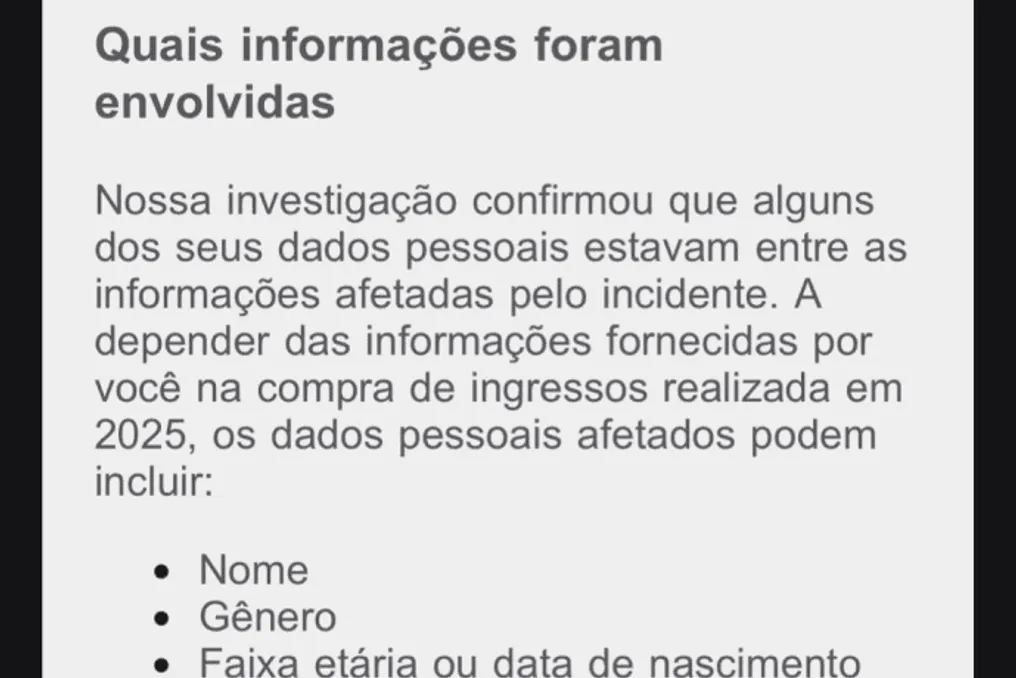
Ticketmaster confirmed that a security incident occurred, resulting in the exposure of personal data of customers who purchased tickets in 2025. The company proceeded to notify the affected users via email and also communicated the occurrence to the National Data Protection Authority (ANPD).

According to the company itself, the incident originated from a third-party data analysis tool. An investigation was conducted with the help of external cybersecurity specialists and was finalized in September 2026, as detailed in the communication sent to customers.

The affected information varies depending on the data provided at the time of ticket purchase. Ticketmaster assures that the exposed data does not include full credit card numbers, bank account information, or access credentials to the platform accounts. Furthermore, the company guaranteed that its account management and ticket sales systems remained intact.

In response to Olhar Digital, Ticketmaster reaffirmed having notified the ANPD and highlighted that it implemented actions to control the incident. The company also provided guidelines to affected customers aimed at protecting them, while also strengthening its data security practices.

Although Ticketmaster Brazil confirmed notification to fans affected by this incident involving the third-party data analysis tool, it did not disclose the exact number of people affected. The platform reinforces that fan account systems and ticket sales were not compromised, and that the leak did not cover sensitive data such as full credit card numbers, bank accounts, or access credentials.

Customers are advised to carefully monitor any suspicious communication that may attempt to use the exposed data, remembering that official channels will never request passwords, payment methods, or other confidential information without prior notice. For clarification, customers can contact the email incidente-dados@ticketmaster.com.br.

Popular