Jio Platforms demonstrated an impressive start in the stock market, surpassing the performance of many large public offerings in the country over recent years. The digital and telecommunications business, which manages India's largest subscriber base telecom network, grew by 26.7 percent above the listing price on Wednesday. As a result, the company became the second largest publicly traded firm in the country, changing the corporate hierarchy in terms of market capitalization.
Shares opened on BSE and the National Stock Exchange at ₹1,358 per share, which was 21.4 percent higher than the listing price of ₹1,119. They closed at ₹1,417.35 on BSE and ₹1,417.50 on NSE, valuing Jio Platforms at ₹13.05 trillion. This amount accounts for approximately 83 percent of Reliance Industries' market value.
This debut also allowed Mukesh Ambani's conglomerate to overtake the Tata group in the total market capitalization of its public enterprises. Ambani's group public companies were valued at approximately ₹30.25 trillion on Wednesday, while the Tata conglomerate was valued at ₹25.40 trillion.
Over the last decade, many of the largest Initial Public Offerings (IPOs) in India have failed to deliver profits to investors on the day of listing. The Jio Platforms debut offered a completely different start.
The company also surpassed Bharti Airtel, whose shares fell by 1.55 percent to ₹1,948.10 per share, valuing the competitor at ₹12.16 trillion, which is 7 percent less than Jio's. Jio's Price-to-Earnings (P/E) ratio was 42x compared to Airtel's 41x. With a market value of about $137 billion, Jio ranked fifth among global telecommunications companies, trailing China Mobile, valued at $221 billion.
The offering attracted exceptional demand: applications reached 22.19 times the offered shares, and demand for the public and anchor investor placement exceeded ₹7.4 trillion. The company raised ₹30.213 trillion through the IPO.
However, the successful debut occurred amid pressure on its parent company. Reliance Industries dropped by 3.19 percent to ₹1,158, leaving a market capitalization of ₹15.67 trillion, which is within 1 percent of its 52-week low.
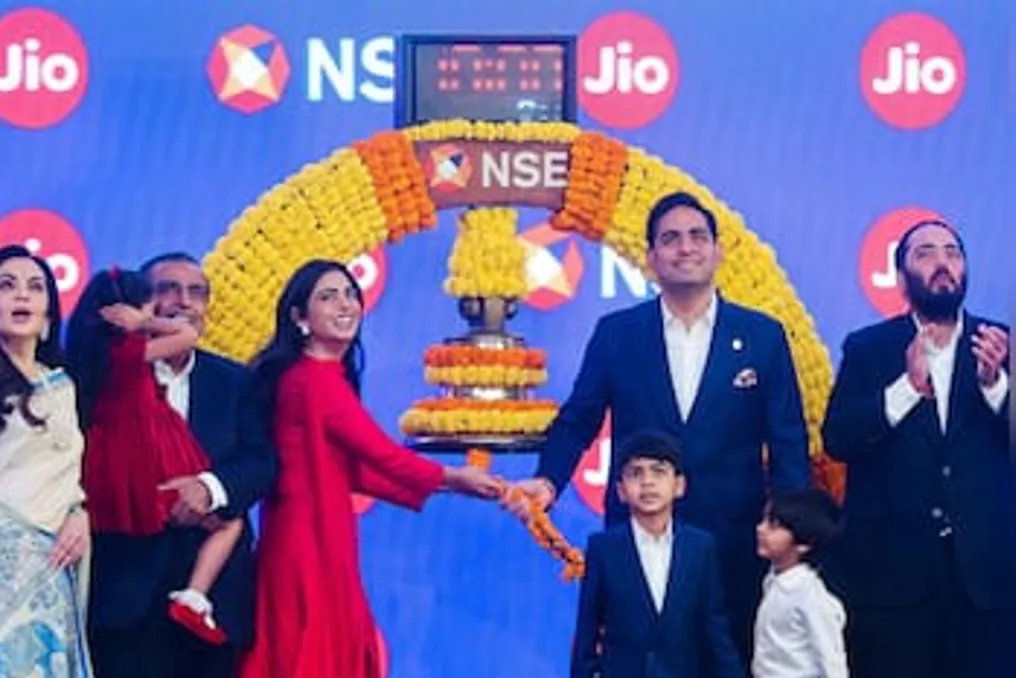
For the Mukesh Ambani family, this listing was both a financial milestone and a handover of responsibilities. Jio Platforms, launched in July 2016, is now a ten-year-old business whose next phase will be defined by its children—Akash, Isha, and Anant.
Future Prospects of Jio Platforms
Akash Ambani, Managing Director (MD) of Jio Platforms and Chairman of Reliance Jio Infocomm, presented the debut as the beginning of a longer project. After the listing, he stated: 'What Reliance has done for shareholders for almost 50 years, Jio will continue to do in the next fifty.' He acknowledged the contribution of his father, Chairman and MD of Reliance Industries Mukesh Ambani, and his grandfather, the late Dhirubhai Ambani, in creating the foundation upon which the business now stands. He and his siblings stated that they would work to make Jio Platforms 'bigger, better, and more significant for India.'
The company's ambitions extend far beyond telecommunications. Having completed its first decade by bringing hundreds of millions of Indians into digital life through affordable connectivity, Jio plans for the next 10 years to encompass artificial intelligence, cloud computing, connected devices, satellite communication, and 'yet unimagined' digital services.
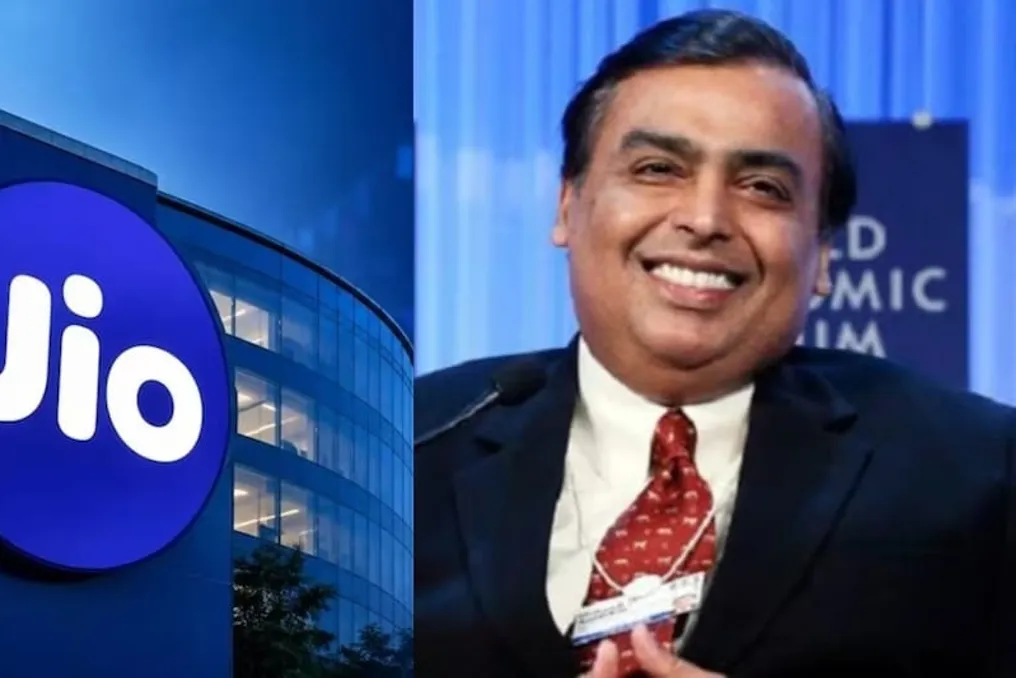
Mukesh Ambani, aged 69, appeared visibly emotional as his children took center stage in the listing of the business he launched. This scene showcased the formation of succession within the family in public, with the future of the corporate empire increasingly linked to the next generation. He said: 'My dream is that one day, when the world counts its great technology companies, one of them will be called Jio Platforms Limited. Our promise to India: we will continue to build, innovate, and expand boundaries until this dream comes true.'
Isha Ambani, Director of Jio Platforms and Non-Executive Director of Reliance Industries, viewed the listing as part of a longer history of increasing public participation in the family business. She recalled Reliance's first public offering in 1977, which raised ₹2.82 crore against a valuation of ₹10 crore. According to her, Dhirubhai Ambani wished for ordinary Indian families to participate in the nation's prosperity as owners, not just spectators. She added: 'Almost 50 years later, this trust came true.' Isha cited Jio Platforms' annual revenue of about $15.5 billion and profit of $8 billion, noting: 'Different industries. Different decades. Same belief in India. And this is only the beginning.'
Anant Ambani, also a Director of Jio Platforms, described the listing as a matter of public trust as well as a corporate achievement. Recalling Dhirubhai's aspiration to provide internet access to every hand and every village in the world, he stated: 'Today, Jio belongs to India.' He thanked Isha for sowing the seed of Jio and Akash for making it his own, acknowledging the customers whose lives the company touched by connecting classes, families, patients, and communities. He said: 'Jio aapne banaya (you built Jio). Realizing your dreams is our dream.'
Next Phase of Challenges
For investors, the listing separates Jio Platforms' market value from the broader Reliance conglomerate, including its larger energy business. The listing sets the stage for an imminent tariff hike, which analysts believe could be around 15 percent.
Analysts from Motilal Oswal Financial Services stated: 'After the IPO of Jio Platforms and the upcoming funding from Vodafone Idea, we believe the argument for a tariff hike becomes stronger. However, we are now projecting a smartphone tariff increase of approximately 15 percent starting March 2027, compared to December 2026 previously.' Ambit Capital Research maintained its forecast of a 15 percent tariff hike in December 2026, followed by subsequent biennial increases of approximately 12 percent over the next decade. They pointed to the need for Vodafone Idea to increase average revenue per user above ₹300 by FY2030 and Reliance to generate over 10 percent dollar revenue for Jio Platforms investors. They also added: 'Thirdly, the current poor industry economics—a 10 percent pre-tax Return on Capital Employed (RoCE) in FY2026, which is below the cost of capital.'
In the long term, market observers note a gradual move away from unlimited 5G data plans as the focus shifts to 5G monetization. Jio Platforms' entry into the Indian market in 2016 paved the way for free voice calls and unlimited data packages as the company aimed to migrate customers to its then-new 4G Autonomous (SA) network architecture. Now having 540 million customers, making it the second largest globally after China Mobile, and betting on AI and data centers, shareholders will closely monitor capital expenditure returns and monetization.
As 5G penetration grows, analysts expect the focus to shift from user acquisition to consumption monetization. Motilal Oswal Securities stated that discontinuing unlimited 5G offers could provide a short-term boost to Average Revenue Per User (ARPU) in anticipation of broader smartphone tariff increases.
Elara Capital, which rated Jio as a 'buy', expects mobility to remain the primary driver of revenue and profitability. It forecasts subscriber growth at a compound annual growth rate of 3 percent between FY2026 and FY2029, supported by affordable plans, network coverage, and low customer churn. The Elara Capital report states: 'We expect a tariff increase of 12–15 percent from the second half of FY2027. Along with other levers (migration from 2G to 4G and 5G, shift from prepaid to postpaid billing, premiumization, data consumption growth, and bundled digital services), this should increase ARPU from ₹214 in FY2026 to ₹257 in FY2029.'
Family Celebration on a Grand Scale
The listing celebration extended beyond the trading floor. At the Reliance Corporate Park, according to a PTI report citing insiders, thousands of employees and their families gathered for a party that included street food stalls, dance performances, and musical sessions blending religious music with modern rhythms.
The company also accelerated employee payouts. October salaries were paid on October 15, about two weeks early, and 75 percent of the annual cash bonuses or performance incentives for FY2027 were paid out on Wednesday, months ahead of the usual post-fiscal year payment. The early salary payout was intended to allow employees to participate in the IPO stock auction; the accelerated bonus was dubbed an early Diwali gift.
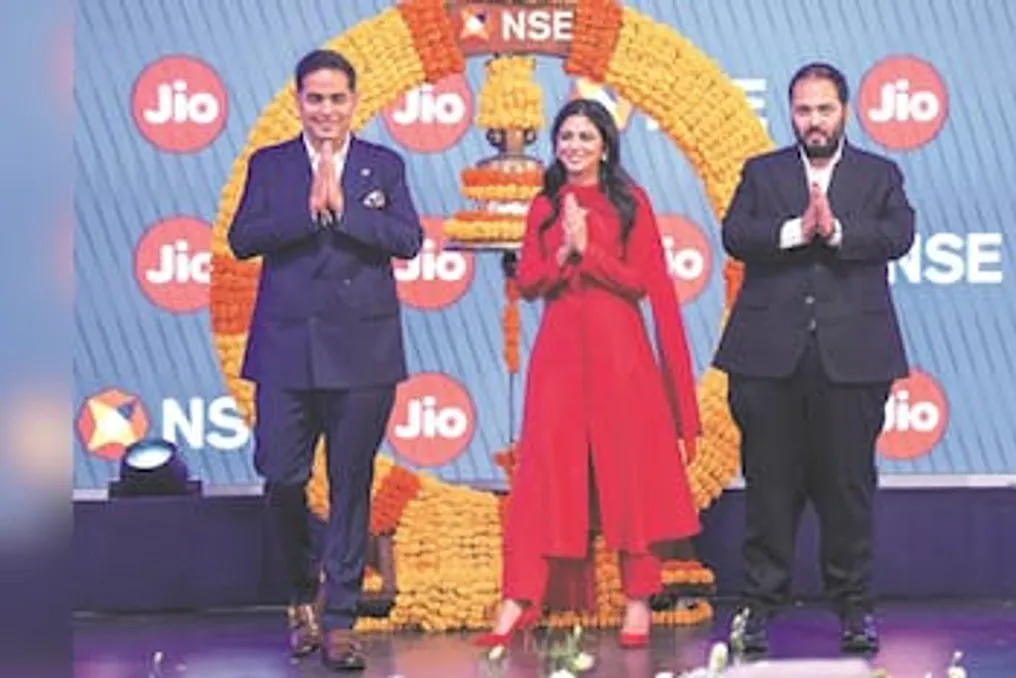
Akash, who wore business suits and a bandhgala during the roadshow for investors and the listing ceremony, changed into a T-shirt to address the gathering. His twin sister Isha and younger brother Anant stood beside him again. Earlier at the listing event, he referred to his siblings as 'three bodies, but one soul,' united by a commitment to serving India and its aspirations. He also thanked Prime Minister Narendra Modi for the vision of 'Digital India,' which, he said, gave Jio Platforms purpose.
[ ]