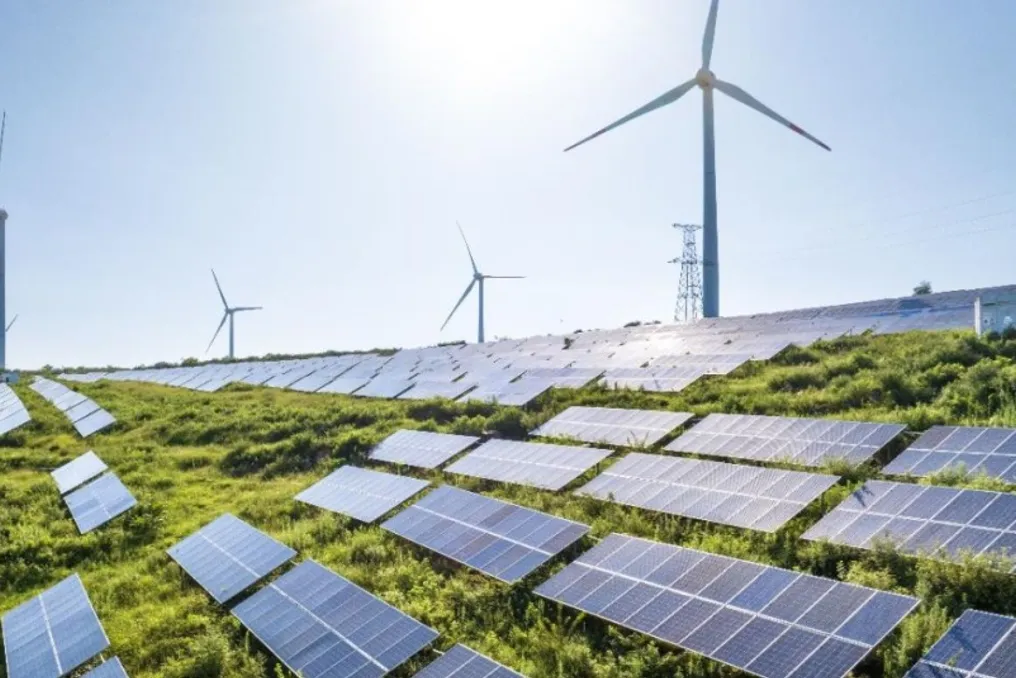
According to the Eurasian Development Bank (EDB) report, by 2028, Uzbekistan risks having to reduce the output of solar and wind power plants because the existing energy system cannot handle the reception and transmission of all generated electricity. Forecasts suggest these losses could reach approximately 3.5 billion kilowatt-hours, based on the country's energy system development plan for the period 2026–2028.
Although more efficient electricity exchange between Central Asian states could reduce these losses, achieving this goal requires strengthening internal grids, implementing digital management, and standardizing trade rules.
Requirements for Energy Infrastructure Development
EDB experts emphasize in their new study that Central Asian countries must not only increase the number of power plants but also actively develop networks capable of delivering produced energy where it is needed. It is proposed to modernize infrastructure, coordinate grid management, and expand cross-border electricity trade.
For Uzbekistan, this problem is exacerbated by the growing share of solar and wind generation. If network development, reserves, and trading mechanisms do not proceed in parallel with the commissioning of new capacities, part of the potential production will have to be limited, even if there is demand for this energy in other parts of the region or in neighboring countries.
Factors Hindering Full Output Utilization
The main reason is that power plants are capable of generating more than the energy system can currently accept. At certain times, the system fails to absorb all available charge, redirect it to required areas, or balance it with current consumption.
This is particularly true for solar and wind facilities, as their output depends on weather conditions and time of day. When the grid is overloaded during peak generation hours, and other stations cannot absorb the surplus, the operator is forced to limit the production of some renewable energy sources (RES). Thus, the stations could generate more electricity, but part of the potential generation remains unrealized, which the report calls forced curtailment.
In addition to grid overload, the report points to several other factors: plants are often built in locations with limited local demand and insufficient capacity to discharge power; traditional power plants cannot reduce the load below their minimum permissible level; the system lacks fast reserve capacity; and short-term trade and balancing processes are underdeveloped.
Scale of Limitations by Year
The energy system development plan for Uzbekistan for 2026–2028, presented in the report, demonstrates the scale of these limitations. In 2026, forced curtailments are estimated at approximately 2.2 billion kilowatt-hours, in 2027—3 billion, and by 2028—nearly 3.5 billion. Annually, this corresponds to 13.6–14.2% of potential RES output, equivalent to about one seventh of the kilowatt-hour that the stations could produce.
The EDB considers these figures to be minimal. The calculation is based on the assumption that by 2028, the installed RES capacity in Uzbekistan will reach about 11.4 gigawatts. However, the state target for 2030 is significantly higher—25 gigawatts. If the pace of plant commissioning outpaces the development of grids, storage, and balancing mechanisms, losses will increase: the report authors suggest that every additional gigawatt beyond the planned scenario will add about 300 million kilowatt-hours of curtailment annually. Moreover, with a high share of solar and wind generation, curtailments usually grow non-linearly, which could lead to an even larger actual volume of losses.
Periods of Highest Load
Forced curtailments are unevenly distributed throughout the year. The largest share occurs from May to October, when solar and wind generation is high, but electricity demand is moderate, making full utilization of available output difficult.
Peak moments are observed during demand transition periods: in May, 37.5% of potential RES output for the month is curtailed, and in September—45.7%. During the summer, the increase in load due to cooling systems slightly mitigates the situation: in June, curtailments amount to 6.4%, in July—5.2%, and in August—14.1%. In winter, curtailments are minimal (0% in January, 1.1% in December) because RES output is lower, while heating demand remains stable. It should be noted that these values are forecasts and relate to 2028 according to Uzbekistan's energy system development plan for 2026–2028, outlined in the EDB report.
Regional Energy Problems
The regional energy problem is related not only to the total volume of electricity produced but also to what portion of the installed capacity is available during peak demand hours and how effectively it can be transmitted to consumers. The functioning of energy systems is also influenced by the availability of reserves, the technical condition of equipment, and the ability to regulate output.
The EDB report presents data on the operation of the Unified Energy System of Central Asia at the peak load hour—December 10, 2024, at 19:00. With a total installed capacity of 36.4 gigawatts, the available capacity was 28.8 gigawatts, and the volume of unavailable or curtailed capacity reached 6.6 gigawatts, with about 0.85 gigawatts undergoing maintenance.
The report authors cite several reasons for the limitations: fuel shortages, water resource deficits, lack of cold reserve at thermal power plants, restrictions on heat consumption, and equipment condition. These problems vary by country. In Uzbekistan, risks are primarily related to gas availability and pressure in the gas transmission system. In Kyrgyzstan, regulation and generation capabilities depend on water resources and growing domestic consumption. In Tajikistan, the key limitation is the throughput capacity of the network infrastructure, which hinders the transmission of some hydropower.
These factors complicate energy exchange between countries in the region. Even if one country has surplus generation, its transfer to neighbors depends on network capacity, the presence of interstate lines, and the coordination of energy system operating modes. Consequently, developing regional trade requires not only increasing production but also eliminating infrastructural barriers and improving interstate coordination.
Current Grid Constraints
The EDB report also contains information on electricity flows during the autumn-winter period of 2024–2025. On several controlled sections of the network, actual flows exceeded permitted norms. For example, in the Fergana energy hub, on the Uzbekistan—Kyrgyzstan direction, the flow reached 2,940 MW against an allowable level of 1,800/2,600 MW, which was 113% of the upper limit. On the Sugdiana—Guzar—Talimardzhan section within Uzbekistan, the indicator reached 1,570 MW against an allowable 1,500 MW, or 105%.
This data indicates the need to eliminate constraints both on international lines and within national energy systems to increase transmission volumes. In addition to building and modernizing networks, the EDB recommends implementing digital monitoring, improving methods for calculating allowable flows, and coordinating energy system operating modes. Such steps will enhance network controllability and allow for more effective use of existing capabilities, although they will not solve the problem of physically reinforcing overloaded sections.
Potential for Regional Exchange for Uzbekistan
One way to reduce losses from RES curtailment is through more active use of the unified energy system of Central Asia. Provided that the countries operate in coordination, surplus energy in one system can be directed where there is still demand. However, the effectiveness of such exchange depends on network capacity, the availability of reserves, and approved trade rules.
According to the EDB, in 2024, the total volume of regional electricity trade in the unified energy system of Central Asia amounted to 12.1 billion kilowatt-hours, covering 8.5% of the total consumption in the region. For comparison, the share of cross-border trade in consumption in the European Union was 17.5%, in Italy—16.3%, and in the United Kingdom—10.5%. In Canada, this figure reached 9.6%, and in the PJM American market—8.2%, although differences in market organization principles prevent direct comparison.
For Uzbekistan, regional coordination is critically important due to the growth of solar generation. During the day, it can create a surplus, whereas the peak of remaining demand in the region often falls in the evening. According to EDB estimates, the joint use of hydropower plants, energy storage, dispatchable thermal generation, and intersystem connections will help smooth these fluctuations and reduce forced RES curtailment.
Nevertheless, trade alone is not enough. Effective exchange requires more accurate forecasts of demand and output, coordinated dispatch control, and sufficient network capacity. Storage units can also help shift daytime solar generation to evening hours when consumption increases.
Role of Storage and Pumped Hydro Power Plants
Another method for reducing RES curtailment is the ability to shift part of the daytime generation to periods of high demand using energy storage systems and pumped-storage hydroelectric power plants (PHPPs). The EDB report examines four PHPP projects being developed by JSC 'Uzbekhydroenergo', with a total capacity of 1.6 GW.
[ ]