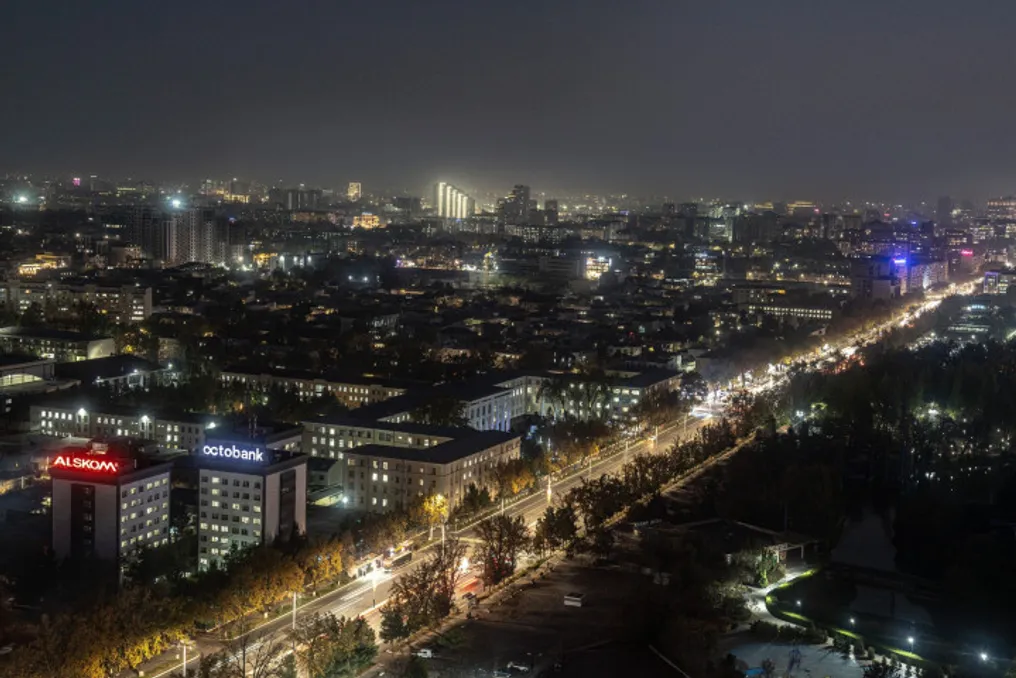
Air quality in Tashkent expected to improve on October 29
Read more
UzDaily
uzdaily.uz

Air quality in Tashkent expected to improve on October 29

According to forecasts, the air quality in Tashkent is expected to slightly improve on the morning of October 29. The pollution level is predicted to drop to the 'unhealthy for sensitive groups' category.

Previously, on October 28, the Special Commission assessed the air quality in the capital as 'unhealthy' according to the international Air Quality Index (AQI). According to Uzbekistan's national air quality index, the level was yellow at night and orange during the day.

The commission attributed the situation to the drop in nighttime temperatures to 9.5°C, strong temperature inversion, dry weather, and the accumulation of air masses over the capital and neighboring regions. Weak winds also contributed to the formation of local atmospheric emissions.

Similar conditions are often observed in autumn and winter when precipitation is limited. According to the forecast, on the evening and night of October 28, the air quality remained at the 'unhealthy' level according to the international AQI.

Similar stories

PM2.5 levels in Tashkent decreased by 28% in 2026
Read more
uzdaily.uz

PM2.5 levels in Tashkent decreased by 28% in 2026

According to data from automated monitoring stations, the average concentration of fine particulate matter PM2.5 in Tashkent decreased by 28% for the period from January 1 to October 19, 2026. Meanwhile, PM10 concentration dropped by 32% compared to the same period last year.

These figures were presented by Doniyor Turgunov, Director of the Scientific and Hydrometeorological Institute of Green University, during a briefing at the Media Content Training Center on October 21. The decrease was particularly noticeable in autumn: from September 1 to October 19, the PM2.5 concentration fell by 28%, and the PM10 level by 37%.

In the first 19 days of October, the relevant indicators showed a drop of 40% and 56% respectively. Last year during the same period, Tashkent's Air Quality Index (AQI) reached 'unhealthy' for 11 days; this year, no such days were recorded. The number of days when air quality based on the PM2.5 indicator was rated as 'moderate' or better increased from 21 to 38.

Turgunov identified meteorological conditions as the main cause of autumn air pollution. The reduction in daylight hours and rapid cooling of the surface at night lead to the formation of temperature inversion, where a layer of warm air traps colder air near the ground. The height of the atmospheric boundary layer decreases from 2–3 km in summer to several hundred meters, and weakening winds contribute to the accumulation of pollutants over the city. Stable high pressure on the periphery of the Siberian anticyclone can maintain these conditions for several days.

Another factor is natural dust. Central Asia is located in one of the world's largest dust belts. Dust from the Caspian region, Kyzylkum, Aral Sea, and southern Balkhash spreads across the region. September and October are usually dry, which facilitates the lifting of soil dust into the air.

According to a study by the World Bank and the Committee on Ecology, wind dust accounts for 36% of annual PM2.5 emissions in Tashkent. Contributions to pollution come from building heating (28%), transport (16%), and industry (13%); the remainder is due to urban dust and waste burning.

The World Bank's 2025 report, 'Air Quality Management in Central Asia,' notes that soil and desert dust is responsible for 20–50% of the annual PM2.5 impact in the region's cities, while in Turkmenistan, this share exceeds 80%.

In autumn, the influence of dust in Tashkent combines with emissions from fuel burning during the heating season. The contribution of various pollution sources was determined by analyzing the chemical composition of PM2.5 samples collected in the areas of Yunusabad, Almazar, and Mirzo-Ulubek in the capital. From September 28 to October 6, natural dust accounted for 52% to 78% of the pollution, averaging 64%. On October 13–14, its share fluctuated between 47% and 52%.

A number of measures are being implemented to improve air quality. In particular, Presidential Decree No. UP-229 of November 24, 2025, established a Special Commission.
Deterioration of atmospheric air quality expected in Tashkent on the night of October 24
Read more
podrobno.uz

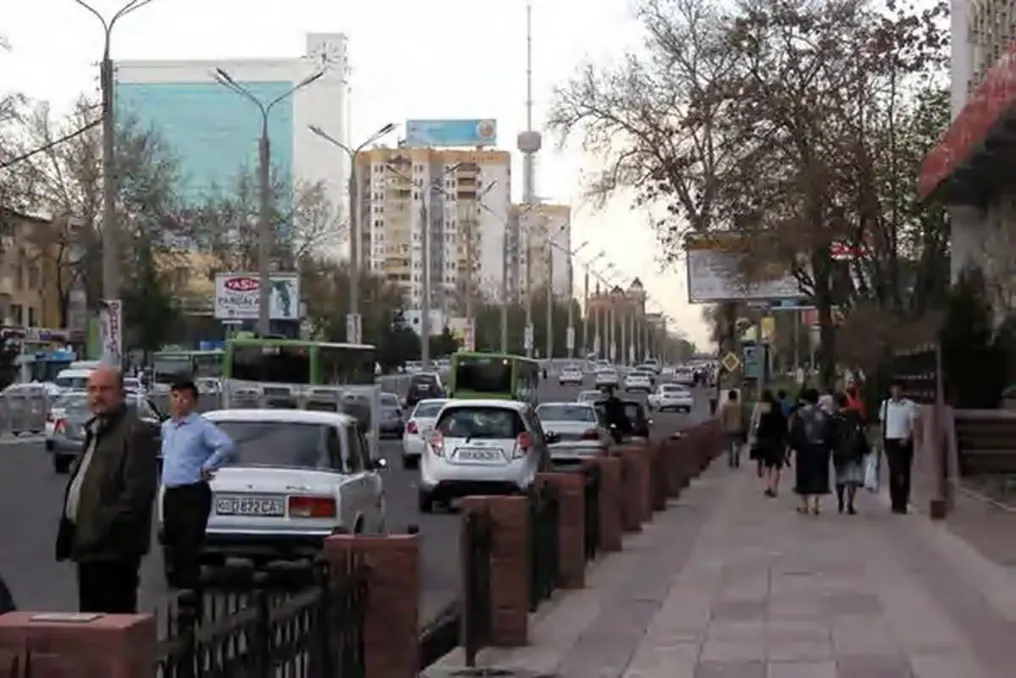
Deterioration of atmospheric air quality expected in Tashkent on the night of October 24

The National Committee for Ecology and Climate Change warned about a probable temporary decrease in the quality of atmospheric air in Tashkent on the night of October 24.

According to the agency, an increase in the concentration of fine particles PM2.5 and PM10 is forecast during the evening and night. This may lead to the air reaching a 'unfavorable' level according to the international Air Quality Index (AQI). Meanwhile, according to the national air quality index, indicators are likely to remain within the 'yellow' zone.

The main factors contributing to the accumulation of pollutants are cited as the drop in temperature at night, weak wind movement, and strong temperature inversion. In such meteorological conditions, the exchange of air in the lower layers of the atmosphere is restricted, causing a concentration of fine dust particles directly near the Earth's surface.

It is expected that after sunrise and as the temperature inversion weakens, air quality will begin to slowly recover. However, in the morning hours in some parts of the capital, values on the international AQI scale may remain at a level considered 'unfavorable for sensitive groups.' A special commission is continuously monitoring the air quality in the city.

Seasonal rise in respiratory infections noted in Tashkent; cases of Influenza A identified
Read more
uzdaily.uz

Seasonal rise in respiratory infections noted in Tashkent; cases of Influenza A identified

According to data from the city's sanitary and epidemiological services, Tashkent is experiencing a seasonal increase in acute respiratory viral infections. Laboratory tests also confirm the presence of Influenza A cases.

According to information provided by Dilfuza Rasulova, head of the epidemiological department of the Department of Sanitary and Epidemiological Welfare and Public Health of Tashkent, no cluster outbreaks have been recorded in either children's institutions or among adult workers in the capital.

Rasulova explained that the spread of airborne infections usually intensifies with the onset of the autumn-winter period. Current monitoring indicates a seasonal rise in morbidity, including a slight increase in cases among younger children compared to previous months.

Specialists at the city's sanitary and epidemiological institutions are monitoring the situation daily. The virology laboratory of the Department of Sanitary and Epidemiological Committee of the city is recording cases of Influenza A.

Recommendations for the Population

Dilfuza Rasulova advised people experiencing symptoms of respiratory illnesses to stay home and avoid visiting educational institutions, kindergartens, and other organized groups. Anyone showing signs of malaise should consult a family doctor and follow prescribed recommendations, including bed rest.

To reduce the risk of infecting others, patients are recommended, if possible, to stay in a separate room and use personal utensils. Medical masks should be worn if necessary. It is also important to regularly ventilate rooms and clean enclosed spaces to reduce the concentration of viral particles.

Furthermore, Rasulova emphasized the importance of vaccination against seasonal influenza. She gave a special recommendation for vaccination to young children, individuals over 65 years old, pregnant women, and those who are frequently ill. According to her, vaccination helps reduce both the probability of infection and the risk of complications.

Residents of the capital were strongly urged to participate in the vaccination campaign, as flu vaccines are available at private vaccination centers in Tashkent.

Popular