The Haryana Electricity Regulatory Commission (HERC) has decided not to proceed with the consideration of a parallel distribution license previously granted to Eleven Power Private Limited (EPPL) for the Gurugram and Nuh areas, following directives from the state government. This decision raises concerns regarding reforms in the energy sector.
Previously, on October 19, the Commission had approved EPPL's application for a 25-year parallel distribution license for the Gurugram and Nuh areas. However, the state government later sent a letter to the Commission expressing serious concern about the impact of this license on both consumers and public interests.
The Commission's decision represents a significant setback for the concept of parallel licensing, which was viewed as a major initiative to reform distribution, capable of introducing competition into the country's lagging energy sector. This occurs amid the review of numerous similar parallel licensing proposals submitted by large companies such as Tata Power, Adani Energy Solutions, and CESC in various states.
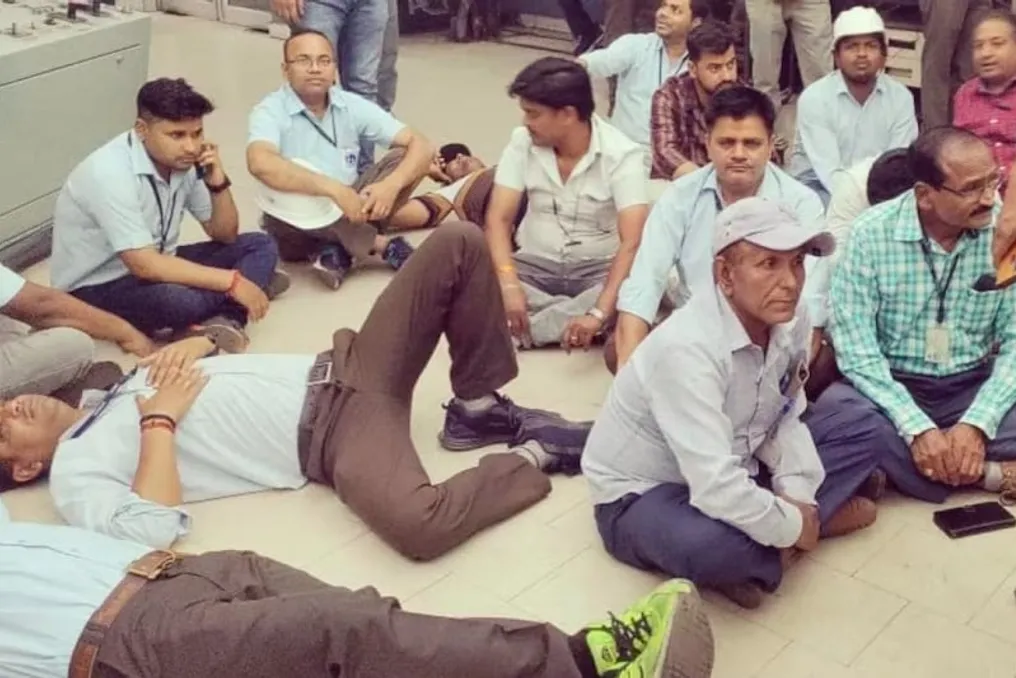
The firm JM Financial noted that with the establishment of parallel licensing, current meter reforms could become the next major opportunity for distribution-oriented utilities. The Haryana government's letter followed mass protests by employees of the state power distribution company Dakshin Haryana Bijli Vitaran Nigam (DHBVN), which still holds a monopoly on the electricity distribution network.
Considering the financial implications for state government revenue, as well as consumer and societal interests, the state government instructed the Commission not to create, activate, or implement any parallel distribution licenses anywhere in the state.
In its resolution, published on Wednesday, it stated that 'the Commission received communication on October 26 from the Commissioner and Secretary of the Government of Haryana, conveying directions issued by the Government of Haryana, mandating that no parallel distribution license shall be created, activated, or implemented anywhere in the State of Haryana.' The resolution added that these directives apply to the entire state of Haryana, and the Commission has no authority to conduct any judicial proceedings for their enforcement. The Commission also denied EPPL's request for prior notification and an opportunity to present arguments.
Eleven Power stated its intention to supply electricity to all categories of consumers on a non-discriminatory basis and meet power supply requests according to Section 43 of the Act, as well as introduce new connections within the timelines set by the Commission's Code of Supply. Furthermore, the private company planned capital investments of ₹4,717 crore over five years, to be phased between 2026–27 and 2030–31, with consumer supply scheduled to begin in 2027–28. It was also mentioned that the network would be built in phases over five years across all five divisions of the licensed zone, including Gurugram Suburban, Gurugram City, Manesar, Sohna, and Nuh.
This move was expected to open up competition for more than 8.3 lakh electricity consumers in the region, including households, farms, shops, industrial enterprises, and offices, who could choose between two distribution licensees.