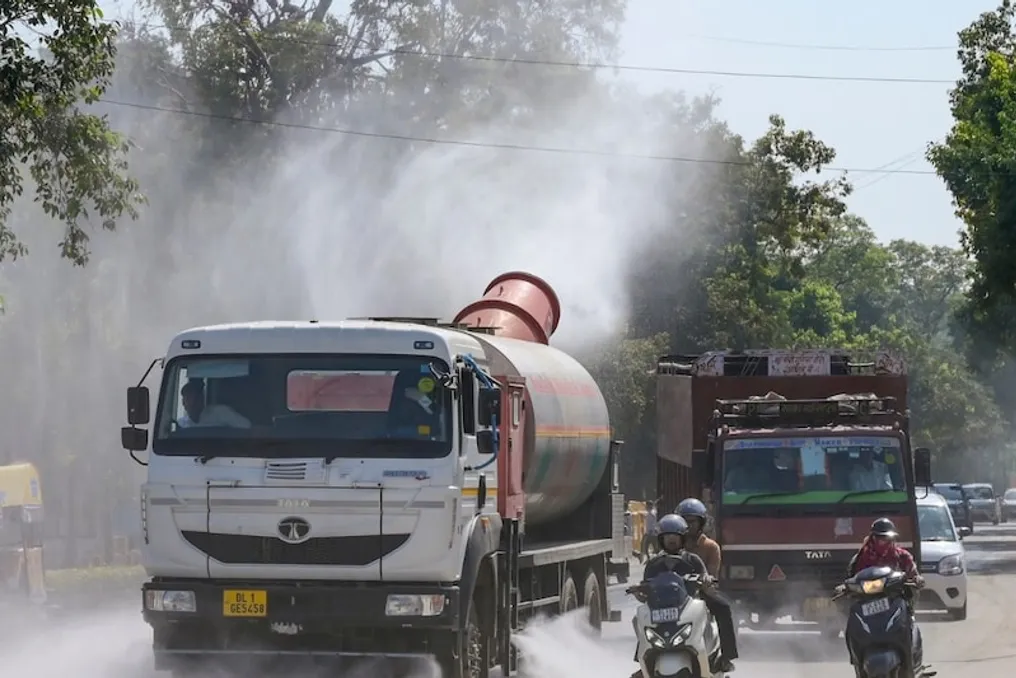
Air in Delhi worsens again: AQI reaches 229, and the reading in Vivek Vihar exceeds 316
Read more
Aaj Tak
www.aajtak.in

Air in Delhi worsens again: AQI reaches 229, and the reading in Vivek Vihar exceeds 316

Air quality in Delhi worsened again on Wednesday, moving into the 'Poor' category after four days in the moderate category. According to data from the Central Pollution Control Board (CPCB), the Air Quality Index (AQI) in the city rose from 197 on Tuesday to 229 on Wednesday. The Vivek Vihar area recorded a reading of 316, which falls under the 'Very Poor' category.

It is forecasted that air will remain in the moderate category for the next three days, but in six days it may be between moderate and poor. AQI indicates the purity or pollution level of the air. According to the CPCB scale, values from 0 to 50 are considered good, 51 to 100 are satisfactory, 101 to 200 are moderate, 201 to 300 are poor, 301 to 400 are very poor, and 401 to 500 are hazardous. There are 58 monitoring stations operating in Delhi.

On Wednesday, the air was moderate at 16 stations, while a poor level was recorded at the remaining 41 stations. The station in Vivek Vihar became the most polluted. Previously, on October 21, the AQI was 245, on October 22 it was 223, and on October 23 it was 230. After this, the air remained in the moderate category for four consecutive days, but the situation worsened again on Wednesday.

According to the Delhi Air Quality Early Warning System, from October 29 to 31, the air may remain in the moderate category. The forecast for the next six days is between moderate and poor. The system notes that if the ventilation index is below 6000 square meters per second and the average wind speed is below 10 kilometers per hour, pollutants are not dispersing properly. The Meteorological Department predicted cloudiness and moderate rain for Thursday, with possible thunderstorms on Friday.

Analysis of pollution sources shows that the transport sector contributed the most on Wednesday, accounting for 19.3 percent. The energy sector contributed 5 percent, and industry in Delhi and surrounding areas accounted for 4.8 percent, while domestic sources provided 5.1 percent. Pollution was also caused by construction (2.5 percent), garbage burning (1.8 percent), road dust (1.3 percent), and other areas (1.3 percent).

In the NCR regions, Ghaziabad contributed 11.8 percent, Gautam Buddh Nagar contributed 8.7 percent, Meerut contributed 8.6 percent, Muzaffarnagar contributed 5.7 percent, Baghpat contributed 4.2 percent, and Bulandshahr contributed 3.9 percent. Pollution was also coming from Faridabad (3.06 percent), Gurugram (2.1 percent), Sonipat (1.5 percent), and Jhajjar (0.5 percent). The share of stubble burning was 0.9 percent, and other sources contributed up to 9.6 percent.

According to daily reports from the Indian Agricultural Research Institute (IARI), satellite data recorded 129 instances of field fires in six states on October 27. Of these, 33 were in Punjab, 1 in Haryana, 18 in Uttar Pradesh, 46 in Rajasthan, 7 in Uttarakhand, and 24 in Madhya Pradesh. In the period from September 15 to October 27, a total of 2267 such incidents were registered: 717 in Punjab, 22 in Haryana, 324 in Uttar Pradesh, 533 in Rajasthan, 159 in Uttarakhand, and 510 in Madhya Pradesh. During this period, two cases were noted in Delhi.
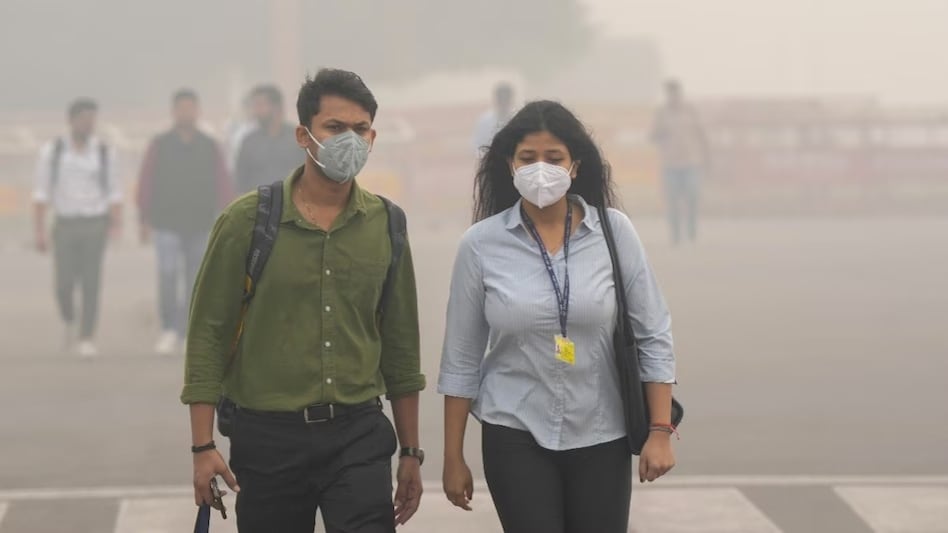

Similar stories

Delhi air becomes toxic before Diwali: Air Quality Index worsens for the fourth day
Read more
www.aajtak.in

Delhi air becomes toxic before Diwali: Air Quality Index worsens for the fourth day

The air in Delhi has once again become toxic shortly before the celebration of Diwali. In the capital, the Air Quality Index (AQI) has been in the poor to very poor range for the fourth consecutive day. In the morning, dense smog and haze were observed in many areas. The deterioration of the situation is linked to weather changes, low wind speed, emissions from transport, and instances of stubble burning in Punjab.

The level of pollution in Delhi began to rise before winter; in areas such as Akshardham, a thick veil of smog was visible in the morning. The AQI in Delhi reached about 230–250, and at some monitoring stations, the air quality reached the 'very poor' category. According to the Central Pollution Control Board (CPCB) standards, an AQI from 201 to 300 is classified as 'poor,' and from 301 to 400 as 'very poor.' This means that even in the 'poor' category, the air can be harmful to health, especially for children, the elderly, and individuals with heart or respiratory diseases.

According to meteorological department forecasts, current weather conditions and wind speed may hinder the dispersion of pollutants, so the possibility of a quick improvement depends on the weather conditions.

A significant factor contributing to the rise in pollution in Delhi is vehicle exhaust fumes. A large number of private cars, diesel buses, and other commercial vehicles operate in the capital. Furthermore, the air quality is worsened by dust from construction work, road dust, and the practice of burning waste.

To control pollution, it is necessary not only to reduce the number of vehicles but also to effectively implement measures such as checking Pollution Under Control Certificates (PUCC), preventing dust on construction sites, and banning open waste burning.

Winds blowing from the northwest also affect the air quality in Delhi. The increase in stubble burning after rice harvesting in Punjab and Haryana can aggravate the pollution problem. To stop stubble burning, state governments must provide farmers with access to machinery and alternative methods to eliminate the need to burn crop residues in the fields.

However, the entire responsibility for Delhi's pollution cannot be placed solely on stubble; numerous factors influence the air quality, including transport, construction activities, road dust, and weather conditions.

To combat pollution in Delhi-NCR, the Commission for Air Quality Management (CAQM) has established phased measures under the Graded Response Action Plan (GRAP). On October 21, 2026, an order was issued to implement the first phase of GRAP measures due to the worsening air quality in Delhi-NCR. The first phase of GRAP is activated when the AQI reaches the 'poor' level (from 201 to 300). Measures taken under this phase include mechanical cleaning of roads, water sprinkling, dust control at construction sites, and a ban on open waste burning. Municipal bodies and relevant agencies are obligated to monitor the implementation of these measures to curb dust and local pollution sources.

In September 2026, CAQM approved a revised GRAP program that includes certain measures related to controlling polluting vehicles in the first phase. These include entry restrictions into NCR and neighboring states for buses meeting BS-IV standards and older.

Particles generated from road dust and construction work play an important role in increasing pollution. According to GRAP, mechanical road cleaning, water sprinkling, and dust prevention measures at construction sites must be carried out. Part of these measures also includes a ban on open waste burning and regular waste collection.

The effect of these rules will only be noticeable with regular inspection of construction sites and action against violators. Coordination between Delhi, Punjab, Haryana, and other NCR states is required to reduce transport emissions, control construction dust, regularly clean streets, and decrease stubble burning incidents.

If wind speed remains low and effective control over pollution sources is not implemented, the situation may worsen in the coming days. Therefore, it is crucial to monitor how strictly governments enforce the directives issued under GRAP and how long the residents of Delhi can breathe clean air.

Air Quality Worsens in Delhi-NCR After Dasara, AQI Exceeds 300
Read more
www.aajtak.in

Air Quality Worsens in Delhi-NCR After Dasara, AQI Exceeds 300

Following the Dasara festival, pollution levels in the Delhi-NCR region significantly increased, reaching hazardous levels. The Air Quality Index (AQI) surpassed the mark of 300 due to smoke from fireworks and stubble burning.

To stabilize the situation, GRAP 1 restrictions were implemented, which prohibit construction work and open waste burning. According to meteorological service forecasts, the situation may worsen in the coming days.

Popular