Iranian Culture Minister calls for deeper understanding of Iranian civilization at 'Night of Iran' event
Read more
Tehran Times
www.tehrantimes.com

Iranian Culture Minister calls for deeper understanding of Iranian civilization at 'Night of Iran' event

Iran's Minister of Cultural Heritage, Seyed Reza Salehi-Amiri, emphasized that Iran has yet to adequately present its rich heritage and civilization to both the younger generation and the international community. He made this statement at an event titled 'Night of Iran,' calling for the creation of a more comprehensive and historically grounded description of the country's cultural, scientific, and artistic achievements.

During the evening event on Tuesday, the minister stated: 'We have not yet been able to tell the story of Iran as it deserves, considering the history, culture, and civilization of this land.' He added that this deficiency must be addressed by providing a comprehensive account of Iran based on historical data and facts.

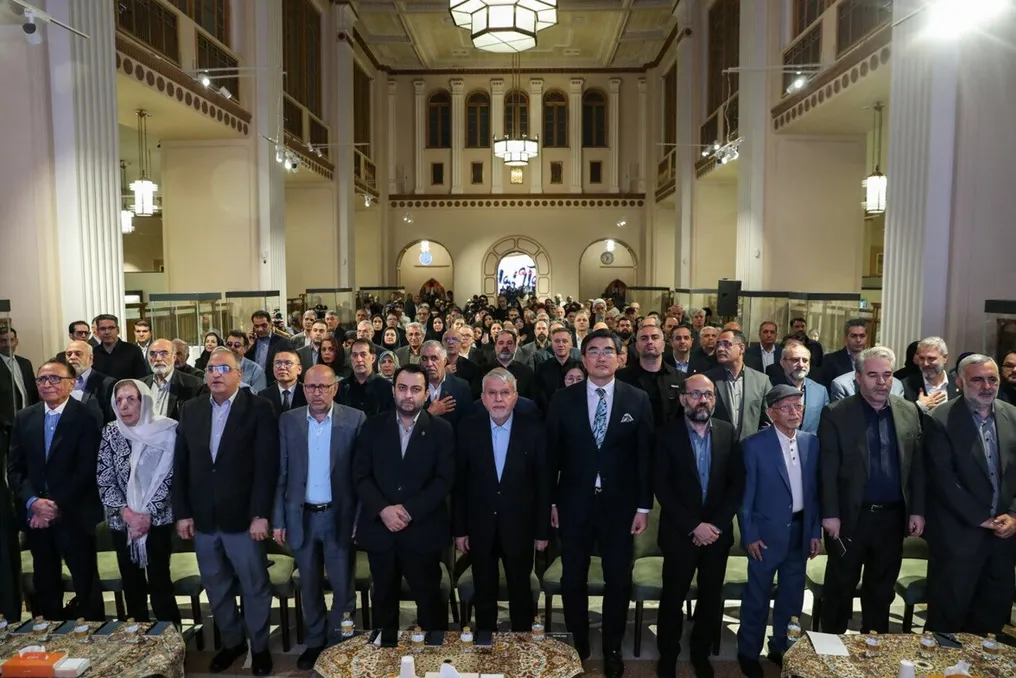
The event took place at the National Bank of Iran Museum in central Tehran and gathered cultural officials, archaeologists, researchers, legislators, and other participants from the country's cultural heritage sector. As part of the event, a collection of photographs titled 'A Thousand Years of Iran' by Herbert Karim-Masighi was presented, documenting aspects of Iran's historical and cultural heritage.

Salehi-Amiri characterized Iran as a country with deep roots, continuous historical continuity, and a vibrant culture that has withstood thousands of years of turmoil and foreign invasions. He noted that successive invasions and political upheavals, from Mongol and Afghan incursions to recent threats, have damaged the country but have not destroyed its cultural and civilizational foundations.

The minister compared Iran to a tree whose branches may bend in a storm, but whose roots remain strong, asserting that the survival of Iranian civilization demonstrates its resilience across generations. He stressed that cultural heritage is one of Iran's most vital national assets, as it strengthens social cohesion, enhances national identity, and fosters a shared sense of belonging among Iranians.

Salehi-Amiri presented Iran as a unifying force for people worldwide, connecting individuals with diverse ethnic, cultural, social, and intellectual characteristics through their historical ties to the country. He insisted that the history and civilization of Iran should play a more significant role in shaping the country's international image, questioning why Iran is often perceived solely through the lens of war, missiles, and political disputes.

He called for increased efforts to integrate the country's historical heritage through education, scientific research, and public cultural programs. The minister specifically noted that educational institutions should incorporate relevant materials on Iranian history and civilization into their curricula, helping students understand the historical and cultural background to which they belong. Universities, he said, should also expand teaching and research on Iranian history, its intellectual traditions, art, and national identity.

Salehi-Amiri also highlighted that a significant portion of Iran's historical heritage remains undiscovered or insufficiently documented. He suggested that continued archaeological excavations and historical research could reveal new facets of the country's past and bring lesser-known stories to public attention.

The minister mentioned the views of scholar Jaleh Amoujegar regarding the resilience of Iranian civilization, noting that political leaders and governments come and go, while cultural achievements can endure for centuries. Furthermore, he reported holding meetings with heads of banking and economic institutions regarding their participation in restoring and completing historical projects, emphasizing the potential role of the private and financial sectors in preserving the nation's heritage.

Addressing the complex situation in the country, Salehi-Amiri called for national solidarity and stated that the government is working to support the population and alleviate its difficulties. He apologized for shortcomings and expressed confidence that Iran will overcome current challenges.

Amoujegar, an Iranian scholar of ancient cultures, languages, mythology, and literature, also spoke at the event, focusing on the importance of hope and confidence in young generations. She stated: 'Iran will not die along with the youth and artists it possesses, and we must not lose hope.' She argued that Iran's cultural vitality is based on a broad base of creative talents, not just a handful of outstanding individuals, and that the country continues to produce people capable of sustaining its artistic and cultural life.

Mohsen Seyfi-Kafashgari, CEO of Bank Melli Iran, noted that the bank's century-long history is closely linked to the country's economic and social development and deserves documentation for future generations. He emphasized that the institution has undergone many changes and difficulties over its first 100 years, and preserving records of its activities could shed light on aspects of modern Iranian history.

The ceremony was attended by Abdollah Hosrobanah, Secretary of the Supreme Council of the Islamic Revolution of Iran; Golamareza Amirkhani, Head of the National Library and Archives of Iran; Kim Joon-pyo, South Korean Ambassador to Iran; as well as archaeologists, cultural heritage specialists, parliamentarians, and officials from cultural institutions. Attendees included researchers and archaeologists Fahri Daneshparvar, Jalil Golshan, and Mehrdad Malekzadeh, as well as Jabrial Nokandeh, Director of the National Museum of Iran, and Mohammad Mehdi Asgarpour, Chairman of the Board of the Iranian Cinema House.
Similar stories

Iranian Rural Settlements Worth Visiting Beyond Famous Cities
Read more
www.tehrantimes.com

Iranian Rural Settlements Worth Visiting Beyond Famous Cities

Iran's historic cities are renowned for their magnificent mosques, Persian gardens, traditional bazaars, and Silk Road heritage. However, beyond well-known locations such as Isfahan, Shiraz, and Yazd, lies another side of the country—a landscape of mountain villages, ancient mud-brick settlements, and rural communities whose traditions offer a different perspective on life in Iran.

These places, scattered across the country's mountains, valleys, and desert outskirts, demonstrate the diversity of Iran's geography, architecture, and cultural heritage. Some can be visited as a day trip from a nearby city, while others require more time and effort to explore. Together, they give travelers an opportunity to look beyond the most famous attractions and get acquainted with the character of rural regions.

Kandovan: Life Inside Volcanic Rock

In northwestern Iran, Kandovan stands out for its unusual architecture. Located near Tabriz, this village is known for its conical rock formations into which generations of residents carved living quarters and other spaces. Kandovan is often compared to Cappadocia in central Turkey and belongs to a small group of settlements where people continue to live in rock-cut dwellings in modern times. Its unique landscape, shaped by volcanic activity and centuries of human adaptation, gives the village a look distinct from most Iranian settlements.

Unlike archaeological cave sites, which are mostly preserved as historical monuments, Kandovan remains a living community. Its houses illustrate how residents adapted traditional building methods to the surrounding geology and climate. Furthermore, this village is one of the most accessible rural destinations for tourists visiting Tabriz, making it a convenient introduction to rural Iran.

Palangan, a Village Climbing the Mountains of Kurdistan

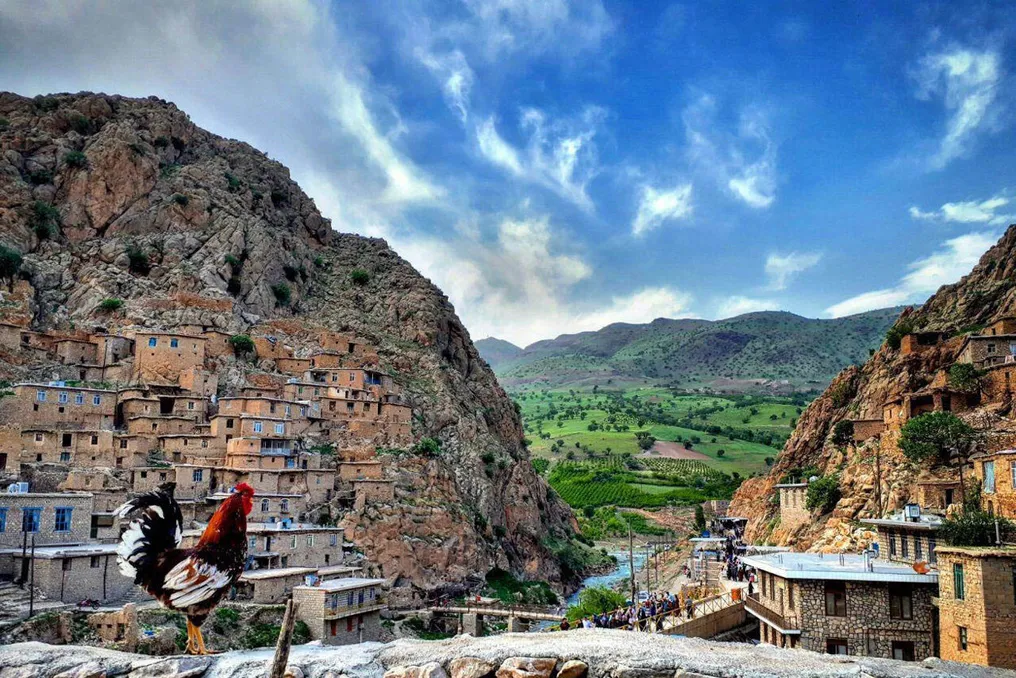
In Kurdistan province, western Iran, Palangan is famous for its terraced architecture and dramatic mountainous setting. Traditional houses rise above one another along the slopes, forming a compact settlement that seems to grow out of the surrounding landscape. This village offers insight into Kurdish rural life, including local culinary traditions and the close connection between communities and their natural environment. Its river, mountain scenery, and stone houses make it a popular spot for visitors from surrounding areas.

Local restaurants serving river fish provide an opportunity to taste regional cuisine, while the surrounding hills serve as a place for walks and exploration. Palangan is among several terraced villages located in the Kurdish mountainous regions of western Iran. Although some rural settlements in this area remain relatively inaccessible, Palangan can be reached from nearby urban centers, including Sanandaj, with possibilities for further travel.

Masuleh: Where Rooftops Become Streets

Further north, in Gilan province, Masuleh presents another striking example of architecture adapted to mountainous terrain. Its traditional houses are built along a steep slope, where the roof of one building often serves as a passage or courtyard for the house situated above it. This arrangement gives the village its characteristic stepped appearance and makes pedestrian movement an integral part of its architectural identity.

Located amidst the misty mountains of northern Iran, Masuleh is known for its humid climate, lush vegetation, and frequent clouds hanging over the settlement. Its popularity among domestic tourists means that the streets can become crowded, especially during peak travel periods. Nevertheless, walking trails leading into the surrounding mountains offer a chance to escape the busiest spots and enjoy the scenery. Within the village, rooftops and narrow paths remain important places for daily encounters, reflecting a strong sense of community. Thus, Masuleh is both a picturesque place and an example of how traditional settlements have evolved in response to steep topography and local living conditions.

Ghazor Khan: Gateway to the Alamut Valley

For travelers interested in history and mountain landscapes, Ghazor Khan in Qazvin province offers a combination of both aspects. This village is best known as the entrance to the UNESCO World Heritage site of Alamut Castle, a fortress associated with the Nizari Ismailis, members of whom were known as Assassins in medieval sources. Perched high above the Alamut Valley, the fortress held a strategic position and became an important center of the Nizari Ismaili state. Its history is closely linked to Hassan-i Sabbah, who established his base there in the late 11th century. The Mongol campaign led by Hulagu Khan resulted in the capture and destruction of the fortress in the 13th century. Although much of the original structure has disappeared, the remaining ruins and the surrounding mountain landscape continue to attract visitors. Besides the historical site, Ghazor Khan is a quiet mountain village surrounded by orchards, including apple, apricot, and cherry trees. In spring, the blooming trees add color to the landscape, and hiking trails offer opportunities to explore the valley. The trip requires more planning than visiting villages near major cities, but the combination of history, scenery, and rural life makes it a worthwhile destination.

Abyaneh: A Living Link to Iran's Past

Located near Kashan, at the foot of Mount Karkas, Abyaneh is among Iran's most famous historical villages. Its red earthen buildings, wooden balconies, narrow alleys, and traditional clothing give it a distinctive look. The settlement is often associated with pre-Islamic Iran, although its long history spans many periods. The architecture reflects the use of local materials, particularly red soil, which gives the buildings their characteristic color. Abyaneh is also notable for preserving elements of the local language and cultural traditions. Some elderly residents speak a distinct local dialect, and traditional dress remains an important part of the village's cultural identity. Men traditionally wore dark coats and loose trousers, while women's clothing is known for its colorful patterns and white headscarves. These customs provide a visible link to regional traditions that have survived amid broader changes in Iranian society. However, Abyaneh's popularity has created challenges. Visitors can fill its narrow streets, especially during peak tourist seasons, and the village can sometimes feel more like an open historical exhibit than a typical rural community.

Nain: Desert Heritage Off the Main Tourist Routes

Between Yazd and Tehran, Nain offers a quieter glimpse into Iran's desert heritage. Although technically a small town rather than a village, it merits attention due to its historic architecture and relatively modest place on many tourist itineraries. The town is known for its historic Jameh Mosque, old bazaar, traditional cisterns, and the ruins of Narenj Castle. These structures together reflect the architectural and engineering traditions that helped communities survive in Iran's arid central regions. Traditional cisterns, known as ab-anbar, were designed to store water for use during dry periods. Along with other water management structures, they demonstrate the importance of adapting settlement models and architecture to scarce water resources. Parts of Nain's historic fabric have deteriorated, and some old buildings are in poor condition. Nevertheless, the town's less commercialized atmosphere can offer a different experience compared to more visited heritage sites. The contrast between historic quarters and newer districts also shows how traditional settlements have evolved as residents adapt to modern life.

Haranak: Traces of an Ancient Silk Road Settlement

Northeast of Yazd, Haranak is known for its abandoned mud-brick settlement and atmospheric ruins. The village developed along historical travel routes and is connected to a network of settlements supporting movement through central Iran. Its old buildings, narrow alleys, and earthen walls form a dense architectural landscape. Some structures are believed to date back many centuries, although the history of individual buildings varies. Walking through the abandoned quarter provides insight into how communities once organized their homes and passages in a desert environment. From elevated points, visitors can see the settlement against the backdrop of surrounding mountains and open land. The ruins are also vulnerable. Weathering, erosion, and uncontrolled visitor access can accelerate the decay of fragile earthen structures. Responsible exploration of this area means avoiding unstable buildings, staying on designated paths where possible, and respecting any closed zones. Haranak can be combined with visits to Meybod and the Zoroastrian pilgrimage site Chak-Chak, making it a possible addition to a broader route from Yazd.

Meybod: Desert Architecture and Ingenious Design

Meybod, another historic settlement near Yazd, offers a broader view of the architectural traditions of Iran's central desert. Although it is a town, not a village, its historic buildings make it a worthwhile stop for travelers interested in the region's cultural heritage. One of the main attractions is Narenj Castle, a large earthen fortress whose origins date back to antiquity. The town also preserves traditional cisterns and a historic pigeon tower. Pigeon towers were built to shelter birds and collect their droppings, which were used as agricultural fertilizer. Their construction reflects the ingenuity of communities that relied on local materials and devised practical solutions to meet daily needs. The pigeon tower in Meybod is one of the notable surviving examples of this building tradition in Iran. Together, the castle, cisterns, and pigeon tower illustrate how desert architecture served practical purposes while becoming part of the region's distinctive cultural landscape.

Why Iran’s Rural Destinations Matter

Exploring Iran's villages and small historic settlements offers more than just a change of scenery. These places reveal how people have adapted to various environmental conditions—from volcanic formations in the northwest to the steep mountains of Kurdistan and the arid landscapes of the central plateau. Their architecture reflects local responses to climate, geology, and available resources. Their languages, clothing, food, and customs also demonstrate the country's regional and ethnic diversity. For travelers whose itineraries focus on Iran's famous cities, adding even one or two rural destinations can broaden their understanding of the country.

International Archaeology Day: An Overview of Paleolithic Heritage and Iranian Museums
Read more
www.tehrantimes.com

International Archaeology Day: An Overview of Paleolithic Heritage and Iranian Museums

On October 17th, archaeologists and cultural institutions worldwide observe International Archaeology Day, emphasizing archaeology's contribution to understanding human history. This day also prompts reflection on the broader role of archaeology in reconstructing human history, studying changing relationships between people and the environment, and disseminating scientific knowledge to the public through museums and other cultural institutions.

In Iran, this day offers a valuable opportunity to recognize heritage that extends far beyond monumental architecture and written records. Long before the emergence of urban centers, groups of people inhabited the Iranian Plateau and its mountain ranges, developing stone tool technologies and other early technologies, adapting to changing climatic conditions, and utilizing a wide spectrum of environments.

The Paleolithic represents the longest period of this history and places Iran at the center of important discussions concerning human evolution, the dispersal of hominins across Eurasia, and adaptation during the Pleistocene.

Situated between Southwest Asia, the Caucasus, Central Asia, and the Indian subcontinent, Iran encompasses an astonishing diversity of landscapes and ecological conditions. These environments formed part of the geographical context in which prehistoric populations migrated, settled, and adapted. Therefore, Iran should be viewed not merely as a corridor between better-known prehistoric regions, but as a unique archaeological landscape with real potential for future research into early human settlement, Neanderthal behavior, and Homo sapiens dispersal.

The earliest chapters of Iran's Paleolithic record are documented primarily through concentrations of stone tools found in open areas and sedimentary layers. Sites such as Kashafrud in northeastern Iran and Dehtal north of the Persian Gulf have contributed to discussions about Lower Paleolithic settlement. Nevertheless, important questions remain regarding chronology, stratigraphic integrity, and the link between artifacts and their depositional context. Resolving these issues requires meticulously planned field surveys, critical reassessment of existing collections, and reliable dating where suitable materials and archaeological contexts are available. The Darband Rashchi Cave is a key example where modern dating methods and lithic materials associated with faunal remains in a stratigraphic context help deepen the understanding of the Lower Paleolithic in Iran.

The Zagros Mountains hold particular significance for understanding the Middle and Upper Paleolithic in Iran. Caves, rock shelters, and high-altitude valleys preserve archaeological sequences that provide evidence of Neanderthal technologies, subsistence strategies, and responses to environmental change. These records are also crucial for studying the arrival and subsequent expansion of modern humans, as well as the cultural and demographic processes associated with the transition from the Middle to the Upper Paleolithic. Together, they serve as a valuable foundation for studying how human populations occupied and adapted to the diverse conditions of the Iranian highlands.

In recent decades, Iranian archaeologists have advanced Paleolithic research through independent projects and, in some cases, in collaboration with international colleagues. Their work has expanded fieldwork, strengthened analytical capabilities, and drawn attention to Iran's prehistoric heritage within the international archaeological community.

The contribution of Iranian women archaeologists has been particularly significant, fostering the development of scientific knowledge, expanding research perspectives, and strengthening the foundations of the discipline. Dr. Marjan Mashkoor has made substantial contributions to zooarchaeological studies, deepening the understanding of past subsistence strategies, human-animal relationships, and interactions between human populations and their environments. Through her teaching and mentorship, she has also trained and helped shape a new generation of Iranian zooarchaeologists, many of whom now conduct research in institutions across Iran, advancing the field nationally. Her work demonstrates how specialized research can enrich museum collections and exhibitions, helping visitors understand how animal remains recovered from archaeological sites serve as evidence of past diets, economies, and human-animal relationships.

Dr. Sonia Shidrang has also made vital contributions to Paleolithic research and the international recognition of Iran's prehistoric heritage, notably through her involvement in the UNESCO nomination for the Prehistoric Sites of the Khorramabad Valley, which were inscribed on the World Heritage List in 2025. Beyond research and heritage management, her commitment to teaching and organizing seminars at Shahid Beheshti University and other institutions has helped transmit specialized knowledge and practical skills to a new generation of student archaeologists. Their work illustrates how Iranian women archaeologists contribute not only to scientific research and international cooperation but also to the development of the national research base and the future of the discipline.

Field archaeology is equally important for heritage management, especially when development projects threaten archaeological sites and landscapes. The rescue archaeology program at the Darian Dam in the Sirvan Valley, conducted in 2015–2016, demonstrated the importance of archaeological investigation in a rapidly transforming landscape. While rescue archaeology cannot replace in-situ preservation, it can document threatened remains and recover information that would otherwise be lost. The project also underscores why prehistoric landscapes, even without monumental structures or visible architectural remains, must be recognized as integral components of Iran's cultural heritage.

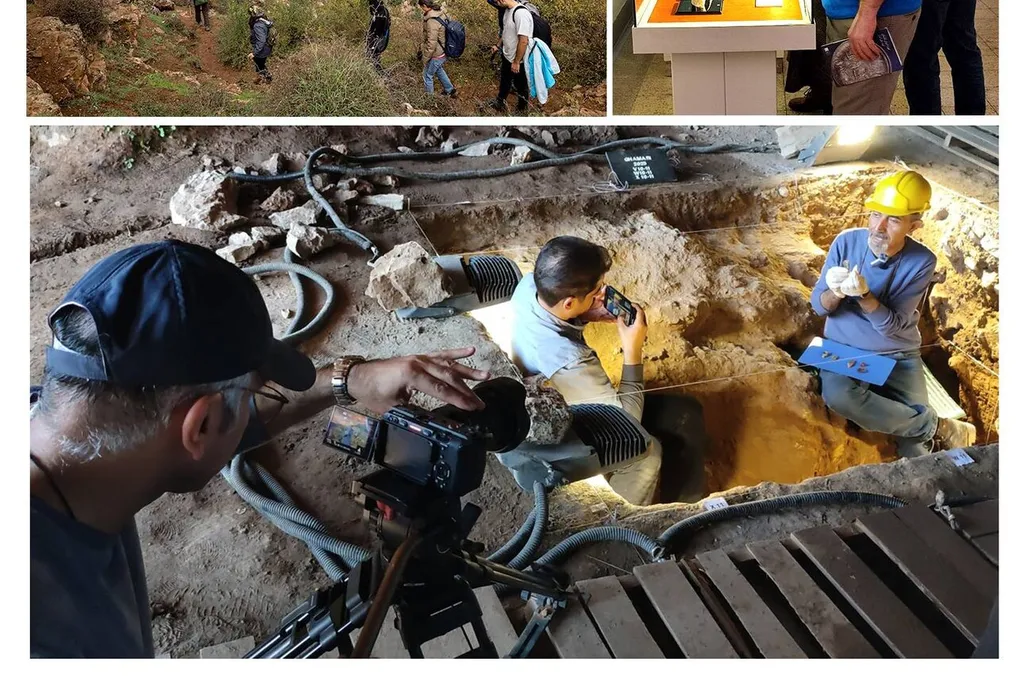
The Khorramabad Valley holds a unique position within this broader archaeological landscape. Its caves, including Kunjji, Yafteh, and Gamari, hold vital evidence for reconstructing Paleolithic lifestyles and studying long-term occupation of the Zagros. The inscription of the Prehistoric Sites of the Khorramabad Valley on the UNESCO World Heritage List in 2025 was a major achievement for Iranian archaeology. As a member of the nomination group, I personally witnessed the importance of a rigorous scientific basis to ensure the international recognition of archaeological heritage. This inclusion provides a crucial opportunity to advance archaeological research, strengthen site management and conservation, and communicate the valley's significance to local communities and the international audience.

My work in Gilan province has also led to a dialogue between prehistoric studies and broader cultural heritage issues through my participation in the UNESCO nomination for the Masuleh Cultural Landscape. This experience highlighted the value of studying cultural landscapes across different time periods, taking into account the ecological and historical processes that shaped them. Archaeological research can extend this perspective beyond existing architectural structures and documented history to explore deeper connections between people and their environments.

Museums play a crucial role in connecting archaeological research with public understanding. In 2001, I headed the creation of the Paleolithic Gallery at the National Museum of Iran to present archaeological evidence in a format accessible to a wider audience. Stone tools may seem simple at first glance, but their technological characteristics, raw materials, and archaeological contexts can reveal important aspects of past human behavior upon careful interpretation. The task of museums is to clearly convey these findings while maintaining the scientific context necessary for their interpretation.

The establishment of the Zagros Paleolithic Museum in Kermanshah extended this work to a region whose archaeological heritage constitutes a significant part of Iran's Paleolithic legacy. Regional museums are particularly valuable because they connect archaeological discoveries to the landscapes and communities from which the evidence originates. Recently developed Paleolithic exhibits at the Lorestan Archaeological Museum in 2024 further reinforced the representation of Western Iran's prehistoric heritage within its regional context. National and regional institutions together can help the audience appreciate the diversity of Iran's archaeological heritage and its contribution to our understanding of human history.

Museums also play a central role in the responsible management of archaeological collections. The scientific value of an artifact depends not only on its physical characteristics but also on its provenance, stratigraphic position, and connection to other evidence. When these interconnections are lost, important opportunities for interpretation and future research diminish or disappear entirely. Therefore, documentation, preservation, and responsible curatorial practice must remain integral parts of archaeological practice.

International Archaeology Day provides a moment to acknowledge the scientific and public value of Iran's Paleolithic heritage. Advancing research requires continuous fieldwork, renewed study of existing collections, interdisciplinary collaboration, and strengthening the links between research institutions and the public. Such efforts can more fully integrate Iran's archaeological heritage into international scientific debates while ensuring that future generations of researchers have access to the evidence, expertise, and institutional resources needed to study it.

As Head of the Paleolithic Department at the National Museum of Iran, my experience in fieldwork, museum development, and UNESCO nominations has underscored the importance of linking scientific inquiry with public interpretation and long-term heritage management. Archaeology achieves its greatest value when discoveries contribute not only to scientific understanding but also to a broader recognition of the common human past. Iran's Paleolithic heritage offers an exceptional platform for advancing this understanding, connecting the history of human adaptation in deep antiquity with the responsibilities of scientific research and cultural stewardship today.

Popular