Central government announced salary indexation increase for civil servants
Read more
Aaj Tak
www.aajtak.in

Central government announced salary indexation increase for civil servants

The state government has made an important decision by announcing an increase in the inflation allowance for central employees. For a long time, central workers have been expecting the government to grant them a salary indexation increase for the Diwali holiday.

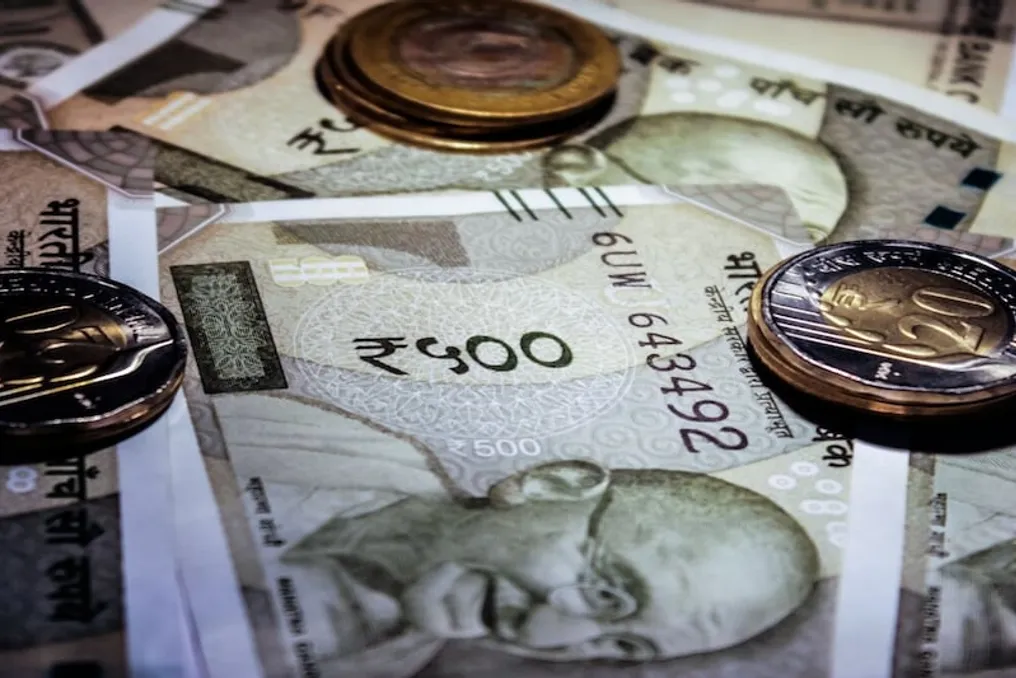
Just before Diwali, the Cabinet approved an increase in the inflation allowance, providing a significant gift to civil servants. An increase of 3 percent in the inflation allowance was approved for employees of the central government. Consequently, the inflation allowance for these workers increased by 3 percent, reaching 63 percent.

This increase in the inflation allowance applies to July. As a result of this increase, the salaries of central employees will increase in October. The total government expenditure related to this will amount to 10,016 crore rupees.

Similar stories

Central Minister Hardeep Puri announced favorable purchase of Russian oil despite US pressure
Read more
www.aajtak.in

Central Minister Hardeep Puri announced favorable purchase of Russian oil despite US pressure

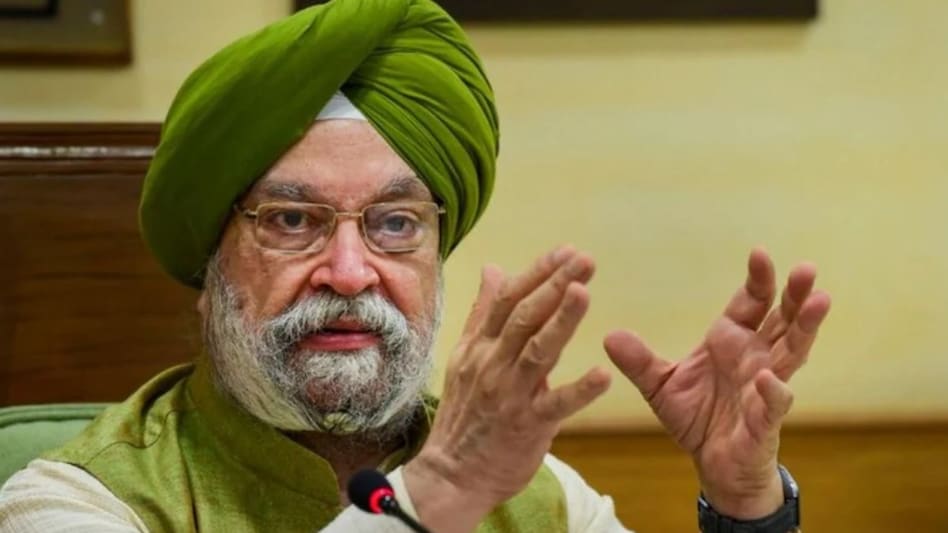
The Central Minister for Petroleum and Natural Gas, Hardeep Puri, noted that India took advantage of discounts on crude oil and purchased it at a lower price without any hesitation. Hardeep Singh Puri commented on the price cap imposed by Western countries on Russian oil, stating: 'I am a sardar outside, but in energy matters, I am a businessman.'

Hardeep Puri explained that his approach is based on commercial foresight, and buying cheap fuel is in the country's interest. He made this statement during the 29th Energy Technology and Innovation Meeting (ETM 2026), which took place on October 27, 2026, in Goa.

The Minister reported that one of his American partners advised him not to miss the opportunity to buy oil at a reduced price. Despite statements from European countries, he chose the more affordable option over expensive fuel. Puri said: 'There was a colleague named Mos. He called me and said: we have no problem, buy oil from Russia, but it would be better if you buy oil at low prices.'

He continued that the imposition of the European price cap means the inability to buy expensive oil. Puri added: 'For a person like me, this was good news because I am a sardar outside, but in energy matters, I am a businessman. Therefore, I said: I can buy oil, and I can buy it cheaply, that was very good, so we bought the oil.'

These statements came amid discussions about pressure on India to reduce imports of Russian oil. Previously, Puri clarified that he did not feel pressure from America. He emphasized that India makes decisions based on its national interests. Before the war, the share of Russian oil imports in India was only 0.2 percent, but after receiving discounts, this figure has significantly increased. Currently, refineries are increasing purchases from sources, including the Middle East, based on prices and availability.

At the same event, Hardeep Puri reiterated that India has never felt pressure from America regarding oil procurement. He noted: 'I have never felt pressure, and I do not think my bosses ever exert pressure.' He also added that it is beneficial for world peace if global energy prices remain low.

Sarvam captures dominant position in Indic AI funding in 2026, securing 87% share, according to Tracxn
Read more
business-standard.com

Sarvam captures dominant position in Indic AI funding in 2026, securing 87% share, according to Tracxn

According to a report by the analytical platform Tracxn, Sarvam, a developer of advanced models for India, secured nearly 90 percent of the total funding raised by startups creating artificial intelligence (AI) for Indian languages in 2026.

Sarvam accumulated $346 million out of the total $399 million attracted by Indic AI companies. This occurred amid growing concerns about AI sovereignty. Earlier this year, Sarvam completed two funding rounds totaling $255 million and $90 million.

Excluding Sarvam, other companies attracted $54 million across seven rounds, which is higher than the $23 million raised over nine rounds last year. Between October 2021 and 2026, the Indic AI ecosystem collectively attracted $657 million in 56 rounds. This funding model indicates a trend of investors concentrating on a few companies they believe have high potential.

Besides Sarvam, Gnani AI, whose speech recognition is trained on a decade of Indian call center audio recordings, closed a funding round of $4.2 million in July.

Geopolitical Influence on Funding

The report notes that funding for sovereign AI models gained momentum after the US government made an unsubstantiated decision to restrict the export of Anthropic's Fable 5 and Mythos 5 models shortly after their public release and suspended access to them. This raised questions about AI sovereignty and whether American companies developing advanced models are becoming too powerful a tool in the hands of the Trump administration to exert excessive influence.

The report adds that 'this halt turned an abstract debate about dependence on foreign AI into a concrete one: access to advanced models can be revoked by order of a foreign government without warning, although access was restored. Sarvam, one of four selected sovereign models by the government, conducted two rounds in the eight weeks following this.'

In addition to Sarvam and Gnani, Soket plans to develop the first open foundational model in India with 120 billion parameters, optimized for the country's linguistic diversity, targeting sectors such as defense, healthcare, and education. Gan AI intends to create a multilingual foundational model with 70 billion parameters designed for text-to-speech conversion functions.

Sarvam, supported by HCLTech and Nvidia, plans to release a trillion-parameter model within the next six months, which is a significant step forward compared to its existing billion-parameter models. The company also plans to open an office in San Francisco to attract AI talent.

The report covers 34 companies divided into two categories: language as a product and language as a differentiator. Sarvam, Gnani, and BharatGen belong to the first category, while Skit.AI, Nuplay, and GreyLabs are in the second category.

The report explains that two developments will define the next phase of growth. Global model providers are beginning to directly penetrate the language gap that these companies were initially meant to fill: Gemini natively supports nine Indian languages and is trained on over 100, and OpenAI released a special benchmark for the Indian language developed with the participation of 261 subject matter experts across 12 languages. The product level competes most directly with this advancement, while the differentiator level, whose value is based on corporate workflows and client relationships, may be less susceptible to this influence.

In conclusion, it is noted that 'the first late-stage round in this group will show that at least one company has crossed the threshold from building to scaling.'
Popular