
Mokale develops hydroponic solutions for novice farmers facing resource scarcity
Read more
Food For Mzansi
foodformzansi.co.za

Mokale develops hydroponic solutions for novice farmers facing resource scarcity

Due to shortages of land and water, novice farmers are increasingly turning to innovations in hydroponics. In the 'Farmer Mentor' segment, engineer-entrepreneur Mogale Mokale shares practical advice on how to start small, acquire technical skills, and gain market access.

Mogale Mokale, founder of AB Farms, applies engineering knowledge and hydroponic technology to help farmers maximize limited resources, increase production levels, and explore new markets.

Hydroponics can serve as an alternative method for growing fresh produce for farmers who face limited access to land, water, and reliable electricity. However, Mokale emphasizes that implementing this technology requires careful planning, patience, and a willingness to learn.

Mokale, a graduate of mechanical engineering from the University of Johannesburg, became interested in agriculture while researching urban farming in Gauteng in 2016. His research highlighted the difficulties faced by urban farmers, particularly limited growing space and water scarcity.

Realizing the potential to overcome these limitations with technology, he began studying hydroponics—a method of growing plants without soil using nutrient-based water solutions. He noted: 'I thought there had to be some technological solution around the problem of insufficient accessible space, as well as insufficient water.'

After studying existing systems, Mokale designed a hydroponic solution adaptable to South African conditions, including areas with unreliable power supply. Today, AB Farms designs, manufactures, and installs hydroponic systems for small and medium-sized farms, while also growing and selling vegetables using its proprietary technology.

It is no surprise that Mokale was named a finalist for the 'Gauteng Young Farmer of the Year' award this year.

Hydroponics allows farmers to produce more food on smaller plots by using water more efficiently through recirculation. These systems can also be installed in locations where traditional cultivation is difficult, such as on rooftops or on land with less fertile soil.

Mokale believes this makes the technology particularly relevant for farmers who cannot easily expand their land holdings. He observes: 'If you think about Gauteng, we are already a small province overall, so we won't get more land.'

Among the crops farmers can consider are leafy greens such as spinach, mangold, and lettuce, as well as herbs and microgreens grown using hydroponic systems. Other suitable options include tomatoes, peppers, and cucumbers.

Growing under infrastructure also helps farmers manage certain weather-related risks and maintain yields amid climate change. Nevertheless, Mokale warns that hydroponics is not a quick path to profitability; he advises farmers to understand the technology and its financial implications before making large investments.

For farmers interested in adopting hydroponics, Mokale recommends starting with a small system to gain practical experience and gradually scaling up as knowledge and confidence grow. He acknowledges that hydroponics is more technical than traditional farming and requires open-mindedness, patience, and a desire to experiment.

Farmers should also have realistic expectations regarding the return on investment. Benefits may not appear immediately, and production alone does not guarantee a viable business.

Market access is another crucial aspect. AB Farms supplies products to processing companies that serve restaurants and hotels, independent retailers, and the Johannesburg fresh produce market. Mokale urges farmers to engage with potential buyers at local markets and determine demand for their produce before increasing production volumes.

In addition to providing technology and growing produce, AB Farms uses its farm as a demonstration, research, and training site. This allows farmers to see the systems in operation, learn how to use them, and gain hands-on experience.

Mokale is convinced that collaboration and skill development are essential for strengthening the agricultural sector, especially among small producers who may struggle with independent access to resources and markets. He asserts: 'We work better as farmers when we collaborate,' adding that sharing knowledge across different agricultural sectors, markets, and provinces can help mitigate risks and improve outcomes.

His message to young and novice farmers is to prepare for a challenging journey. Establishing an agricultural enterprise takes time, and issues such as weather, production, and market access can slow progress. He concludes: 'Perseverance and patience are what will help a great deal.'
Similar stories

Manaus records the most polluted air in Brazil; inland cities of Amazonas also show critical indices
Read more
g1.globo.com

Manaus records the most polluted air in Brazil; inland cities of Amazonas also show critical indices

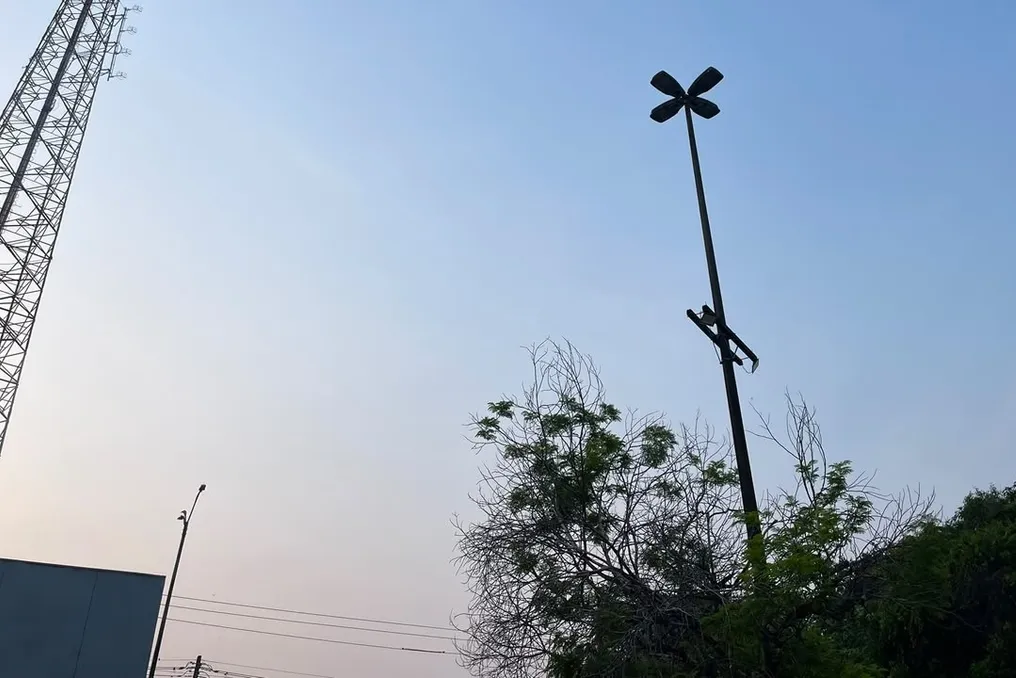
The air in the capital Manaus was classified as the most polluted in Brazil this Wednesday, the 28th. Data obtained through real-time monitoring on the global platform IQAir placed the Amazonian capital at the top of the national ranking for poor air quality, with an Air Quality Index (AQI) reaching 148, a level considered harmful to sensitive groups.

According to the monitoring, the concentration of pollutants in the city reached 54.8 µg/m³. This atmospheric contamination poses a serious environmental and public health alert, affecting residents of the capital and various riverside localities in the state's interior.

Additionally, the Environmental Surveillance Electronic System (Selva), belonging to the State University of Amazonas (UEA), also signaled a deterioration in air quality. Around 6:20 AM, monitored points in the capital showed indices classified as 'poor' and 'very poor,' with particle concentration reaching 81.8 µg/m³ in one of these locations, in the Morro da Liberdade neighborhood.

For reference, Selva considers air quality good when particle concentration remains between 0 and 25 µg/m³. Above this limit, indicators are categorized on scales ranging from moderate to very bad, depending on the system used.

Inland cities record pollution

Air degradation is not limited to the capital, severely affecting other municipalities in Amazonas. Real Selva stations reported high levels of harmful particles spread throughout the state's interior:

  • Iranduba: Showed a concentration of 106.5 µg/m³, placing it among the most severe conditions in the state.
  • Maués: Registered 88.4 µg/m³ of fine suspended particles in the air.
  • Itacoatiara: Reached 73.4 µg/m³, maintaining its air quality classified between 'poor' and 'very poor.'
  • Urucurituba: Pointed to 60.2 µg/m³, which also demonstrates a strong compromise of breathable levels.

Fires in Pará may carry smoke to Amazonas

In a statement made on Monday, the 26th, the governor of Amazonas, Roberto Cidade, warned that the fires occurring in southern Pará have the potential to transport smoke to the state in the coming hours. He informed that the fire hotspots are mainly concentrated in the area of Itaituba, located near the border between the two states.

During a press conference, Cidade mentioned that the government of Amazonas plans to establish contact with the government of Pará to discuss strategies for containing the fires. The governor emphasized that, although the arrival of smoke is not immediate, it could reach Amazonas within two to three days.

He stated: 'A large part of where the fires are happening is in southern Pará, it is there in Itaituba, on the border with our state, there in Lower Amazonas. We are already working so that we can do our part here in our state, but I will also ask with our team to contact the government of Pará.'

Smog recorded in Tashkent: PM2.5 levels reached dangerous marks at night
Read more
podrobno.uz

Smog recorded in Tashkent: PM2.5 levels reached dangerous marks at night

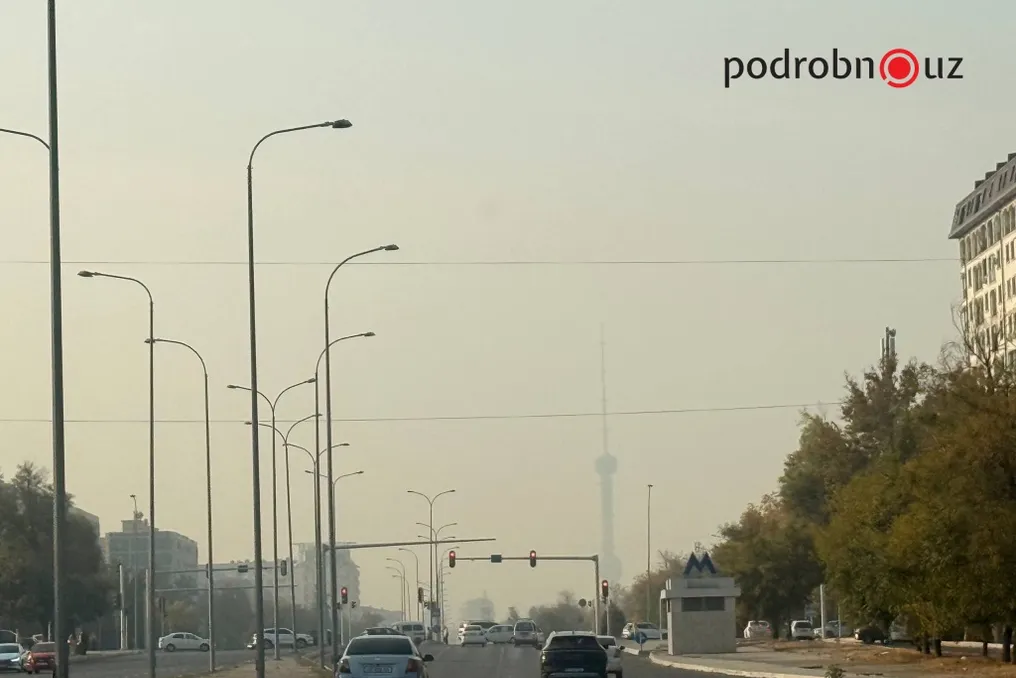
On the night of October 27 to 28, Tashkent faced air pollution. Due to the lack of wind and falling temperatures, harmful substances could not disperse and accumulated near the ground surface. Specialists recorded dangerously high concentrations of fine PM2.5 particles in five districts of the city.

According to environmental monitoring data, the air quality in the capital was at a 'unfavorable' level according to the international AQI index during the night. At some stations, indicators reached the 'very unfavorable' category. According to the national index, the average pollution level of PM2.5 particles was assessed as 'yellow', and for PM10 as 'orange'.

Measurements were conducted in Yunusabad, Almazar, Yangiha'it, Sergeli, and Yashnabad districts, where the 'very unfavorable' category was observed at all points. Specialist forecasts indicate that on the afternoon of October 28, the air quality in the capital will remain 'unfavorable' according to the international AQI index. On the national scale, a 'yellow' level is expected primarily, although it may periodically rise to 'orange', and the situation may also remain dangerous in the evening.

Environmentalists advise the population: children, the elderly, pregnant and breastfeeding women, as well as those suffering from heart and respiratory diseases, are advised to avoid being outdoors in the evening and at night. If going outside is necessary, a protective mask should be used, and time spent outdoors should be minimized. It is recommended to keep windows closed in residential premises to prevent the infiltration of polluted air.

A specialized atmospheric laboratory operates in Tashkent, which studies the composition of the air and determines the main sources of pollution. This work is necessary to understand the factors contributing to the accumulation of harmful impurities and to develop measures to combat them.

Popular