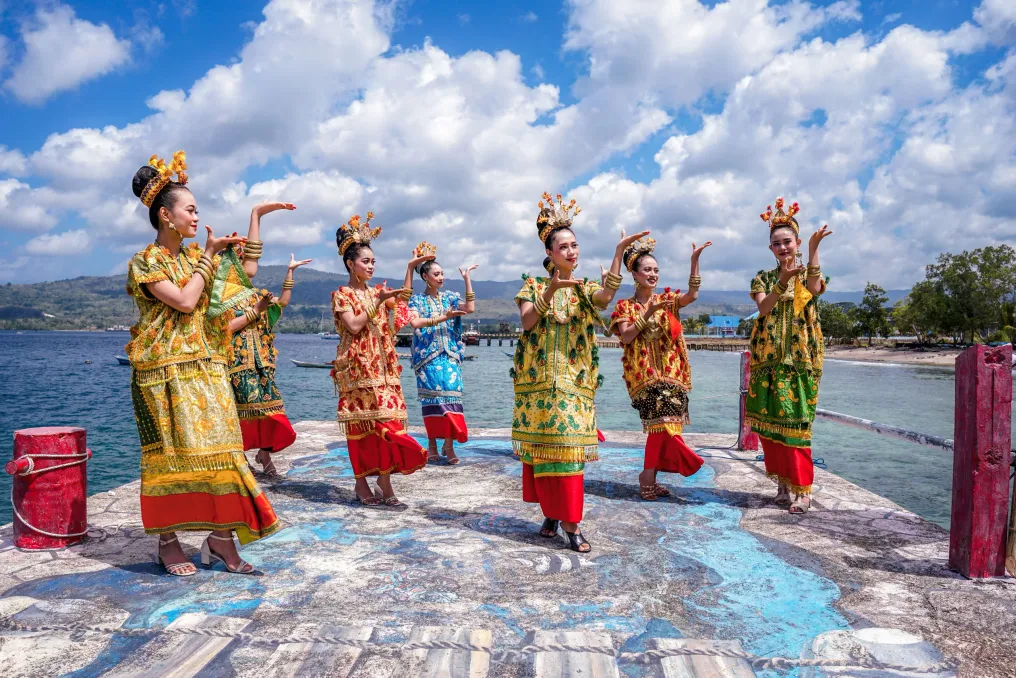
Sulawesi, located between Borneo and the Moluccas, has a shape resembling the letter K. Its volcanic highlands, dense tropical forests, and coastal areas support exceptional biodiversity, while its unique cultures offer travelers a different perspective on Indonesia. Despite the significant distances, the island rewards those willing to deviate from standard tourist routes.
Off the coast of Manado is Bunaken National Marine Park, which protects coral reefs, steep underwater walls, and diverse marine habitats within the Coral Triangle. Diving is the main attraction here, but snorkeling offers a more accessible way to explore shallow reefs. Local operators in Manado can arrange boat trips to surrounding islands; it is recommended to choose responsible operators, maintain distance from marine animals, and avoid touching corals.
Near Bitung is Tangkoko Reserve, which protects a tropical forest inhabited by Sulawesi black macaques, tarsiers, and hornbills. Tarsiers, tiny nocturnal animals, are one of the main attractions due to their large eyes, which help them navigate the forest after dark. The best way to find them is by taking excursions with experienced local guides. Black macaques are more often seen during the day; distance should be maintained, and they should never be fed. Staying near the reserve facilitates organizing early morning and evening trips.
In the highlands of South Sulawesi, Tana Toraja is known for its rice paddies, green valleys, and traditional Tongkonan houses with characteristic curved roofs, reflecting generations of family history. Rantepao serves as a convenient base for visiting Kete Kesu, where traditional houses and rice barns are located, as well as Lemo rock tombs. The burial caves in Londa offer another glimpse into Torajan ancestral traditions. Funeral ceremonies, known as Rambu Solo, unite families and communities to honor the deceased, sometimes over several days. These events hold significant cultural importance and are not tourist performances; if you are invited, you should follow the family's wishes and ask permission before taking photos.
Trekking between villages allows for a closer look at mountain life, and the local coffee is worth trying. Several days should be allocated to this region, as the journey from Makassar takes a long time.
In southeastern Sulawesi, Wakabobi National Park protects extensive coral reefs within the Coral Triangle. Its name combines the first syllables of four islands: Wangi-Wangi, Kaledupa, Tomia, and Binongko. Divers come for the diverse underwater landscapes and marine fauna, while snorkelers can explore shallow reefs. Tomia is a popular diving base, Hoga Island attracts snorkelers, and Wangi-Wangi serves as a gateway to the archipelago. This region is also home to coastal communities, including the Bajo, or Sama-Bajau, whose maritime traditions span parts of Southeast Asia. Permission should be sought before photographing residents, and local businesses should be supported whenever possible. Reaching Wakabobi requires careful planning, as connectivity varies depending on the island, and boat crossings depend on sea conditions.
Central Sulawesi offers forested highlands and archaeological sites outside the island's more famous destinations. Lore Lindu National Park protects important wildlife habitats, and the adjacent area contains ancient megalithic structures included in the UNESCO Tentative List of World Heritage Sites. The region provides opportunities for trekking and birdwatching, as well as insight into Indonesia's lesser-known archaeological history. Further south, Bira is famous for its beaches and traditional shipbuilding. In Manado, try Tinutuan, a vegetable rice soup, alongside fresh fish and chili-rich dishes characteristic of Minahasan cuisine.
Local markets and eateries provide an easy way to experience regional cuisine and daily life. Rather than trying to cover the entire island, it is better to select a few areas that match your interests. The optimal time to visit depends on the region. In most of southern Sulawesi, the dry months are typically from May to September or October, making travel and hiking more comfortable. Some Torajan funeral ceremonies take place between July and September, although dates vary by family. Diving conditions differ between Bunaken and Wakabobi, so information should be confirmed with local operators before booking. Manado is a useful entry point to North Sulawesi, while Makassar provides access to the southern highlands. Accessing remote islands may require domestic flights and boat transfers, so flexibility should be built into the itinerary. Sulawesi combines coral reefs, rare wildlife, highland villages, and cultural traditions that remain part of daily life. Exploring this place requires time, but the reward is an experience beyond beach relaxation. For travelers seeking another side of Indonesia, Sulawesi is an invitation to explore at a slower pace, with curiosity and respect for the people and environment that make it exceptional.