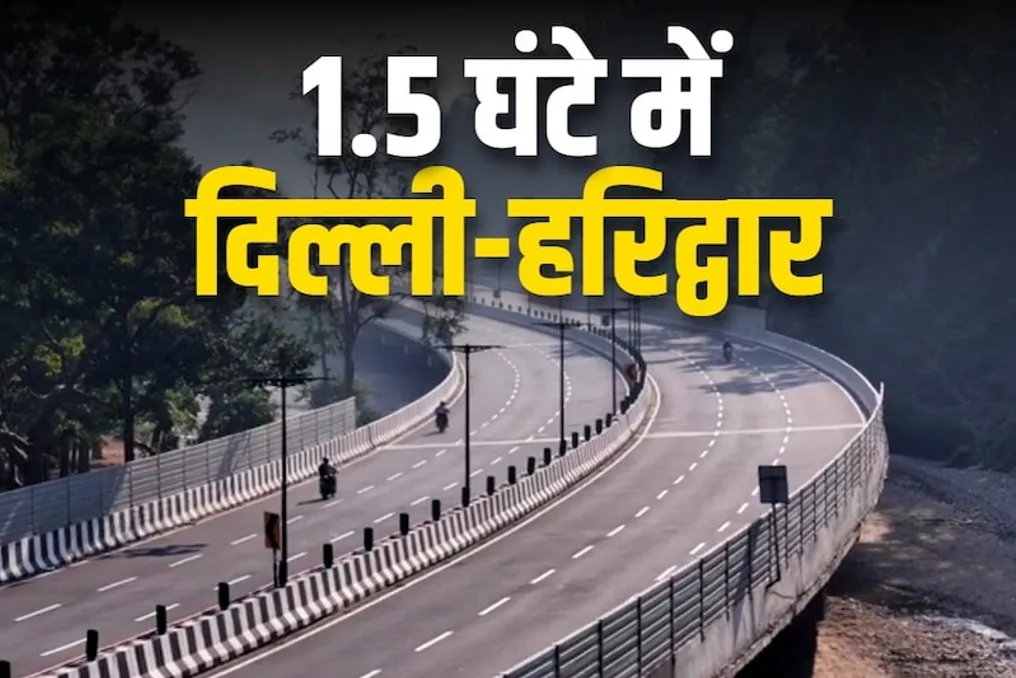
Those planning a trip from Delhi to Haridwar can soon significantly simplify their journey. The route, which currently takes three to four hours, will soon take only an hour and a half. Union Minister of Road Transport and Highways Nitin Gadkari announced the reduction in travel time between Delhi and Haridwar.
He stated that the new expressway connecting Delhi and Haridwar will be ready within the next two months, which will substantially decrease the arrival time from Delhi to Haridwar.
Previously, after the opening of the Delhi-Dehradun expressway, the travel time between these cities was reduced. If the trip from Delhi to Dehradun used to take about five to six hours, it now takes approximately two hours. This has created expectations among Delhi residents traveling to Haridwar regarding improved transport accessibility on this route, which is now confirmed by Nitin Gadkari's statements.
The reduction in travel time to an hour and a half will bring significant benefits to tourists, pilgrims, and those planning weekend trips. Residents of Delhi-NCR will be able to leave for Haridwar early in the morning to take a ritual dip in the Ganges and easily plan the return trip on the same day. This, in turn, may lead to an increase in visitors to Haridwar and neighboring tourist spots.
Addressing the National CII conference on 'The Future of India,' Union Minister Nitin Gadkari emphasized the critical importance of strong infrastructure for the economic development of any country. He noted that improving road conditions and building expressways promotes agriculture, industry, trade, and business. This facilitates the transportation of goods and reduces delivery times.
The minister also stated that the new expressway linking Delhi and Haridwar within two months will reduce the travel time to an hour and a half. He mentioned that logistics costs in India have decreased from the previous 16% to below 9%. According to Gadkari, developing basic infrastructure is the key and most important factor for the country's future development, as it allows for the development of agriculture, productivity, industry, trade, and business.
Gadkari compared the situation with logistics costs: about two years ago, the issue of logistics was discussed. In China, logistics costs were around 8% of GDP, whereas in India they reached 16%, creating serious obstacles for the Indian economy in international trade. However, he expressed happiness by reporting that India's logistics costs have dropped from 16% to a single-digit figure of 9%, which is lower than the figures for China (8%) and the USA (12%).
Examples of improved transport accessibility include reducing the travel time from Delhi to Meerut from three and a half hours to 45-50 minutes, and from Delhi to Jaipur from five hours to two hours. Furthermore, it is expected that the road journey between Bangalore and Chennai, which previously took four to five hours, will now take about two hours. This leads to a reduction in logistics costs and stimulates tourism and development.
In conclusion, Nitin Gadkari announced plans to develop 36 green expressways, which will bring radical changes to the landscape of development and the country's transport system. Work is underway for road infrastructure projects in Delhi worth about 1,60,000 crore rupees. He also noted that 49% of capital expenditure in tourism will contribute to job creation. An example of such a project is the Char Dham initiative, which costs approximately 12,000 crore rupees, and 85% of the work on it is complete. Thanks to this, the number of tourists traveling from Delhi to Badrinath and Kedarnath has tripled compared to previous years.