
Oracle NetSuite Asia Head Names India as Priority Market, Highlights Potential of Tier-Two Cities
Read more
Business Standard
business-standard.com

Oracle NetSuite Asia Head Names India as Priority Market, Highlights Potential of Tier-Two Cities

A senior company executive stated that India is one of the most priority markets for Oracle NetSuite. He also noted that small businesses in India, especially outside major metropolises, are increasingly using artificial intelligence (AI) and cloud technologies to expand into new territories, including abroad.

During the Oracle AI World event, speaking to PTI, Amit Suksen, Vice President of Group and Head of Asia at Oracle NetSuite, the AI-powered business management platform, reported on the growing pace of development among Indian enterprises over the last four to five years.

Suksen emphasized that one of India's significant advantages is its young population, which is inherently oriented towards using cloud and AI technologies, unlike some other developed economies that prefer using outdated systems.

He added that technology helps bridge the gap between large and small firms, allowing small businesses to grow beyond their original city. Previously, studying a new market required expert teams only in large companies; however, now small businesses can use AI to check rules and regulations of another state, make decisions about entering or exiting a market, and manage fluctuations such as currency changes.

Suksen identified tier-two cities as the biggest opportunity for the company's growth in India but pointed out that cost concerns restrain small traders and entrepreneurs in these regions. He reported that conversations with business owners showed that technology adoption in cities outside the main metropolises lags due to fear of expenses, and NetSuite aims to demonstrate to these businesses that implementing AI is not as expensive or complex as they think.

In addition to tier-two cities, the company optimistically views sectors such as software, accounting, insurance, as well as manufacturing, retail, and food and beverage. Regarding concerns about uncontrolled behavior of AI agents, Suksen stated that strict control is critical. He explained that the risk exists for organizations that have not implemented all necessary checks and balances, but NetSuite provides built-in rules ensuring complete owner control over the actions the AI agent performs on their behalf.

Comparing the situation to the shift to cloud computing 28 years ago, Suksen noted that companies remaining on old local systems are 'truly behind,' while those who adopted cloud solutions early are outpacing competitors. He advised everyone to adopt AI now, as refusing to do so means missing a growth opportunity that allows for doing things previously unimaginable.
Similar stories

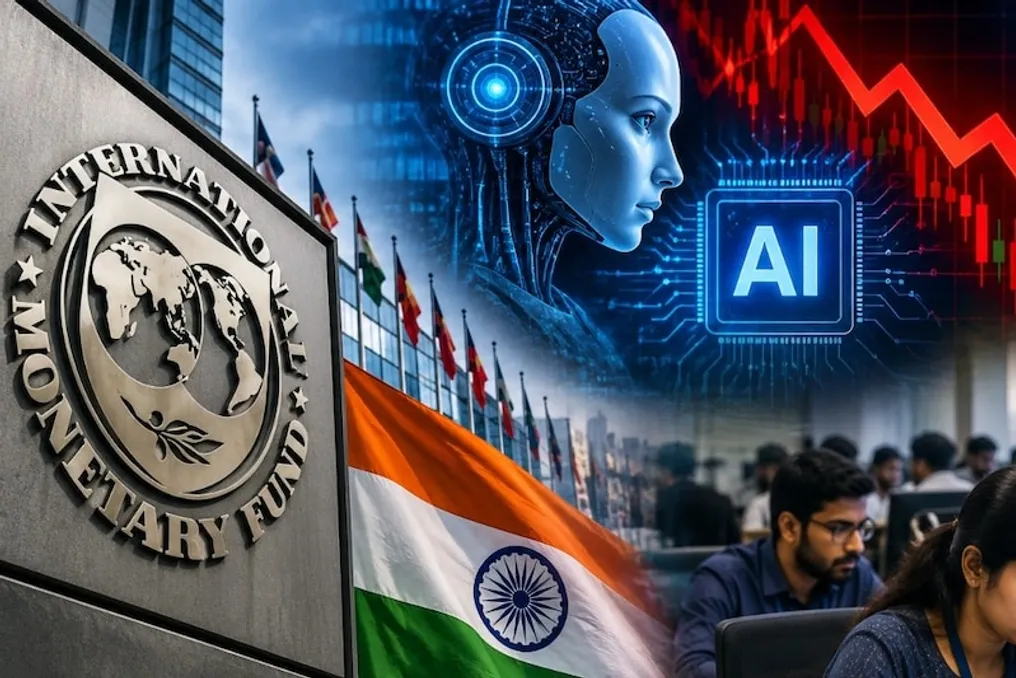
IMF warns of risks for emerging markets, reflected in stock market
Read more
www.aajtak.in

IMF warns of risks for emerging markets, reflected in stock market

Athenas Vamakisidis, Deputy Director of the IMF's Department of Currency and Capital Markets, told Business Today that improvements in global artificial intelligence (AI) markets could indirectly harm India. He noted persistent concerns regarding capital outflow from emerging markets, as well as the future of the technology services and banking office operations sectors.

Vamakisidis emphasized that although India does not hold as significant a share in the AI ecosystem as other markets, changes in investment sentiment in developing countries, driven by the desire to reduce risks, could also affect investments in India. He clarified that the cause of this influence would not be the emerging markets themselves, but rather the general trend toward risk reduction.

This warning came at a time when the IMF identified rising sovereign bond yields, potential corrections in the AI stock market, and cybersecurity threats as risks related to global financial stability. Vamakisidis pointed out that the increase in government bond yields is an immediate concern. Further growth in this yield could lead to a decline in the stock market, including AI stocks, which would have a broad impact on the bond market, the credit market, and the real economy.

He also commented on the possibility of an 'AI bubble,' noting that current valuations are not excessive due to strong company earnings. Nevertheless, any weakening of corporate earnings could increase valuation pressure and stimulate sell-offs.

India faces an additional risk related to the impact of AI on traditional areas of technology services, software, and office operations where the country has achieved significant success. On the other hand, there are concerns that AI could negatively affect back-office operations, logistics, and software, areas where India is particularly strong. However, he cautioned against drawing definitive conclusions about the potential impact.

Vamakisidis added that market reactions to concerns about AI disruptions are sometimes excessive, and the IMF does not yet see a similar impact on the real economy data.

Against the backdrop of the IMF's warning, the Indian stock market saw a significant decline, especially in the banking, AI, and technology sectors, where selling continued. The IMF also issued warnings specifically regarding these sectors. Although several other factors contribute to this decline, such as rising crude oil prices, quarterly reports, and the sell-off of large-cap stocks, it remains unclear how the market will react to this warning going forward.

Popular