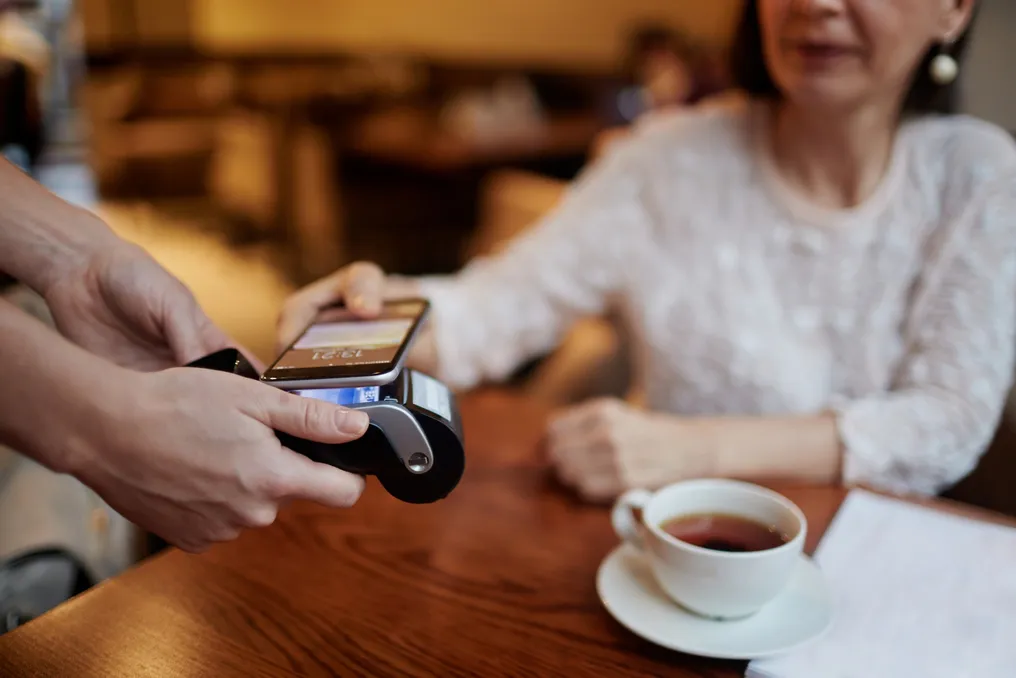
New meal and food voucher rules take effect in November, promoting greater card interoperability.
Read more
Grupo Globo
g1.globo.com

New meal and food voucher rules take effect in November, promoting greater card interoperability.

A significant change is about to be implemented for those who use meal or food vouchers issued by companies such as Alelo, Ticket, VR Benefícios, Pluxee, Flash, or Swile. Starting in November, these cards must be accepted at any payment terminal enabled for this type of benefit, concluding a transition phase that began in May and expands the possibilities of using the benefit.

This determination is part of a set of new guidelines from the Worker Feeding Program (PAT), which was announced by the government in February of this year. In November, the adaptation period ends, and the rule that guarantees that any card belonging to the program can be used at any machine capable of receiving the benefit comes into full effect.

The main transformation introduced is called interoperability, which simplifies the operational scenario. In practice, this feature eliminates the requirement for restaurants, supermarkets, and other points of sale to maintain specific agreements or equipment for each meal or food voucher brand.

What changes starting in November?

Although the integration between systems began in May, the adjustment period was completed last Saturday. Previously, some companies were still in the migration process. At the beginning of September, g1 reported that more than one hundred companies had been notified by the Ministry of Labor and Employment (MTE) to provide documentation and clarifications regarding possible failures in complying with PAT rules.

With full interoperability, the worker gains the freedom to use their card at any commercial location that accepts this benefit, without depending on the company that issued the card.

Will the benefit amount change?

There will be no change in the amount of the meal or food voucher provided by companies to employees under the new rules. Furthermore, the use of these resources for purposes other than food remains prohibited. Thus, the amounts remain exclusively intended for the purchase of ready meals or food items, according to the benefit modality. The change aims to broaden the options for using the benefit and foster competition in the sector, without increasing the amount received by the worker.

What has changed since February?

Even though full interoperability only starts to apply in November, other regulations have been in force since February. Among the most relevant changes are: a maximum limit of 3.6% for the fee applied to sales processed with meal and food vouchers; a ceiling of 2% for the exchange fee; and a maximum period of 15 calendar days for the sales money to be transferred to the establishments.

Previously, merchants frequently complained about high fees and long waiting periods to receive payments, which could exceed 30 days. The government justifies these rules as an effort to reduce costs and make the acceptance of benefits more advantageous for businesses of all sizes.

What do the operators say?

After the disclosure of the new rules, some operators have challenged the decree legally. These companies argue that the government exceeded its authority by establishing tariff limits and promoting structural transformations through a decree.

What happens if the rules are not complied with?

Contracts and operations linked to the PAT must strictly adhere to the guidelines established in the decree. Non-compliance with these rules can result in various consequences, such as fines, sanctions, de-registration from the program, and the requirement to return tax benefits previously enjoyed. Penalties may fall on the operators, the companies participating in the PAT, and the businesses, depending on the nature of the infraction found.
Similar stories

Samsung 55-inch 4K TV becomes more affordable at ₹17,900 during Flipkart sale
Read more
www.aajtak.in

Samsung 55-inch 4K TV becomes more affordable at ₹17,900 during Flipkart sale

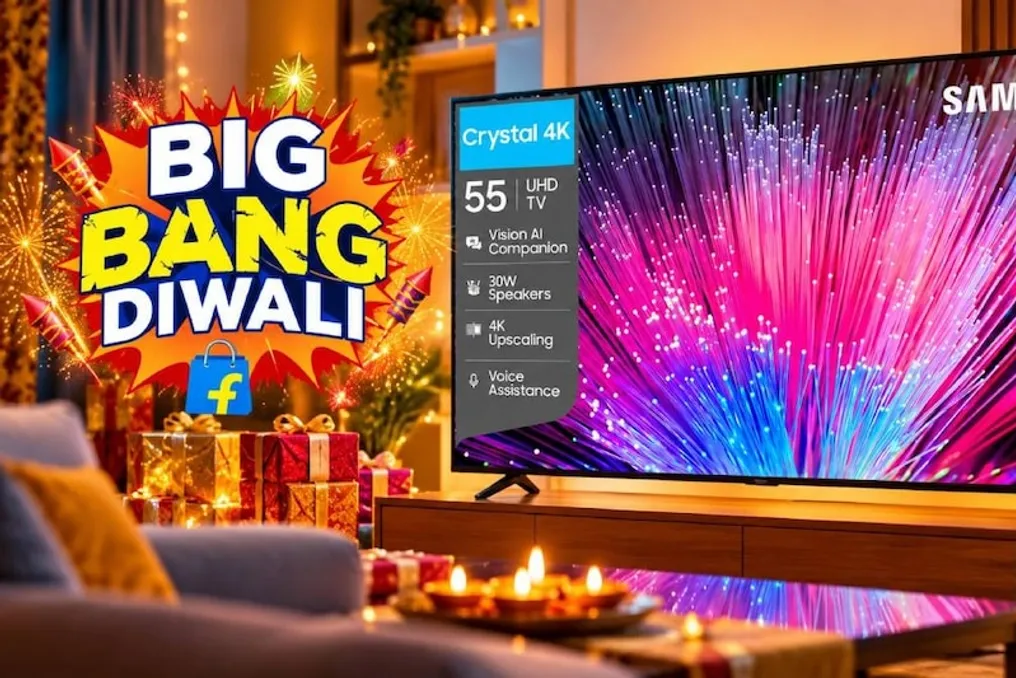
The e-commerce platform Flipkart has launched the Big Bang Diwali Sale, offering significant discounts on numerous electronic goods. Specifically, a favorable deal on a 55-inch television was featured.

The Samsung Crystal 4K Vision AI TV is part of the Big Bang Diwali Sale promotion. Its original Maximum Retail Price (MRP) is ₹53,900, but during the sale, it can be purchased for ₹42,999. With the special offer, the price of the television can drop to ₹35,999, representing savings of approximately ₹17,900 from the MRP.

Regarding the display, this television is equipped with a 138-centimeter ultra-HD 4K screen, which corresponds to 55 inches. The large screen enhances the viewing experience for movies and web series. The television also features a 50Hz refresh rate, ensuring comfortable daily viewing.

In terms of sound, the television is equipped with two speakers providing a 30W output signal. This allows users to enjoy rich sound along with high-quality picture, which is ideal for watching sports events and movies. The Samsung television runs on the Tizen operating system, offering smart TV features for accessing various applications.

Three HDMI ports and one USB port are provided for connecting external devices, allowing connection of game consoles, set-top boxes, and other gadgets.

This sale on Flipkart may be useful for those planning to purchase a new television during this festive season.

Jio Platforms IPO sets 13 records on the Indian stock market
Read more
www.aajtak.in

Jio Platforms IPO sets 13 records on the Indian stock market

The Initial Public Offering (IPO) of Jio Platforms set a new historical precedent in the Indian stock market primary market. This IPO, with a volume of approximately 30,188 crore rupees, attracted over 1.38 million applications, and investors placed bids worth approximately 4.9 lakh crore rupees during the public offering. Combining the public offering and the fundraising process from anchor investors, the total demand reached nearly 7.4 lakh crore rupees. The offering created numerous new records in terms of its scale, institutional investor interest, and retail participation.

Largest IPO in Indian History

The Jio Platforms IPO became the largest in Indian history. After accounting for employee discounts, the final offering size was 30,188 crore rupees, surpassing the record set by Hyundai Motor India's IPO in 2024, which had a volume of 27,870 crore rupees. The declared IPO size was 30,213 crore rupees, based on a price range of 1,065 to 1,119 rupees per share.

Largest IPO with Entirely New Shares

The Jio IPO was a fresh issue, meaning the company raised funds by issuing new shares without including any portion of the offer from existing shareholders (Offer-For-Sale, OFS). Thus, it became the largest IPO in India where the entire amount was raised through the issuance of new shares. The company plans to use up to 27,500 crore rupees of the raised funds to repay or prepay debt of Reliance Jio Infocomm, and the remaining amount can be directed towards general corporate purposes.

Record Bids Worth 4.9 Lakh Crore Rupees

Investor demand also set a new record during the Jio IPO. For the available 19.75 crore shares, investors applied for 438.26 crore shares. Calculated based on the upper offering price, the value of these bids reached approximately 4.9 lakh crore rupees. The IPO was subscribed 22.19 times. This amount received through public bidding exceeded the previous record of about 4.39 lakh crore rupees set by LG Electronics India's IPO in 2025.

Institutional Investors Bid 3.87 Lakh Crore Rupees

Qualified Institutional Buyers (QIBs) also showed significant interest in the Jio IPO. In addition to anchor investors, this category received bids worth about 3.87 lakh crore rupees, exceeding the previously mentioned record of 3.86 lakh crore rupees. The QIB category IPO was subscribed 70.55 times. This category includes mutual funds, insurance companies, foreign portfolio investors, and other relevant institutions. A significant portion of the total IPO demand came from institutional investors.

Reliance Shareholders Bid 19,000 Crore Rupees

Separate shares were reserved for qualified shareholders of Reliance Industries in the Jio IPO. This category received bids worth about 19,000 crore rupees. This is more than double the previous record of 9,350 crore rupees recorded in the Bharat Coking Coal IPO in January 2026. Shares were reserved for Reliance shareholders worth up to 2,500 crore rupees, and this portion was subscribed 7.60 times. This indicates a high level of interest from existing Reliance shareholders in the Jio IPO.

First IPO with Over 1.38 Million Applications

Jio Platforms received a total of 13,865,535 applications. This surpassed the previous record of 97.33 lakh applications from the Varri Energies IPO. Jio became the first IPO in India where the number of applications exceeded one million. This record demonstrates enormous interest in purchasing the company's shares from various categories of investors, from small to large.

Record Retail Investor Participation

The participation of small, or retail, investors in the Jio IPO also set a new record. Retail investors submitted 10,513,429 applications. In this category, the bids amounted to about 26,000 crore rupees, and the retail segment was subscribed 2.72 times. To apply for the IPO, a minimum of 12 shares had to be purchased. The minimum investment at the upper price of 1,119 rupees per share was 13,428 rupees.

Reliance Shareholders Bid 21.62 Lakh

Reliance Industries shareholders also submitted a large number of applications in the Jio IPO. A total of 2,162,500 applications were received in this category. Within this reserved category, Reliance shareholders were given the opportunity to apply for Jio shares in addition to the regular investor category. The number of applications and the bid amount in this category also reached a new level.

Record Bids from Small HNI Investors

In the Small High Net-Worth Individual (Small HNI) category of the Jio IPO, there were over 5.75 lakh applications. This surpassed the previous record of 499,825 applications. This category receives bids worth over 2 lakh and up to 10 lakh rupees. The Small HNI investor segment was subscribed 10.2 times, receiving about 13,900 crore rupees in bids.

Large HNI Investor Bids Also Reach Record

The Jio IPO also set a new record in the Large HNI investor category, which submitted bids worth over 10 lakh rupees. In this category, the number of applications was 3.

UAE Reaches 84% of Target for Hotel Guests by 2031
Read more
www.khaleejtimes.com

UAE Reaches 84% of Target for Hotel Guests by 2031

The UAE Minister of Economy and Tourism announced that the country has reached 84 percent of its planned goal to attract 40 million hotel guests by 2031.

The UAE's tourism strategy for 2031 aims to increase the country's gross domestic product to 450 billion dirhams and attract an additional 100 billion dirhams in tourism investments, in addition to hosting 40 million visitors in hotels.

Abdulla Bin Tuk Al Marri, the UAE Minister of Economy and Tourism, specified that in 2025, the country welcomed approximately 33.9 million visitors, which corresponds to about 84 percent of the ambitious plans.

Speaking at the third event of the International Travel and Tourism Forum in Sharjah, Al Marri noted that the current period provides an opportunity to review priorities and strengthen cooperation between government bodies, companies, airlines, hotels, and tourism firms.

Popular