
Study shows heat-related deaths increased by over 30% in a decade
Read more
RTP Noticias
rtp.pt

Study shows heat-related deaths increased by over 30% in a decade

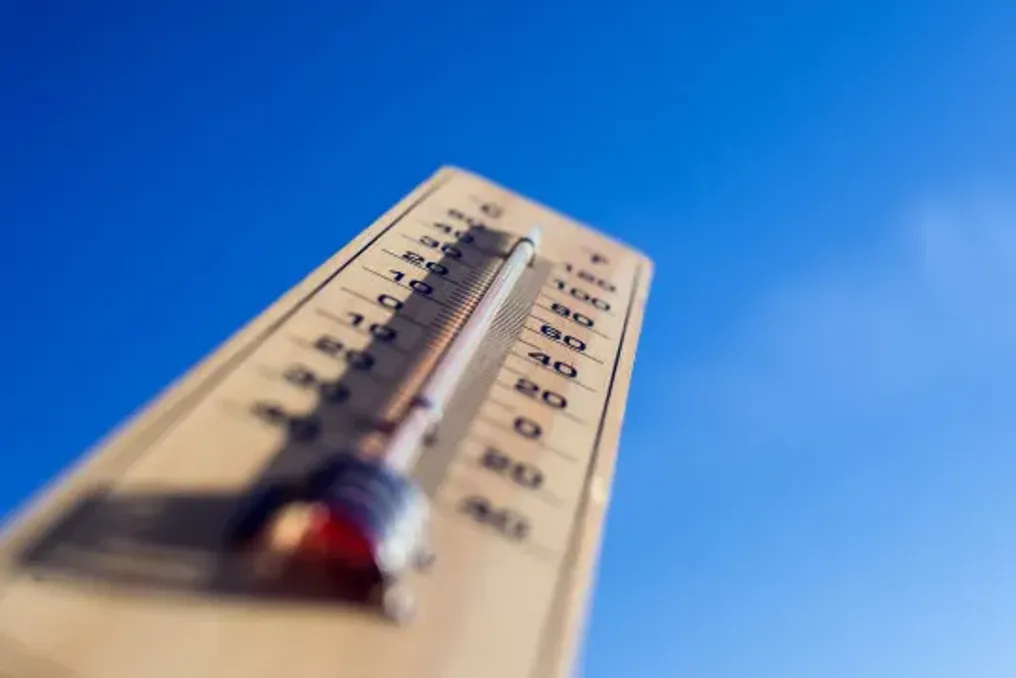
A recent study concluded that the number of deaths caused by heat registered an increase of over 30% over the last ten years.

In parallel with this discovery, other topics were addressed in the political and social sphere. There were reports of protesters who chose not to set up camps near Parliament but marked a return to protest activities.

In the legal sphere, an open letter signed by lawyers contested certain police interventions, defending the right to disobedience by PSP agents.

In politics, the Likud party, led by Netanyahu, achieved electoral victories, although its support bloc did not reach the necessary majority.

Other news included the departure of Flávio Bolsonaro from Brazil, heading to the United States, and debates about the State Budget proposal for 2027.

The PSP released videos on its social networks with the aim of documenting assaults suffered by the police. Furthermore, there were comments about the need for dialogue, with someone stating: 'I didn't like what I saw' and urging conversation.

Miguel Pinto Luz commented that the government needs to 'know how to listen,' but warned that 'part of the street is being instrumentalized.' In judicial matters, detainees in Rossio had to decide between paying fines or facing trial.

An inquiry commission related to Luís Neves' mandates was suspended during the OE2027 debate.

In real estate and infrastructure matters, there was controversy over the compensation value of the Glória Elevator, where Fidelidade contested the amount.

Internationally, Trump announced a ban on the use of the term Artificial Intelligence in the United States.

Regarding environmental and survival issues, Oleshky reported days of truce for a city forced to consume grass to survive.

Leaders of Finland and Norway held conversations with Putin and Zelensky.

In the European economic context, consumer confidence in France decreased in October, reaching its lowest level since 2013.

Amadeu Guerra rejected the claim of having challenged Parliament to modify legislation on demonstrations.

Alternative energy sources such as firewood and solar panels were mentioned to meet lighting needs.

Although last summer may have been the hottest ever recorded, projections indicate that the coming years will be milder, as Europe prepares for climate change.

In the housing sector, bank valuations of properties reached a record of 2,278 euros per square meter in September.

In educational terms, students protested demanding better conditions at Soares dos Reis School, and the government plans to allow licensed individuals to teach in the first cycle without holding a master's degree or internship.

Portugal was classified as the fifth country in the European Union with the highest road mortality rate in 2025.

There were also announcements about new limits for sardine fishing, valid starting Wednesday.

The Porto IPO faced criticism, with anesthesiologists alleging that the situation 'puts patients' safety at risk.'

In public health, Portugal recorded 19 cases of measles this year, since October.

Leiria Capital Portuguese Culture intends to react to Kristin and implement post-2028 effects.

Opposition to the mine maintained the blockade of Savannah's work in Boticas.

Social data indicates that more than half of pensioners experienced a drop in quality of life, with more than two and a half million Portuguese currently over 65, and the loneliness of the elderly is pointed out as a serious public health problem.

Finally, it was highlighted that the ultra-rich contribute to the pollution of more than half of the world's population.
Similar stories

Annual death rate from heat increases by 36% globally after the implementation of the Paris Agreement
Read more
noticiasaominuto.com

Annual death rate from heat increases by 36% globally after the implementation of the Paris Agreement

A new report on Health and Climate Change indicates that the annual average of heat-related deaths has risen by almost 36% worldwide since the entry into force of the Paris Agreement.

The tenth report, named 'Lancet Countdown,' was prepared by University College London (UCL) in partnership with the World Health Organization (WHO). This document reveals that in 2023 alone, heat was responsible for a record 710,000 deaths, with over 70% of these directly attributed to human activity-induced climate change.

According to the analysis published in the scientific journal Lancet, the estimated average of annual deaths due to heat stood at 540,800 between 2016 and 2023. Of this total, 68% (equivalent to 369,900 deaths) were caused by climate change, representing an increase compared to the 55% (219,100 deaths) recorded in the period from 2006 to 2015. In summary, the calculations indicate that nearly three million heat-related deaths linked to climate change occurred between 2016 and 2023.

The Paris Agreement, ratified in 2015 during the 21st Conference of the Parties to the United Nations Framework Convention on Climate Change (COP21), establishes the global commitment to keep the increase in average temperature below 2ºC compared to the pre-industrial era, ideally not exceeding 1.5ºC.

The report's authors state that the actions implemented to mitigate global warming have generated tangible benefits for public health. However, they consider these measures insufficient to offset the growing damages of climate change, arguing that this situation should be classified as a 'global health emergency.' Anthony Costello, co-president of the Lancet Countdown, highlighted that for a decade, it has been argued that combating climate change would be the greatest opportunity to promote health in the 21st century through adaptation and rapid reduction of fossil fuels.

He emphasized that although there is evidence that health-focused climate action is working—protecting lives with cleaner air, more robust health systems, and alerts—the pace and magnitude of emission reductions are still far short of what is necessary given the severity and speed of climate damage.

Additionally, the study points out that fossil fuel production plans are increasingly distant from the Paris Agreement's 1.5°C target. The world's 100 largest oil and gas companies plan to produce up to 150% more by 2040 than is compatible with this goal, an increase from the 138% projected for 2025.

The report also observes that these production plans persist even with rising fossil fuel costs, which put pressure on public finances. Net subsidies for these fuels have doubled since 2016. In response to energy price increases, global net subsidies reached record levels between 2022 and 2024, the year when ten countries spent more on these subsidies than on their own healthcare systems.

This study was conducted with the contribution of 146 multidisciplinary researchers from over 100 institutions spread across about thirty countries and was released shortly before the start of the 31st United Nations Climate Conference, which will take place in Turkey from November 9 to 20.

Popular