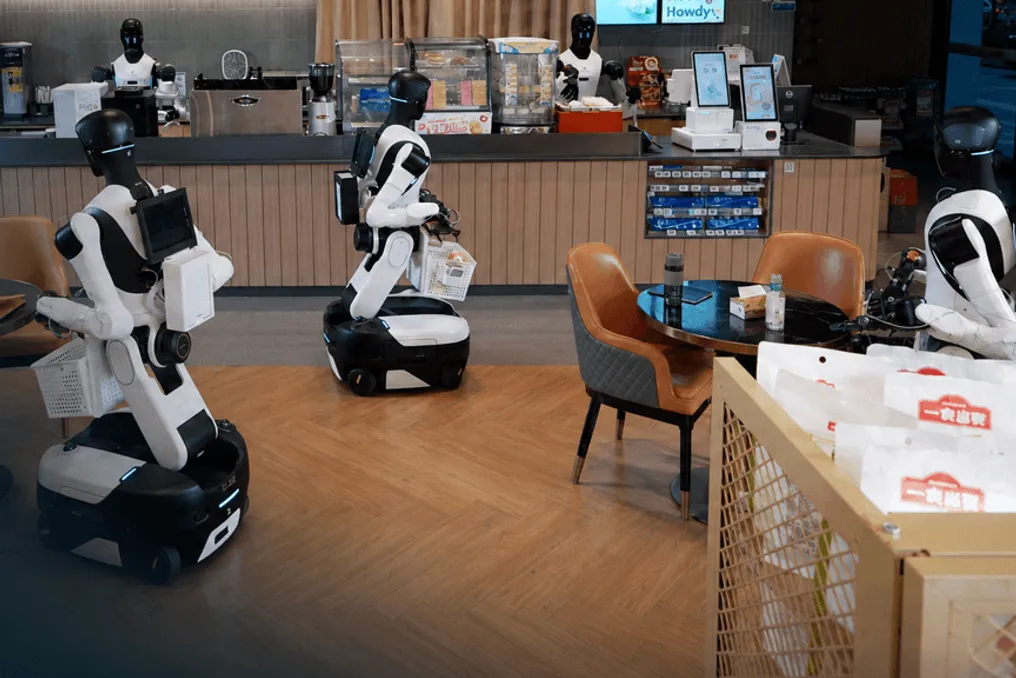
AgiBot's Genie Master system allows G2 robots to self-diagnose errors during in-store operation.
Read more
Pandaily
pandaily.com

AgiBot's Genie Master system allows G2 robots to self-diagnose errors during in-store operation.

AgiBot has introduced Genie Master—an embodied agent framework that enables robots to continue improving after deployment, rather than waiting for engineers to conduct retraining. The company states that G2 robots using this framework operated in a real neighborhood store, performing tasks such as packaging ready meals, picking items, and restocking shelves, while also detecting and resolving their own failure modes without human intervention in the training process.

AgiBot describes the result as the first proof of concept for what they call Physical RSI, or Embodied Recursive Self-Improvement, outside of simulation and laboratory settings. One example presented at the presentation involved a robot repeatedly missing a small hook on a shelf because a price tag was obstructing the view from its head camera. By analyzing its own execution logs, the agent identified the problem, changed its approach by bringing its left arm closer so the wrist camera could confirm the hook's position, then picked up the item with its right hand and saved this correction for future use.

This framework is based on the Embodied Execution Protocol (EEP)—a unified interface between the agent and the robot. It consists of four components: a capabilities interface, which informs the agent what the robot can do; a guidance interface for transmitting spatial cues, object references, and detailed action policies; a feedback interface, which reports the physical outcome; and a continuity interface, which tracks progress and task dependencies across the entire robot fleet, allowing work to resume or be rescheduled after breaks.

When tasks consistently fail or are performed slowly, the agent schedules targeted practice during the store's least busy hours. Improvement occurs in two directions. RSI, which does not affect model weights, refines cues, memory, and execution rules by using daily analysis of successes and failures to create what the team compares to an error log. The RSI policy collects data from autonomous runs, human interventions, and recoveries, filters and reweights it, and then retrains the base action policy using supervised learning, imitation, or reinforcement. AgiBot notes that the second track still utilizes human intervention data and model training, meaning humans are not entirely excluded.

Genie Master is the fourth release in AgiBot's AI WAVE series, which began on October 22nd. According to the company's published schedule, the next item on October 28th will be an update to the Genie Sim simulation platform with an internal physics engine designed to simulate deformable objects, which, according to AgiBot, achieves over 95% consistency between real and simulated results in complex tasks. More detailed information was not published at the time of writing.

Public testing is scheduled for November 2nd and 3rd, when six G2 robots will operate for 24 hours in a real neighborhood store environment, covering peak lunch and dinner hours, the night shift, and breakfast preparation.
Similar stories

X Square Robot introduces X2Real—an evolving simulation benchmark for robot evaluation
Read more
pandaily.com

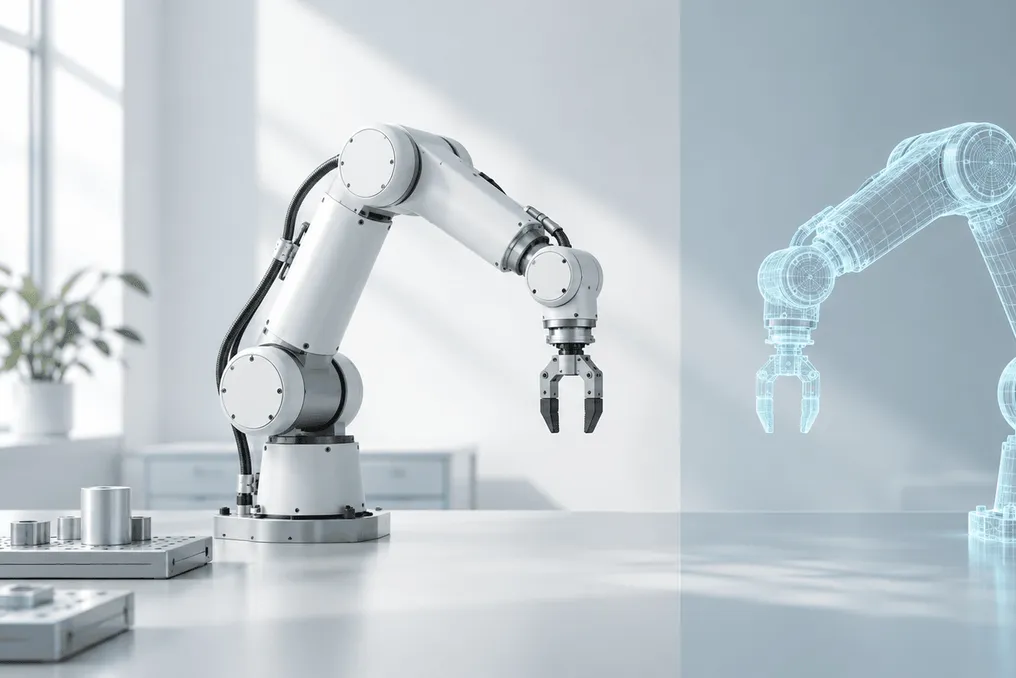
X Square Robot introduces X2Real—an evolving simulation benchmark for robot evaluation

The embodied artificial intelligence startup X Square Robot has released X2Real—a simulation benchmark designed to measure the performance of fundamental level robot models in the real world, as well as to continuously expand the test dataset as models improve.

The company clearly states the problem: evaluating real robots is costly and slow, whereas simulation is fast but often unrealistic and allows models to easily overfit. X2Real is based on three principles: fidelity, efficiency, and fairness.

To ensure fidelity, the team recorded trajectories from physical robotic manipulators, reproduced the same control commands in the simulation, and tuned joint responses until they matched, which the company claims ensures trajectory consistency at the millimeter level. Visual appearance and physical characteristics, such as contact, were also calibrated. Supported embodiments include the single-arm Franka, the two-arm ArtiXon Arm-6A, ARX R5, and the mobile manipulator Quanta X1. When performing general manipulation tasks, X Square Robot reports a correlation of 0.96 between task success in simulation and in the real world, and 0.99 for progress metrics. This data was obtained through the company's own tests on this subset of tasks.

Regarding efficiency, X2Real includes 44 tasks distributed across 10 categories. Four categories are dedicated to reasoning: generalization, visual understanding, language comprehension, and memory. Five categories relate to manipulation: fine manipulation, two-arm coordination, tool use, dynamic objects, and mobile manipulation. A separate set of tasks, including block stacking, pressing buttons in a specified color sequence, and solving the Tower of Hanoi, is aimed at testing accuracy, long-term memory, and planning. The company notes that most existing models still struggle with these tasks.

The principle of fairness is achieved by independently randomizing the appearance, task setup, and embodiment conditions. Models trained after this stage use a dataset collected over nearly 300 hours in a studio with a uniform green screen, which is separate from the evaluation scenes. The benchmark operates within the Mana simulation ecosystem, built on NVIDIA Isaac Lab-Arena, which packages scenes, robots, and task steps into reusable modules.

AI agents manage two loops. One generates new tasks and scenes from a limited menu of options with automatic checking to exclude incorrect settings. The second breaks down each task into a subgraph of subtasks, evaluates each node based on object poses, contacts, and grasp states, and creates intentionally new tests where the model fails.

A unified protocol called Policy Space standardizes differences in input formats, action representations, and output timing. Developers perform inference locally and connect to a platform that handles online evaluation and trajectory replay without requiring a local simulation setup.

OpenAI to develop humanoid robots; first demonstration expected in 2027
Read more
www.aajtak.in

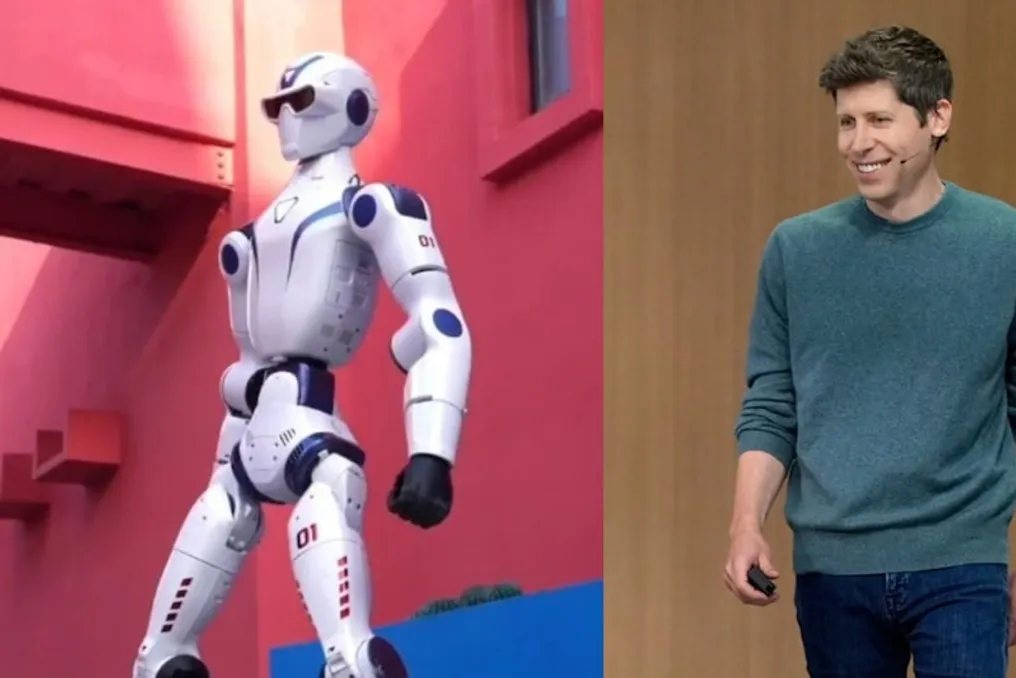
OpenAI to develop humanoid robots; first demonstration expected in 2027

OpenAI, the company that created ChatGPT, plans to undertake an even larger project—the development of robots that resemble humans externally. Special attention is paid not only to these robots' ability to move but also to their capacity to understand their environment and perform tasks.

OpenAI CEO Sam Altman has hinted at a robot demonstration. This raises questions about the robot's capabilities and its expected arrival timeline.

First demonstration possible in 2027

According to a report, Sam Altman stated that OpenAI could present a demonstration of its humanoid robot in 2027. However, the company has not yet disclosed full information regarding the release date, price, or characteristics of the robot, and this does not mean it will go on sale specifically in 2027.

A natural question arises regarding the necessity of creating humanoid robots, given that machines already exist. Modern homes, offices, and factories are designed with human anatomy in mind. A robot with a structure similar to a human can function more easily in such environments.

However, simply creating a human body is not enough. The robot must possess the ability to analyze what is happening around it and make decisions about subsequent actions.

The robot's brain will be the most important

OpenAI's main strength lies in its artificial intelligence technologies. The company intends to use this technology to give the robot intelligence. For example, if the robot is tasked with picking up an object, it must first recognize the object, understand how to lift it, and then complete the task. Thus, what becomes critically important is not just following pre-set commands, but the robot's ability to make decisions based on understanding the current situation.

Competition with Tesla?

OpenAI is not the only company participating in the humanoid robot race. Tesla, led by Elon Musk, is also working on its Optimus robot. Other companies are also advancing this technology.

Currently, complete information about the OpenAI robot is unavailable. It remains to be seen what the company will demonstrate in 2027 and how effectively its robot will be able to operate in the real world.

Popular