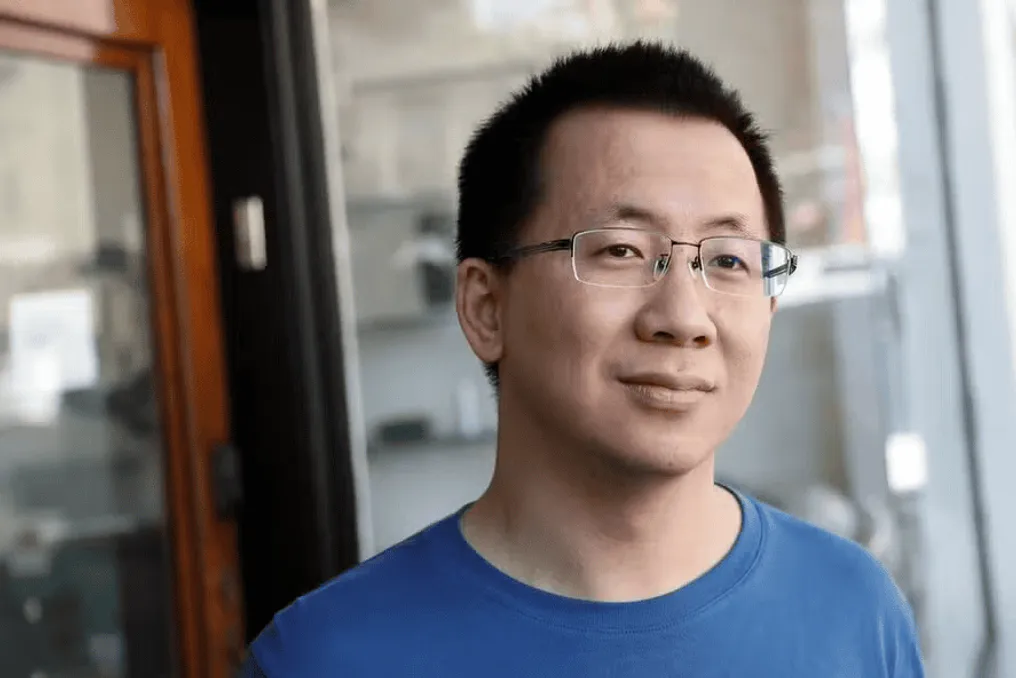
The advancement of artificial intelligence (AI) is reshaping the Chinese economy, increasing the wealth of prominent figures in the technology sector. Zhang Yiming, creator of ByteDance, the company that owns TikTok, has returned to the top of the richest individuals ranking in China, with a fortune valued at $100 billion, which corresponds to approximately R$ 540 billion.
This amount demonstrates a 43% increase compared to the previous year and sets a new record for the country's wealthiest person. The data was presented in the 2026 edition of the annual Hurun Research Institute list, released this Tuesday, the 27th.
According to Rupert Hoogewerf, president of the institute, most of Zhang's fortune growth is directly linked to AI. ByteDance, which also manages the Chinese platform Douyin, has expanded its operations in this segment, highlighting the AI assistant Doubao, ranked by Hurun as the most used in China.
This scenario illustrates how the competition for AI is generating fortunes beyond corporations focused on chips and language models. Companies that already possess large user bases can capitalize on their infrastructure to launch new tools and gain market share.
Despite Zhang Yiming regaining the lead, other notable entrepreneurs are among the top positions. Zhong Shanshan, a bottled water magnate, holds the second position, with an estimated fortune of $61 billion (about R$ 329 billion), representing a 23% decrease in one year.
In third place is Robin Zeng, president of CATL, a manufacturer of electric vehicle batteries, whose fortune was valued at $57.3 billion (approximately R$ 309 billion). Pony Ma, co-founder of Tencent, dropped to fourth place with $51.5 billion (about R$ 278 billion).
Another point of attention was Lei Jun, president of Xiaomi, whose fortune halved, reaching $25.1 billion (about R$ 135 billion), according to the survey.
The variations in the rankings reflect the heterogeneous performance of the industries and sectors where these entrepreneurs operate. While businesses related to AI, chips, and robotics gained strength, consumer sectors and the real estate market registered value losses.
The list also points to the difficulties faced by the Chinese real estate market, which is under pressure due to a persistent crisis for several years, affecting domestic demand. According to Hoogewerf, for the first time since the beginning of the survey, no mainland Chinese property developer is among the top hundred. Names from the real estate sector maintaining positions at the top of the ranking belong to families owning properties in Hong Kong.
Consumption also showed weakness, as consumers are reducing their spending, which makes life difficult for small entrepreneurs, in contrast to companies benefiting from Chinese support for technologies such as AI and electric vehicles.
Despite this uneven landscape, the Chinese economy recorded a 4.5% growth in the third quarter of 2026, compared to the same period last year, driven by exports. The official growth target for the year remains between 4.5% and 5%.
The 2026 edition of the Hurun list identified 1,529 individuals with net worth exceeding 5 billion yuan, equivalent to about $740 million (approximately R$ 4 billion). This number represents a 6.6% increase compared to the previous year and surpasses the previous record set in 2021. The total number of billionaires in dollars reached 1,176, an increase of 155 people in one year, surpassing the quantity recorded in the United States, according to the institute.
The survey considers fortunes estimated up to September 1, 2026, with adjustments made for any significant changes that occurred until the publication date. This study has been conducted annually since 1999 and is in its 28th edition.