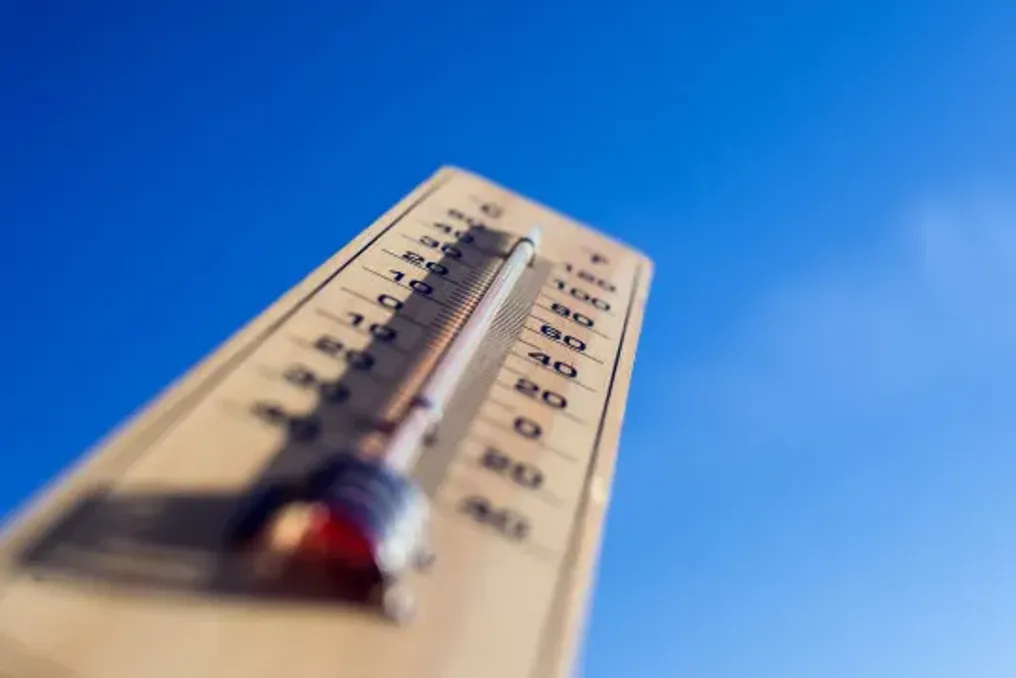
A new report on Health and Climate Change indicates that the annual average of heat-related deaths has risen by almost 36% worldwide since the entry into force of the Paris Agreement.
The tenth report, named 'Lancet Countdown,' was prepared by University College London (UCL) in partnership with the World Health Organization (WHO). This document reveals that in 2023 alone, heat was responsible for a record 710,000 deaths, with over 70% of these directly attributed to human activity-induced climate change.
According to the analysis published in the scientific journal Lancet, the estimated average of annual deaths due to heat stood at 540,800 between 2016 and 2023. Of this total, 68% (equivalent to 369,900 deaths) were caused by climate change, representing an increase compared to the 55% (219,100 deaths) recorded in the period from 2006 to 2015. In summary, the calculations indicate that nearly three million heat-related deaths linked to climate change occurred between 2016 and 2023.
The Paris Agreement, ratified in 2015 during the 21st Conference of the Parties to the United Nations Framework Convention on Climate Change (COP21), establishes the global commitment to keep the increase in average temperature below 2ºC compared to the pre-industrial era, ideally not exceeding 1.5ºC.
The report's authors state that the actions implemented to mitigate global warming have generated tangible benefits for public health. However, they consider these measures insufficient to offset the growing damages of climate change, arguing that this situation should be classified as a 'global health emergency.' Anthony Costello, co-president of the Lancet Countdown, highlighted that for a decade, it has been argued that combating climate change would be the greatest opportunity to promote health in the 21st century through adaptation and rapid reduction of fossil fuels.
He emphasized that although there is evidence that health-focused climate action is working—protecting lives with cleaner air, more robust health systems, and alerts—the pace and magnitude of emission reductions are still far short of what is necessary given the severity and speed of climate damage.
Additionally, the study points out that fossil fuel production plans are increasingly distant from the Paris Agreement's 1.5°C target. The world's 100 largest oil and gas companies plan to produce up to 150% more by 2040 than is compatible with this goal, an increase from the 138% projected for 2025.
The report also observes that these production plans persist even with rising fossil fuel costs, which put pressure on public finances. Net subsidies for these fuels have doubled since 2016. In response to energy price increases, global net subsidies reached record levels between 2022 and 2024, the year when ten countries spent more on these subsidies than on their own healthcare systems.
This study was conducted with the contribution of 146 multidisciplinary researchers from over 100 institutions spread across about thirty countries and was released shortly before the start of the 31st United Nations Climate Conference, which will take place in Turkey from November 9 to 20.