The Court of Rio de Janeiro granted permission for Grupo Ocean, formerly known as Grupo A. Gaspar, from Rio Grande do Norte, to assume ownership of the Hotel Tambaú, located in João Pessoa. This determination concludes the legal controversy regarding the validity of the auction, which began in February 2021.
The decision was issued on Thursday, the 22nd, by Judge Artur Eduardo Magalhães Ferreira, acting in the 1st Business Court of Rio de Janeiro. Through this act, the issuance of the deed of sale and the writ of possession of the property was ordered.
As stated in the decision, the Superior Court of Justice (STJ) definitively resolved the issue of the auction. In May 2025, the Fourth Panel of the court unanimously validated the result of the hotel's second auction, in which the group from Rio Grande do Norte was declared the winner.
Judicial Dispute
The dispute over the hotel's possession involves Grupo Ocean and Ampar Hotelaria, based in Paraíba. The establishment was subjected to two auctions, and the results of these processes were legally contested over the past few years.
Hotel Tambaú was auctioned in February 2021 for a value of R$ 40.6 million during a judicial auction. This auction was held to settle labor debts of the hotel chain that managed the property, which was linked to the bankruptcy estate of Grupo Varig and Rede Tropical de Hotéis.
Discussions on Indemnities
In the most recent deliberation, the magistrate also specified that any requests for compensation for damages resulting from the period of property occupation, as well as charges related to improvements made to the hotel, will not be evaluated within the bankruptcy process.
The understanding presented is that the bankruptcy procedure primarily aims to organize the assets of the bankrupt company and ensure payment to creditors, and it is not the appropriate forum to judge claims for damage repair. Thus, interested parties, such as Ampar Hotelaria or the bankruptcy estate itself, will need to file separate lawsuits in common court to debate possible reimbursements or indemnities.
History and Architecture of Hotel Tambaú
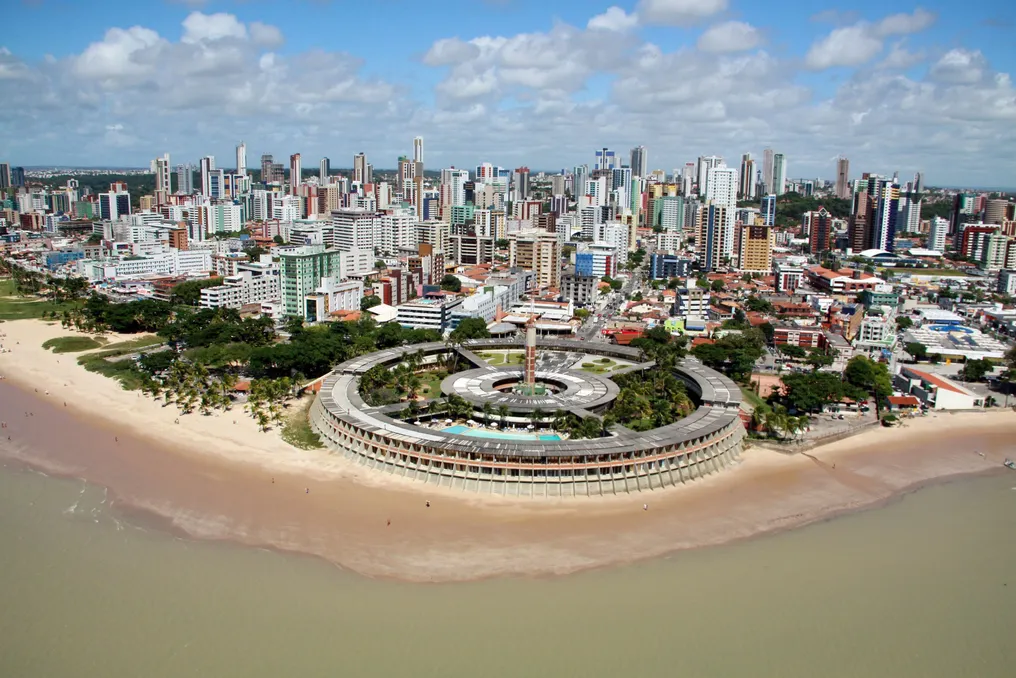
Considered one of the central tourist attractions on the waterfront of João Pessoa, Hotel Tambaú was inaugurated at the beginning of the 1970s and represented an architectural and tourist milestone for the city. However, the hotel had to be auctioned to cover debts of Rede Tropical de Hotéis, which belonged to the former Varig.
The building was erected on the sands of Tambaú beach in the 1970s, a time when the area had a very different landscape. According to historian Maiara Belo, before the 1950s, the region was predominantly inhabited by fishermen. The arrival of Epitácio Pessoa Avenue, which connects the Center to the beach, spurred urban restructuring, leading the wealthier class residing in the central area—the cradle of the city—to move to the waterfront.
Maiara Belo describes the hotel as belonging to a modernist architectural school, reflecting the national urbanization process. She points out that the hotel's characteristics symbolize a moment of prosperity, austerity, and confidence in the country and the region, while it was fully developing. The hotel was conceived as a luxury and high-standard accommodation, becoming a reference for prominent Brazilian and international figures.
With 173 apartments, almost all offering sea or internal garden views, its architectural design was conceived by Sérgio Bernardes. The hotel was part of Rede Tropical de Hotéis, which belonged to the former Varig. After facing difficulties starting in 2006, it closed its doors in 2020. In 2020 and 2021, auctions took place to settle the network's debts, and the location was auctioned on two occasions, generating judicial questions.
The chronology of the dispute reveals that Hotel Tambaú was auctioned by Grupo A. Gaspar (later renamed Grupo Ocean) from Rio Grande do Norte in October 2020, for R$ 40.02 million. Grupo A. Gaspar withdrew, allowing the second bidder, journalist and lawyer from Paraíba Rui Galdino, to take over with a bid of R$ 40 million. However, Rui Galdino claimed his actual bid was R$ 15 million and also withdrew.
A second auction was called. Rui Galdino later reconsidered and stated that he would pay the R$ 40 million from the first auction. He made the down payment and the auctioneer's commission, dividing the remaining balance into 12 installments, but failed to honor these payments. Grupo A. Gaspar won the second auction with a bid of R$ 40.6 million in February 2021, paying the first installment and dividing the rest into 80 payments. Rui Galdino was replaced in the process by André Amaral, a Paraíba businessman and politician, partner of Ampar Hotelaria.
In June 2022, Ampar paid off all overdue and pending installments from Rui Galdino's initial bid, in addition to paying taxes such as ITBI and Union Heritage fees, formalizing its position as owner of Hotel Tambaú. Subsequently, the Court of Justice of Rio de Janeiro annulled the second auction and confirmed the result of the first auction, validating Rui Galdino's victory. Grupo A. Gaspar challenged this decision before the STJ, arguing that Ampar had not participated in the auction. Despite this, A. Gaspar continued making payments for the installments related to the second auction, until the STJ ruled in favor of A. Gaspar, granting the subsidiary company the right of possession of the hotel.