
Use of urban metrics overestimates rural poverty in the Amazon by 17%, study points out
Read more
Super Abril
super.abril.com.br

Use of urban metrics overestimates rural poverty in the Amazon by 17%, study points out

The use of indicators designed for urban environments ends up exaggerating the actual poverty situation of rural communities located in the Amazon. Using data from the 2000 Census, a standard multidimensional poverty index showed a value approximately 17% higher for the rural area compared to the result obtained by applying a metric adapted to the region's reality.

To correct this inaccuracy and reduce the risk of countryside lifestyles being erroneously categorized as deprivation, a team of researchers coordinated by the Federal University of Pará (UFPA) developed the Multidimensional Poverty Trajectories Index (IPM-Trajectories). This new index was presented in a study published in the journal Nova Economia last Friday (23).

This model integrates health, education, and living conditions data from the 2000 and 2010 censuses, applying different criteria for both urban and rural areas. Specific indicators, such as land ownership, were created to measure poverty in the countryside, while the possession of a radio and other communication items, as well as the availability of a car or motorcycle, receive different weights depending on whether the context is rural or urban.

The new indicator showed that, in 2010, rural poverty in the area reached 27% of the rural population, a rate about four times higher than that observed in the urban area, which was 7%. Between 2000 and 2010, the multidimensional poverty index registered significant drops, reaching about 79% in the rural sector and 94% in the urban sector. However, those responsible warn that a direct comparison between the two years is unfeasible due to changes in the variables used by the Census.

In addition to UFPA, the creation of this tool involved several other entities, including Ipea (Institute for Applied Economic Research), the Ministry of Health, Inpe (National Institute for Space Research), Fiocruz (Oswaldo Cruz Foundation), federal universities such as UFSM, UFSCar, and UFMG, and the Barcelona Supercomputing Center. A multidisciplinary group composed of specialists in epidemiology, economics, ecology, biology, geography, and social sciences defined these new indicators.

General indicators, such as per capita Gross Domestic Product (GDP) and Human Development Index (HDI), use averages that mask the reality of those residing in the biome, and according to the authors, contributed to consolidating the perception of continuous poverty in the Amazon, linked to a supposed delay in its rural economy.
Similar stories

Amazon records new historical record with the lowest deforestation rate ever documented
Read more
olhardigital.com.br

Amazon records new historical record with the lowest deforestation rate ever documented

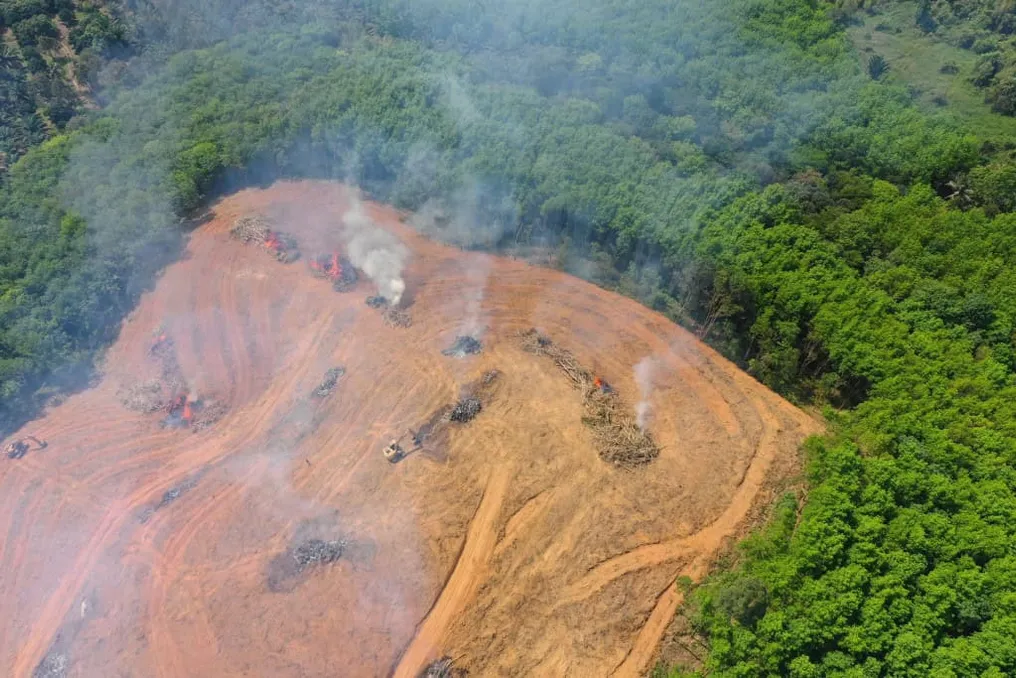
The Brazilian Amazon forest has reached a positive historical milestone, as satellite monitoring data indicates that deforestation in the region has reached the lowest level ever recorded since the beginning of official measurements, representing a major advance for environmental conservation.

According to the annual survey conducted by the National Institute for Space Research (Inpe), released on Friday (16th), approximately 3,335 square kilometers of vegetation were lost in the analyzed cycle. This figure demonstrates a notable reduction of 42% in devastation compared to the previous period. It is relevant to note that the previous positive record was set in 2012, while in the 90s, annual damage exceeded 30 thousand square kilometers.

This official mapping is carried out by the Program for Monitoring the Brazilian Amazon Forest by Satellite (PRODES), which uses the central months of the year to obtain high-definition images directly from space, taking advantage of the lowest incidence of cloud cover.

Sector specialists celebrated this historic achievement, as reported by Reuters, emphasizing that the combination of technological advances, constant oversight, and solid political decisions is fundamental to controlling the expansion of deforestation and mitigating the emission of pollutants.

The federal government has set the goal of eradicating deforestation by the year 2030. The issue gained greater relevance during the second round of the face-to-face elections between President Lula (PT) and Senator Flávio Bolsonaro (PL). While the current administration focuses on resuming environmental objectives, the opposing candidate proposes concentrating oversight on combating organized crime in the Amazon, ensuring the protection of small farmers and extractive workers.

Additionally, the Brazilian Cerrado biome also showed encouraging results. The rate of destruction of native vegetation decreased by about 24% in the same interval, totaling 5,517 square kilometers. This also constitutes the lowest record of green area loss in the region since the start of historical monitoring in 2001.

Popular