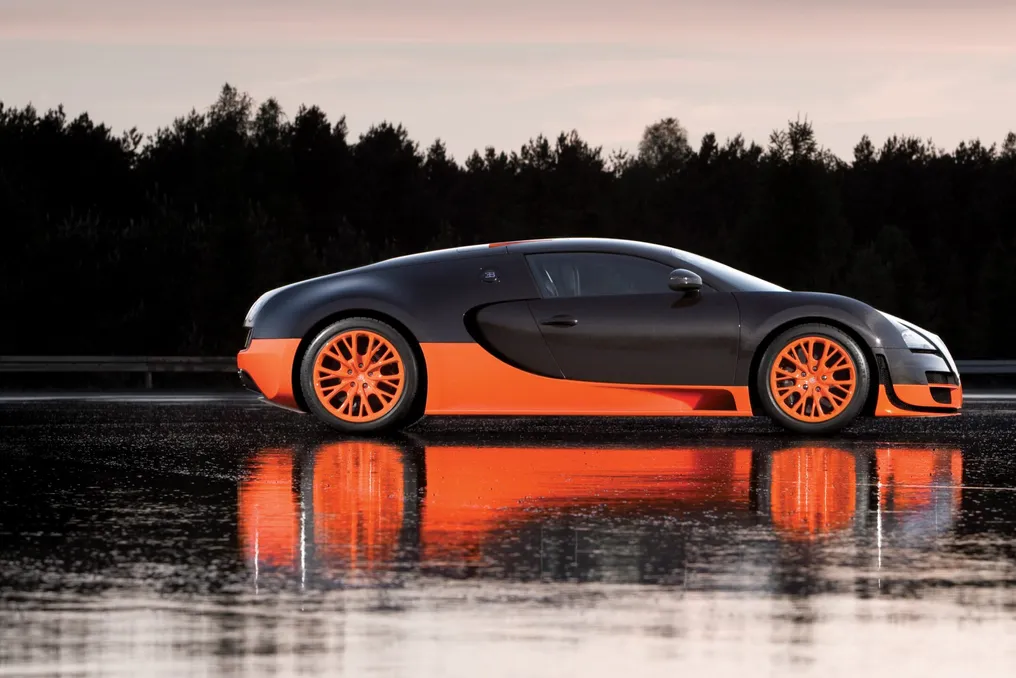
Bugatti Veyron is pointed to as responsible for transforming supercars into excessively powerful and complex machines
Read more
FlatOut
flatout.com.br

Bugatti Veyron is pointed to as responsible for transforming supercars into excessively powerful and complex machines

A notable aspect of the human condition is the concept of free will, which allows individuals to act within the law and respect others, even if their actions have no apparent utility or logic. This principle also applies to opinions, challenging the notion that all human thought must be coherent.

Consciousness is described as something extremely complex and ineffable, something that science has not yet been able to fully explain. Therefore, the requirement that all a person's ideas, tastes, and subjective issues be perfectly organized and free of contradictions is questioned, raising the possibility of disagreeing with oneself.

The ability to form and defend an opinion and subsequently criticize it is a human characteristic that distinguishes humans from animals, which act by immediate instinct or survival. Humans, on the other hand, are complex, constantly reflecting, even if this is not always useful for basic survival.

The author mentions an apology before the Bugatti Veyron, initially seeing it as an exaggeration of waste. However, he began to perceive it as an engineering statement. Although it is known that it is possible to exceed 1,000 hp and 400 km/h with less than eight liters, sixteen cylinders, and four turbos, Volkswagen demonstrated that by pushing its standard components to the limit, it managed to revitalize a brand and create a model of unnecessarily absurd opulence and performance.

Despite recognizing the thermodynamic achievement of the Veyron, the author argues that this vehicle is the main cause of the current state of the industry. The Veyron is seen as the 'patient zero' of a plague that transformed the pursuit of dynamic engagement into an arms race focused solely on technical numbers, acceleration, and metrics that serve the vanity of engineers and owners.

Before the Veyron, the supercar market followed more human rules. When Gordon Murray designed the McLaren F1 in the 1990s, the focus was on weight, throttle response, and central driving position, with the 386 km/h achieved being a consequence of the search for aerodynamic efficiency and lightness, driven by a naturally aspirated V12.

Ferdinand Piëch, in contrast, defined the Veyron with specific numerical goals: '1,001 hp, over 400 km/h top speed, and daily usability to take the wife to the theater.' Bugatti engineers were forced to adapt physics to meet this bureaucratic ultimatum, resulting in the use of four turbos, ten radiators, and a heavy W16 engine.

Although the Veyron won the battle against physics, it permanently changed the mindset of the sector. The car's value shifted from the delicacy of contact with the driver or the chassis balance in corners to scale, brute force, and the ability to impress with grandiose numbers.

This breaking of the four-digit power barrier triggered an uncontrolled spiral. Manufacturers realized they could simply add larger turbos or auxiliary electric motors instead of spending years perfecting suspension geometry or reducing chassis weight. This led to the emergence of the 'Holy Trinity' of hybrid hypercars – LaFerrari, McLaren P1, and Porsche 918 Spyder – where weight increased and electronics began to control every millisecond of dynamics.

The peak of this trend is represented by full electrification, with Mate Rimac as a central figure. Rimac began his journey by converting a BMW M3 E30 in Croatia, seeking electric performance. Later, he presented the Rimac C_Two (future Nevera) at the Geneva Motor Show, promising 'Almost 2,000 hp. 0 to 100 km/h in 1.8 seconds.'

The Nevera is seen as a direct descendant of the Veyron, adopting the premise of seeking shocking numbers but replacing gasoline with lithium ions. To achieve 2,000 hp, four electric motors and a battery pack resulting in a weight of 2,300 kg were used.

Recently, Mate Rimac, who now has a stake in Bugatti, expressed that he considered the Tourbillon 'too much car.' He commented that the 8.3-liter naturally aspirated V16 engine, developed with Cosworth, already delivered almost 1,000 hp on its own, without the need for the trio of electric motors and battery added to reach 1,800 hp. Rimac admitted that, personally, he would prefer a simpler, lighter version with a manual gearbox and purely analog.

The author criticizes this stance, reminding that it was the Veyron that initiated this escalation. After the 1,500 hp Chiron, the arrival of the Nevera proved that electricity could surpass combustion. Now, with technological saturation, the creators of chaos suggest a return to light cars with manual gearboxes.

This demonstrates that the Bugatti Veyron corrupted the market, addicting the world to a dependency that no longer generates pure pleasure. In the past, having 400 or 500 hp in a rear-wheel-drive manual required skill and respect. Today, 2,000 hp or 1,800 hp are accessible to those who can afford it, without the need for skill, as control is done by torque vectoring via software. The supercar has become an ultra-fast luxury appliance, killing the need for purist refinement at the top of the market.


Similar stories

Supreme Court suspends Madras High Court ruling regarding international art dealer
Read more
timesofindia.indiatimes.com

Supreme Court suspends Madras High Court ruling regarding international art dealer

The Supreme Court (SC) on Tuesday suspended the September 8 ruling of the Madras High Court, which ordered the Central Government to detain the alleged international art dealer Subhash Chandru Kapur from the Tiruchirappalli Central Jail and act according to the law for his return to Germany.

The bench of judges suspended the effect of the Madras High Court's decision, which allowed the Habeas Corpus petition filed by Kapur. This decision stated that his continued detention in India due to other offenses, allegedly committed before his extradition from Germany, cannot be justified without the consent of German authorities.

The High Court noted that after being compensated for the time already served, the verdict in the extradition case was considered fulfilled, and the certificate of detention recorded February 22, 2023, as the date of release for this charge.

Sergipanidade Festival offers 135 spots for free workshops and conversation circles in Aracaju
Read more
g1.globo.com

Sergipanidade Festival offers 135 spots for free workshops and conversation circles in Aracaju

The Sergipanidade Festival will offer 135 spots in nine free workshops, in addition to conversation circles, on the 30th and 31st at the Creativity Center, located in the Getúlio Vargas neighborhood, in Aracaju.

The program includes activities such as learning to mold ceramic pieces, performing woodcuts, writing cordel verses, and experiencing the rhythms of Northeastern dance, complemented by discussions about Sergipe culture.

According to the Sergipe Foundation of Culture and Art Aperipê (Funcap), these workshops are aimed at individuals aged 16 or older, with a limit of 15 participants per activity. To register, it is necessary to fill out an online form accessible on the Funcap portal, and registrations remain open until spots are filled. Participation confirmation will be sent via message, depending on availability.

Check the full schedule:

Friday (10/30)

On Friday, the day begins at 9 am with the handicraft workshop titled 'Illuminating the Roots of Sergipe', taught by Ysá. Also at 9 am, there will be the ceramics workshop 'Sergipe in the Palm of the Hand' (lesson 1), conducted by Alana Naara. Another morning activity is the straw workshop from ouricuri, held in partnership with Seteem - State Secretariat of Labor, Employment and Entrepreneurship.

At 10 am, the conversation circle 'Sergipe Telling its Stories from Coast to Backlands' will take place, with the participation of Abiúdo and Osvaldinho. At 2 pm, the agenda features two workshops: the cordel workshop 'First I Sing and Rhyme, Then I Write the Verses', with Eduardo Teles, and the painting workshop 'Painting by Hand: From Cashew to Crab', with Vinícius Tavares. There will also be a ceramics workshop at 2 pm.

Saturday (10/31)

On Saturday, activities start at 9 am with the dance workshop 'Sergipe: Bodies, Rhythms and Tradition', led by Netto Andrade. Other 9 am workshops include 'Sergipe in Carvings', focused on woodcut, with Cláudia Nen, and the second ceramics lesson 'Sergipe in the Palm of the Hand', again with Alana Naara. Additionally, there will be an Irish lace workshop from Divina Pastora, organized by Seteem.

At 10 am, the conversation circle 'Sergipanities: Influences of Sergipe Culture on the Creative Process' will occur, mediated by Dênio Azevedo and featuring Rafa Càstro (Severinas).

About the Sergipanidade Festival

The second edition of the Sergipanidade Festival takes place between October 29th and 31st at the Creativity Center in Aracaju. The free event includes workshops, conversation circles, screenings of Cine Sergipanidade, a fashion show with collections supported by the Paulo Gustavo Law (LPG), a creative economy fair, a Cultural Parade, and musical performances.

The official opening ceremony is scheduled for Thursday, the 29th, starting at 6 pm, while on the 30th and 31st, activities will begin promptly at 9 am.

Leonardo performs in Campinas with 'Uma História Sem Fim' tour after 12 years away
Read more
g1.globo.com

Leonardo performs in Campinas with 'Uma História Sem Fim' tour after 12 years away

After twelve years, Leonardo will perform again in Campinas this Sunday (the 1st) at the Royal Palm Hall. The concert is scheduled for 10:00 PM, and the gates will open at 8:00 PM. The singer's previous performance in this city took place in 2014.

This concert will be the first stop of the tour in this region. The 'Uma História Sem Fim' tour was created based on a DVD dedicated to the singer's 40th career anniversary, which was recorded in 2025.

The concert repertoire will feature hits such as 'Pense em Mim', 'Entre Tapas e Beijos', 'Não Aprendi Dizer a Deus', 'Eu Juro', 'Talismã', and 'Um Sonhador'.

Tickets are available for purchase in the Diamante, Ouro, Prata, and Bronze sectors; the Platinum sector is sold out. Tickets are individual and include seats at tables for six people. They can be purchased on the website or at the following physical locations:

  • Campinas: Equipadão Norte-Sul and Restaurante Stefano’s Galleria;
  • Jaguaruina, Mogi Guaçu, Artur Nogueira, Amparo, and Pedreira: Dr. Placas points;
  • Mogi Mirim: Newness Bebidas.

Popular