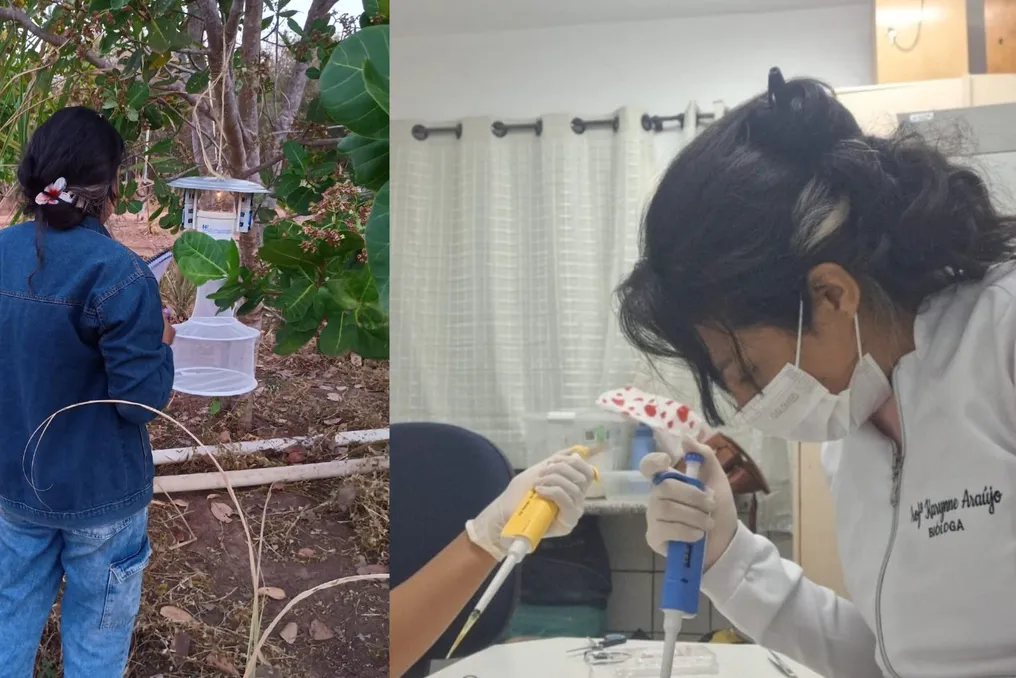
As part of a study conducted by the Federal University of Piauí (UFPI), over 1,300 phlebotomine flies—insects associated with the transmission of leishmaniasis—were discovered in two districts of Teresina with different historical settlement experiences.
During this survey, a predominant population of the species Lutzomyia longipalpis was identified, which is the main carrier of visceral leishmaniasis in Brazil. However, researchers emphasize that the risk of disease transmission cannot be determined solely by the presence of these insects; the data must be analyzed together with information on the parasite, animal hosts, and registered human cases.
The study was carried out by Master Karynne Araújo Costa under the supervision of Professor Maria Regiane Araújo Soares. Sample collection took place from August to December 2025 in the settlements of Casimba Velha and Terra Nossa.
A total of 1,351 phlebotomine flies were caught. Of this total, 1,243 specimens were found in Casimba Velha, which is an older settled district, and 108 in Terra Nossa.
According to the research supervisor, knowing the species of phlebotomine flies present in the urban and suburban environment is important for understanding the dynamics of leishmaniasis transmission and assisting surveillance services.