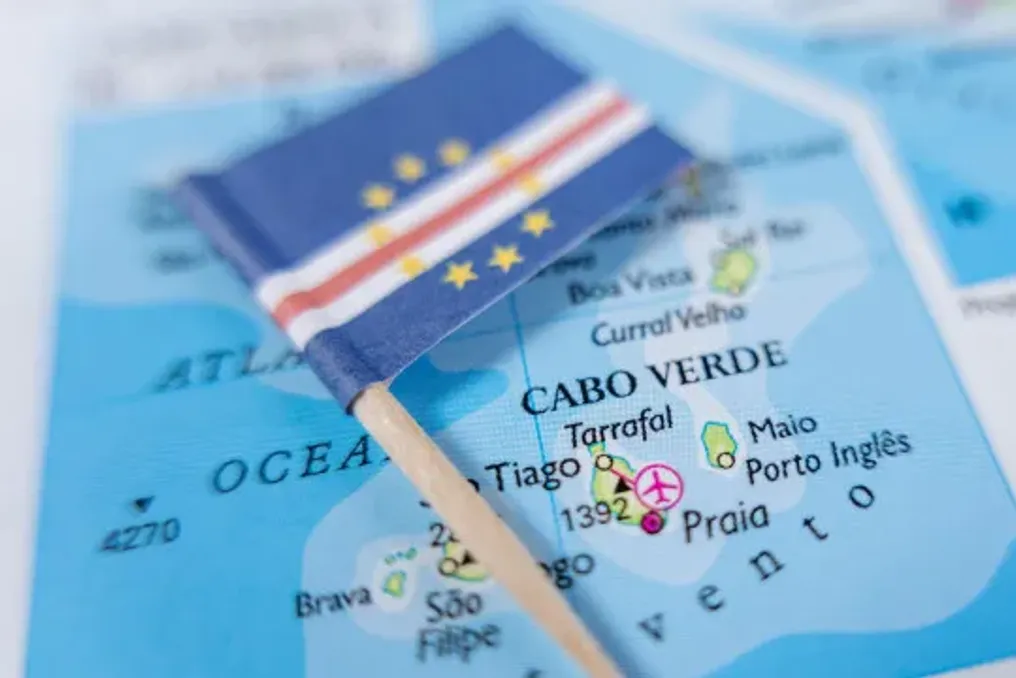
Cabo Verde plans to ensure universal access to electricity by 2028
Read more
Noticias ao Minuto
noticiasaominuto.com

Cabo Verde plans to ensure universal access to electricity by 2028

The government of Cabo Verde has announced its intention to provide electricity to the entire population of the country by 2028. The Minister of Coordination of Special Projects and Fund Access stated that the goal is to connect households that currently lack electricity access, as well as to legalize illegal connections.

José Carlos Moniz voiced this objective during a panel discussion on energy at the II Forum for Investment in Portuguese-Speaking Africa, held on Sal Island. Currently, electricity coverage in the country stands at 97%, and it is expected that the remaining 3% will be connected.

This task is enshrined in the National Pact under Mission 300 (M 300). This mission provides for structured partnership with the African Development Bank (AfDB) and the International Finance Corporation (IFC) to expand electricity access across the African continent.

With the support of these two financial institutions, 35 countries have already defined their pacts with plans to expand power grids. These plans are based on public policy reforms and attracting state, private financing, as well as funds from development institutions.

Cabo Verde also forecasts reaching 70% renewable energy sources by 2031 and 100% by 2040, estimating the necessary investment volume at $520 million by 2031, including $295 million in private capital.

Guinea-Bissau presented its pact, where electricity access covers 40% of the population, while basic healthcare and education services remain without power. The Guinea-Bissau document indicates achieving universal electricity access by 2030 under an ideal scenario, requiring $700 million in investments, of which $280 million is private capital.

Pedro Coutinho, founder and CEO of Source Energy, which handles renewable energy projects, noted that national pacts help investors understand each country's goals and work 'based on this ambition.' He told Lusa that his company is studying the markets of Cabo Verde and Guinea-Bissau.

Coutinho considers technical assistance from the IFC and AfDB important because it allows 'participation in everything that has already been conceived, that has already been developed. This greatly helps minimize project development time.' He emphasized that for developing countries, it is crucial 'not to depend on oil-producing countries.'

He added that natural resources such as sun or wind do not require transportation, are not subject to rising oil prices or logistical corridors, and thanks to technological progress 'can be compensated by batteries.' Coutinho argued that 'independence' from logistics chains and oil producers is 'an important part of the future of these countries.'

The Forum for Investment in Portuguese-Speaking Africa, which began on Monday and concludes today on Sal Island, is organized by the IFC, a World Bank Group member specializing in the private sector. According to updated IFC data, over the past five years, this organization has mobilized about $1.2 billion (approximately one billion euros) in 10 projects in Portuguese-speaking African countries.
Similar stories

Mozambique plans to complete 10 electrification projects by 2027
Read more
noticiasaominuto.com

Mozambique plans to complete 10 electrification projects by 2027

Mozambique's National Energy Fund (Funae) intends to complete ten electrification projects by the end of the first half of 2027. This decision was made after resource availability constraints affected the implementation of construction work and infrastructure maintenance.

The Chairman of Funae's Board of Directors, Mati Gondola, stated that the institution is reviewing priorities. The focus is now on projects with completion levels ranging from 60% to 70%. Additionally, another 12 projects, currently at 30% to 40% completion, are scheduled to be finished by the end of 2027.

Fundo de Energia is a state organization of Mozambique responsible for financing and implementing energy projects, particularly those aimed at expanding electricity access in rural areas. These projects include small stations, including solar ones, that operate off the national grid.

Gondola specified that the ten projects refer to those whose implementation is between 60% and 70% complete. Among the twelve projects at 30%-40% completion is the Lúrio project, located in Nampula province, northern Mozambique, where civil construction still needs to be finalized. According to Gondola, Funae already has the necessary funds, but a contract review with the contractor is underway due to disagreements over the cost of resuming work.

"But what is guaranteed is that we will electrify Lúrio. It is on our list of urgent tasks," the head stated, adding that a team will go to the site to assess the situation and ensure the project's completion.

Funae is also prioritizing the restoration of power plants that have been out of service due to breakdowns and have not supplied energy for two or three years. Restoring this infrastructure is part of Mozambique's efforts to increase electricity access, especially in rural areas and communities far from the main grid.

In October, the national director of energy, Marcelina Mataveia, pointed to demographic dispersion, vast territory, and financial limitations as major obstacles to expanding energy access. According to data from the Ministry of Mineral Resources and Energy, Mozambique has reached an energy access level of 66.9%, of which 57.9 percentage points belong to the traditional grid, and nine percentage points to off-grid solutions.

Previously, Funae presented the National Program for Accelerating Electrification through Mini-grids (Promir), which involves installing 363 such facilities across the country with estimated investments of $250 million. Funding for 148 of these facilities is secured in the provinces of Nampula and Niassa in northern Mozambique, as well as Zambezia and Tete in the center.

The institution continues to evaluate projects where grid installation has advanced, but civil works are behind schedule. Funae recognizes the possibility of either renewing existing contracts or issuing new tenders to complete the infrastructure, depending on the specific case.

"First and foremost, finding resources. So that we can resume our activities," Gondola noted, speaking about mobilizing funding to restore installations and complete current projects.

In September, Mozambican President Daniel Chapo announced the creation of a coalition to attract 966.5 million euros designated for off-grid electrification, as part of the goal of universal energy access by 2030. The government plans to achieve approximately 2.5 million off-grid connections to meet this goal.

Popular