Mozambique Government Assures Supply of Basic Medicines for Two Years
Read more
Noticias ao Minuto
noticiasaominuto.com

Mozambique Government Assures Supply of Basic Medicines for Two Years

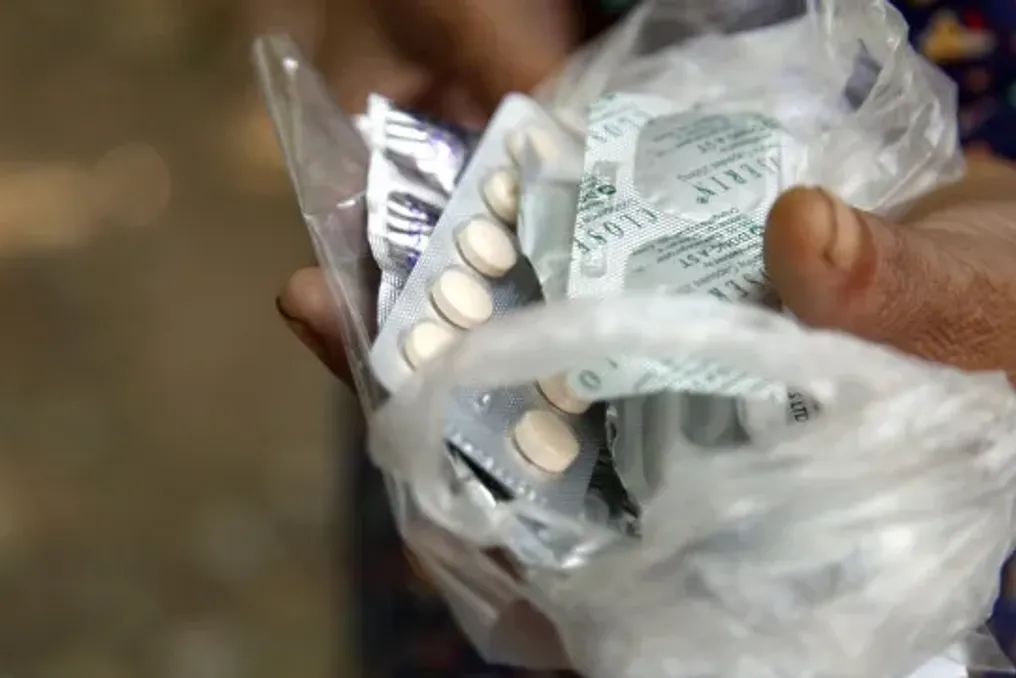
The Council of Ministers of Mozambique confirmed that the country has sufficient supplies of essential medicines for the next two years, despite persistent reports of drug and reagent shortages in various health units.

Inocêncio Impissa, spokesperson for the Council of Ministers, declared during the 31st ordinary session of the body, held in Maputo, that after receiving all requests, there will be no problems with the lack of basic medicines for at least the next two years.

Impissa informed that the first batch of medicines purchased by the health sector has already been received and that new shipments are expected soon. He admitted that temporary disparities in medicine availability may occur between provinces, districts, or health units due to the ongoing distribution process.

The spokesperson stressed that the overall supply of the system is guaranteed, adding that districts closest to the provincial medicine depot should already be receiving the items. The guarantee extends to vital medicines for the normal functioning of public health services and personal protective equipment, as requested by professionals.

The situation of interruption of health services in Mozambique, caused by frequent failures of essential medicines and supplies, occurs at a time of system fragility due to cuts in external funding, according to a report released in September.

This alert comes from a report by the Mozambique Health Cluster, a coordination platform for humanitarian assistance in the health sector, coordinated by the World Health Organization (WHO) and involving UN agencies and other entities operating on the ground, especially in Cabo Delgado, in northern Mozambique.

The document entitled 'Medicine Supply Chain in Mozambique: Ensuring Supply Amid Funding Uncertainty' points out that 79% of interviewed organizations reported constant or recurring absences of medicines and other crucial products in health units. Furthermore, half of these organizations indicated that such disruptions exceed one month.

Among the most affected items are antibiotics, analgesics, contraceptives, gloves, and wound dressings. Those responsible for the report warn that this scarcity not only leads to delays in care but often results in the complete paralysis of services for patients.

The study's authors advocate for greater articulation among donors, more stable funding for the entire medical supply chain, and support for migration to national funding sources, aiming to reduce dependence on external aid and ensure greater stability in population access to healthcare and medicines.
Similar stories

Health Minister seeks Unicamp professors to develop menopause program in SUS
Read more
g1.globo.com

Health Minister seeks Unicamp professors to develop menopause program in SUS

The Minister of Health, Alexandre Padilha, has begun seeking professors from the Center for Comprehensive Women's Health Care (CAISM), which belongs to the State University of Campinas (Unicamp), with the goal of establishing a program within the Unified Health System (SUS). This program aims to improve access to treatments and medications intended for the transition and menopause itself.

This initiative was announced on Tuesday, the 27th, during Padilha's visit to CAISM and the university's Hospital de Clínicas (HC), located in Campinas, in the state of São Paulo. The minister mentioned that the health center was contacted due to its previous contributions to the SUS in areas such as maternal-infant care, in addition to the implementation of new Pap smear techniques and HPV virus detection.

During the visit to CAISM, Padilha stated that he intends to invite the professors to debate a new care plan for women in menopause and transition, addressing everything from medications to practices to be used, aligned with the reorganization proposal of the SUS advocated by President Lula over the next four years.

At CAISM, he observed the use of a bone densitometry equipment, essential for monitoring women in climacteric and menopause, measuring bone density to prevent fractures. There are plans to expand this technology within the scope of the SUS through this new program.

Radiopharmaceutical Pharmacy

Another topic discussed by Padilha during his stay in Campinas was the possibility of extending access to radiopharmaceutical preparation to other states. Radiopharmaceuticals are substances that combine radioactive elements (radionuclides) for diagnostic or therapeutic purposes, and are frequently used in the fight against tumors and cancer.

Unicamp's HC has a Clinical Unit in Nuclear Medicine Service (SMN), inaugurated in June 2024, responsible for producing these radiopharmaceuticals for the diagnosis and treatment of various pathologies. The minister emphasized that this radiopharmaceutical pharmacy model could be replicated in other regions of the country, as it functions as a central point for preparing medications for multiple hospitals.

He stressed that many regions, especially inland, in the North, Northeast, and Central-West, have few services for preparing this type of medication, and that the Unicamp model would be monitored for dissemination in these areas.

Technical Visit

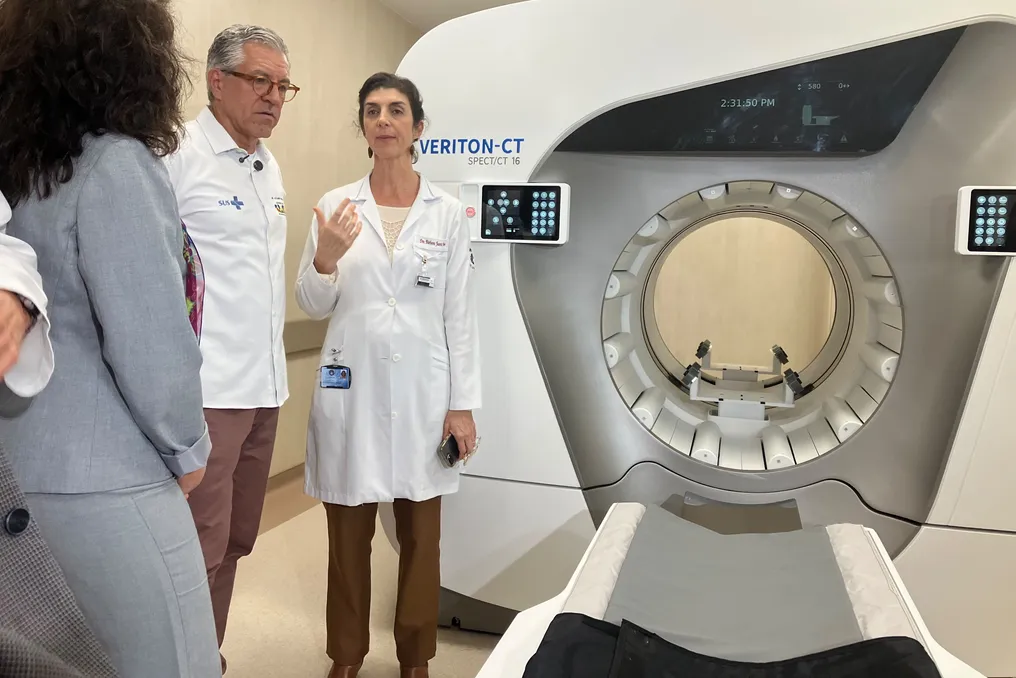
In addition to CAISM, Padilha inspected a nuclear medicine section at Unicamp's HC to learn about the SPECT/CT equipment. This device, valued at R$ 8.6 million and equipped with cadmium-zinc telluride (CZT) detectors, uses artificial intelligence to generate high-precision three-dimensional body images.

SPECT/CT aids in the early identification of lesions, cancer diagnosis, and reducing patient waiting times. According to Unicamp, the HC is the first public hospital in Latin America to have this technology.

Project launches campaign in Santarém to warn drivers about the risks of using cell phones while driving
Read more
g1.globo.com

Project launches campaign in Santarém to warn drivers about the risks of using cell phones while driving

A traffic education campaign was launched this Tuesday, the 27th, in Santarém, located in western Pará. The focus of the initiative is the use of mobile phones while driving, under the slogan 'Cell phone at the wheel, constant danger.' This project, promoted by the Municipal Secretariat of Mobility and Traffic (SMT), aims to increase drivers' awareness of the dangers caused by distraction while driving and consequently reduce traffic accidents.

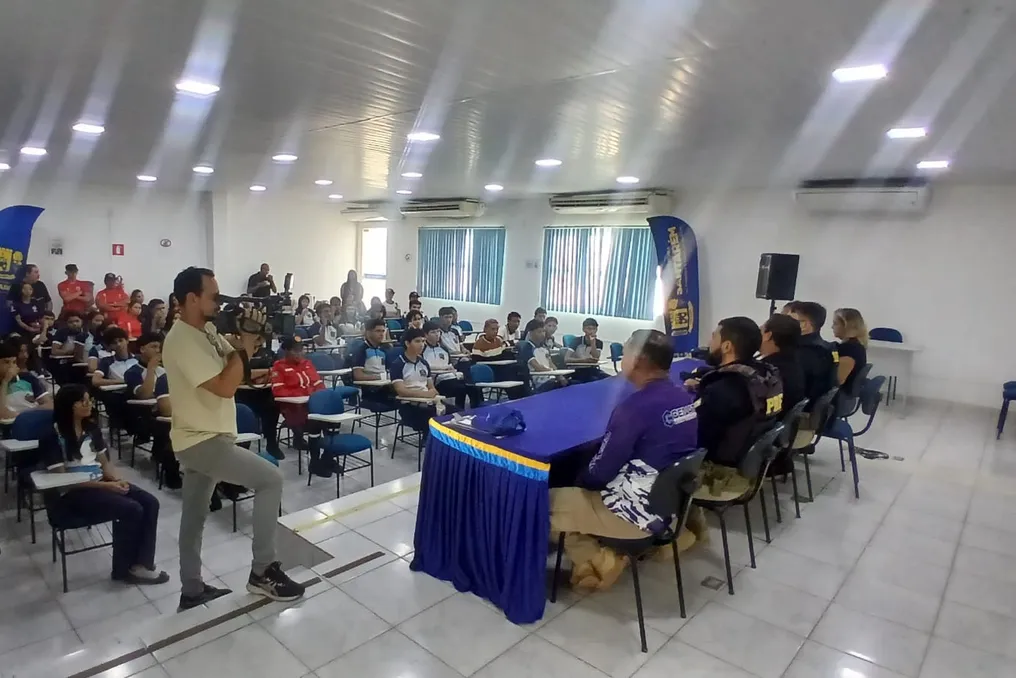
The launch ceremony took place at 8 am at the Municipal Center for Environmental Information and Education (Ciam), located downtown. During the event, a lecture focused on traffic accident prevention was held, with the participation of students from Frei Ambrósio School, as well as representatives from traffic agencies and the Social Service of Transport and the National Service for Learning in Transportation (Sest Senat).

According to information from the SMT coordination, activities will be intensified until the end of the year and will cover two main topics: cell phone use while driving and the combination of alcohol with vehicle operation. The program includes educational blitzes and the promotion of activities in both public and private establishments. The secretariat also held a meeting with representatives of cargo and passenger carriers who use applications to disseminate guidelines.

A second of distraction can be fatal

João Betcel, an SMT traffic educator, reported an increase in records of infractions involving drivers who use or talk on their cell phones while driving, and the secretariat has also noticed more accidents linked to this behavior.

During the campaign, Thiago Oliveira, an SMT representative, emphasized that just reading a message can divert the driver's attention, thus compromising road safety. He warned: 'A message is not worth a life.' Furthermore, the proposal will be extended to municipal and private schools to guide young people before they obtain their first National Driver's License (CNH).

The Federal Highway Police (PRF) also integrated the activity, reinforcing the inherent risks of driving with a cell phone. A representative of the institution clarified that such an infraction is classified as extremely serious and involves adding seven points to the CNH. Amóis Barbalho, head of inspection at the PRF, detailed that even in short periods of inattention, the vehicle can travel a significant distance, increasing the danger to the driver, occupants, and other road users.

Education starting in school

The objective of the campaign with students is to foster safe habits before the start of their journey as drivers. Jaqueline, a student present at the lecture, cited two recommendations received: refrain from using a cell phone while driving and not driving after consuming alcoholic beverages. She stated that these guidelines are crucial 'to preserve lives and protect society.'

Professor Luzineide Aguiar, who monitored the schedule, underlined the relevance of discussing traffic safety with young people. She added that students have the capacity to share the knowledge acquired with their families and the community in general. The campaign reiterates that driving and using a cell phone demand a level of attention incompatible with any type of distraction, making it essential to keep focus on the road and avoid handling the device while the vehicle is in motion.

Study reveals over 1,300 insects associated with leishmaniasis transmission in Teresina
Read more
g1.globo.com

Study reveals over 1,300 insects associated with leishmaniasis transmission in Teresina

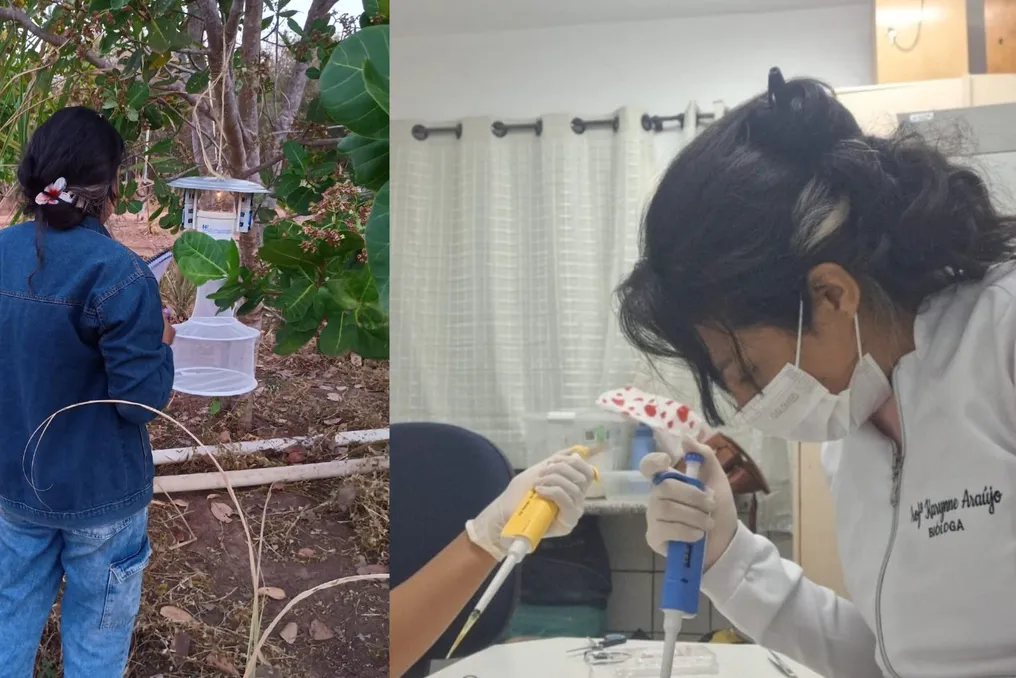
As part of a study conducted by the Federal University of Piauí (UFPI), over 1,300 phlebotomine flies—insects associated with the transmission of leishmaniasis—were discovered in two districts of Teresina with different historical settlement experiences.

During this survey, a predominant population of the species Lutzomyia longipalpis was identified, which is the main carrier of visceral leishmaniasis in Brazil. However, researchers emphasize that the risk of disease transmission cannot be determined solely by the presence of these insects; the data must be analyzed together with information on the parasite, animal hosts, and registered human cases.

The study was carried out by Master Karynne Araújo Costa under the supervision of Professor Maria Regiane Araújo Soares. Sample collection took place from August to December 2025 in the settlements of Casimba Velha and Terra Nossa.

A total of 1,351 phlebotomine flies were caught. Of this total, 1,243 specimens were found in Casimba Velha, which is an older settled district, and 108 in Terra Nossa.

According to the research supervisor, knowing the species of phlebotomine flies present in the urban and suburban environment is important for understanding the dynamics of leishmaniasis transmission and assisting surveillance services.

Popular