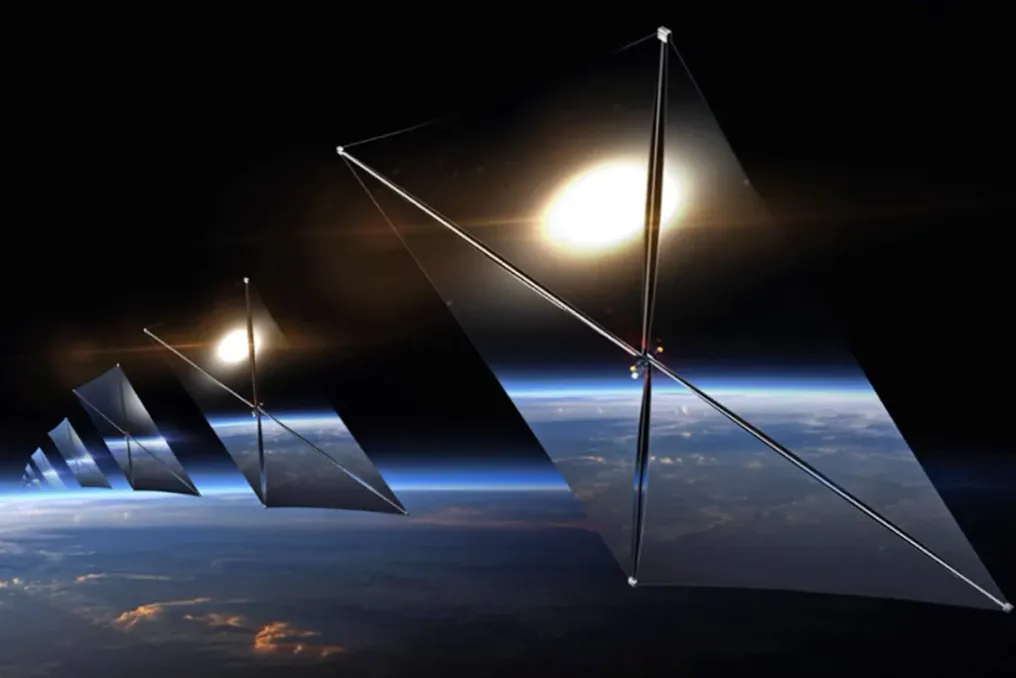
The American company Reflect Orbital plans to deploy thousands of satellites equipped with mirrors, designed to reflect sunlight onto the Earth when it is in the nighttime period. The goal of this innovation is to assist in rescue operations, provide illumination for agricultural crops, and enhance solar energy capture, although this proposal has raised concerns among scientists, environmental activists, and residents of California.
A trial conducted in the American state served as a demonstration of the project. This test impressed local inhabitants with an intense luminosity during the night, which reignited discussions about the impacts of artificial light on wildlife, human sleep patterns, and astronomical observation practices.
Reflect Orbital plans to place fifty thousand satellites into orbit over the next decade. In July, the U.S. Federal Communications Commission (FCC) approved the initial proposal for launching a demonstration satellite, the debut of which is scheduled for next year.
The equipment in question will feature a mirror approximately 18 meters in diameter, capable of reflecting sunlight onto areas that can reach up to 4.8 kilometers wide. The resulting light intensity can vary from a brightness comparable to the Moon to the clarity of the Sun at noon.
The experiment took place near Lone Pine, California, close to Mount Whitney. To simulate the technology's effect on the ground, the company set up large mobile reflectors. The unexpected brightness attracted the attention of residents, with one individual describing the light as 'blinding.'
According to the company itself, search and rescue teams will be the first users of the technology. A spokesperson confirmed that the demonstration was conducted in collaboration with a local team, stating: 'Search and rescue teams should be our first customers, so this was a real-condition test, conducted alongside the teams that would use our technology.'
In addition to the potential to improve nighttime lighting, the proposal raises concerns that go beyond the use of the technology in emergency scenarios. In August, four entities represented by the environmental collective Earthjustice requested that the FCC review its approval. These groups fear that the light reflected by the satellites could interfere with the natural rhythms of species that depend on the alternation between day and night.
Jan Hasselman, senior attorney for Earthjustice, expressed strong criticism of the undertaking, labeling it 'a stupid project.' He emphasized that all terrestrial life has evolved following the day-night cycle and pointed to various data demonstrating the dangers of disturbing this cycle.
Animals, including birds, insects, and mammals, use the alternation between darkness and light to feed, find shelter, and reproduce. Astronomers, meanwhile, fear that these reflections will intensify light pollution, hindering celestial observation. Other issues raised involve the increase of satellites in orbit and the consequent generation of space debris.
Human health was also included in the debate. Exposure to light at night can affect the circadian rhythm, which is responsible for regulating sleep and wakefulness. Additionally, looking directly at a very intense light source can cause eye damage.
Reflect Orbital argues that its technology can boost electricity production from solar panels at night, reducing dependence on fossil fuel sources. However, this idea raises questions about modifying the amount of solar energy reaching the Earth's surface.
David Ho, a climate scientist from the University of Hawaii, criticized the idea of directing more solar energy to Earth while the planet faces global warming, linking it to the energy imbalance caused by excessive greenhouse gases in the atmosphere.
The company assures that it has engaged in dialogue with scientists and astronomers to avoid sensitive areas, such as observatories, national parks, and regions vital for wildlife. It also states its willingness to accept oversight from authorities.
A spokesperson for Reflect Orbital stated: 'We believe it is our responsibility to work alongside governments, scientists, and regulatory bodies, rather than acting ahead of them.'