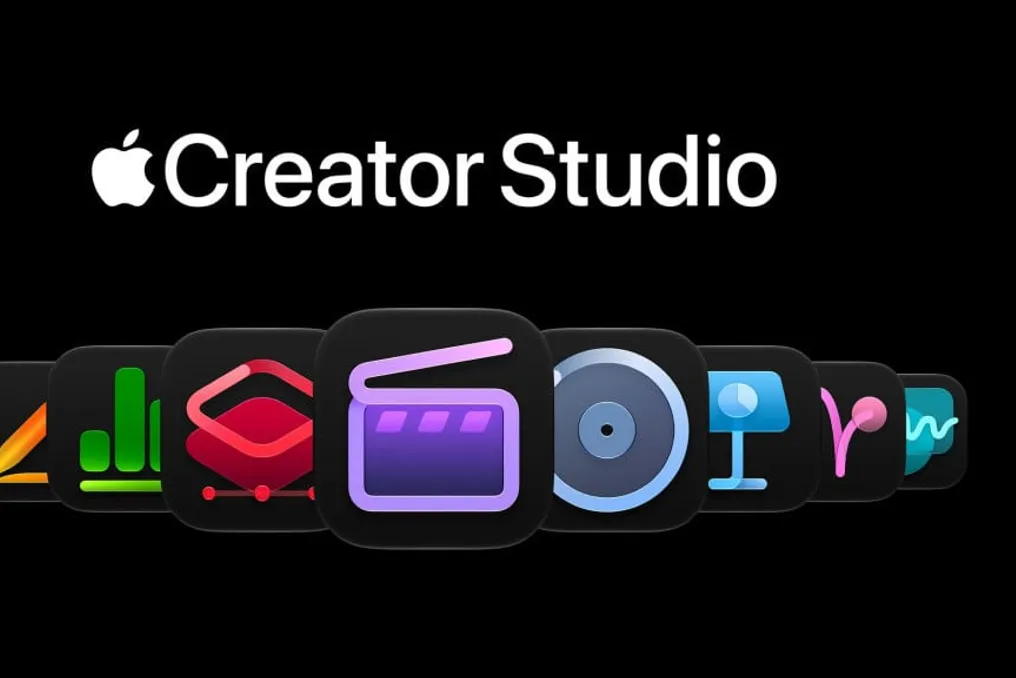
Apple integrates AI into Final Cut and Logic Pro, adding new features to Creator Studio
Read more
Olhar Digital
olhardigital.com.br

Apple integrates AI into Final Cut and Logic Pro, adding new features to Creator Studio

Apple has released an update for the Apple Creator Studio, introducing various advanced tools for video and image editing, as well as features for music production and document creation. Among the innovations are the incorporation of MotionVFX into Final Cut Pro, the ability to fill images using text commands, and the inclusion of artificial intelligence assistants in several productivity applications.

These improvements will be available on the App Store starting in November and will not incur extra costs for existing subscribers. For new subscribers, the monthly fee is R$ 39.90 or R$ 399 annually. There is a reduced rate for university students and educators, set at R$ 14.90 monthly or R$ 149 annually.

Final Cut Pro for Mac now includes MotionVFX integration, offering thousands of ready-made elements for audiovisual productions, such as titles, transitions, templates, and visual effects. Additionally, the Content Hub has been integrated into the editor, centralizing videos, photos, and backgrounds previously selected by Apple itself.

A feature that optimizes image editing during video assembly allows the user to open an image from the timeline in Pixelmator Pro, make the necessary adjustments, and save the result directly to the project, eliminating the need for re-importing the file. Final Cut Pro has also received support for transcription in 23 new languages, extra controls to refine animations, and the option to position clips outside the main narrative.

In Pixelmator Pro, the main addition is the Generate Fill function. This tool allows you to select a section of an image and describe the desired modification using natural language. The system handles adjusting lighting, perspective, and texture to ensure the generated content harmonizes perfectly with the original composition.

Logic Pro for Mac incorporates an intelligent assistant in beta, developed based on models from Apple and OpenAI. This assistance can be used to aid in musical composition, preparing vocal tracks, and guiding different phases of the production process. The application has also received a revamped sound browser, which adds loops, instruments, and effects. Thanks to the musical comprehension feature, the software automatically classifies and analyzes sounds inserted into the library. Integration with Splice expands possibilities for producers.

Stem Splitter has been enhanced, allowing components of the drums to be isolated, replaced, or rebalanced without depending on the original tracks. The update also includes a sound pack provided by producer Sergio George, who has won 20 Grammy Awards, containing Latin jazz and salsa elements.

Keynote, Pages, and Numbers have also received intelligent assistants in beta versions. In Keynote, the tool assists in creating and animating presentations; in Pages, it offers support in reviewing and drafting texts; and in Numbers, it helps organize data, suggesting charts and creating custom tables.

Compatibility with MCP (Model Context Protocol) allows external artificial intelligence agents to read content, make modifications, and automate tasks in these three programs. Furthermore, Keynote now accepts the open KEYX format, structured in JSON, aiming for greater integration with external tools.

The Content Hub will be expanded to include videos intended for presentations, documents, and spreadsheets, while Freeform will receive, starting in December, features for image editing in Pixelmator Pro and generating editable shapes via text commands.

Similar stories

Apple may have to pay hundreds of millions more in US patent dispute
Read more
olhardigital.com.br

Apple may have to pay hundreds of millions more in US patent dispute

Apple risks facing an even larger debt after being ordered to pay US$ 5.7 billion (approximately R$ 30.8 billion) in a patent infringement lawsuit in the United States. Taction Technology, which filed the suit, asked a federal judge to increase the compensation amount and add interest to the sum determined by a jury in September.

This request has the potential to raise the financial obligation of the iPhone manufacturer by hundreds of millions of dollars. The litigation relates to haptic feedback technology used in iPhones and Apple Watches, which allows the devices to generate vibrations detectable by touch.

In a document filed on Friday (16), Taction argued that the initial ruling only covers Apple sales made between 2021 and the end of March of the current year. For this reason, the company requested that the court also review sales made in the subsequent six months.

Additionally, the company requested the payment of retroactive interest on the judicial decision, calculated based on the California state legal rate of 7% (USA). According to Taction, this addition could add at least hundreds of millions of dollars to the original judgment amount. The company argued in the document that the volume of compensation set by the jury should not be an impediment to granting interest, also seeking post-judgment interest.

Apple Intelligence approved in China; tests to begin in October
Read more
olhardigital.com.br

Apple Intelligence approved in China; tests to begin in October

Tim Cook confirmed that Apple Intelligence has received approval for use in China and that a test version will be released as early as October. This information was disclosed by the state-owned Chinese newspaper The Paper following an interview given in Shanghai.

The initial implementation of this system will feature capabilities such as real-time translation, image editing tools, and writing assistance. However, the AI-powered Siri functionality will not be part of this first phase.

According to Reuters, Apple created a proprietary language model adapted for the Chinese market. This development was conducted in collaboration with the Alibaba Group, which provided support for the model's training process. This new strategy represents a shift from the company's previous approach in the country, which relied on third-party models to power its artificial intelligence features.

This move occurs within a specific regulatory context. In July, China's cyberspace regulator notified that Apple's generative artificial intelligence service had been duly registered for use on iPhones within Chinese territory.

During his visit to Shanghai, Cook also met with Wang Wentao, China's Minister of Commerce. According to the ministry itself, both discussed the advancement of artificial intelligence and Apple's business interests in the region.

Although testing is scheduled for October, The Paper did not specify an exact launch date. Furthermore, there is no forecast released regarding when the AI-powered Siri will reach the Chinese market.

Apple surpasses R$ 25.2 trillion in market value and poses an AI advancement challenge to the new CEO
Read more
olhardigital.com.br

Apple surpasses R$ 25.2 trillion in market value and poses an AI advancement challenge to the new CEO

Apple recorded a closing on Wednesday (14) with an estimated market value of US$ 5.005 trillion, which is equivalent to approximately R$ 25.2 trillion. This achievement makes it the second corporation in history to end the day with a capitalization exceeding US$ 5 trillion.

This milestone reinforces Tim Cook's legacy and sets a significant challenge for his successor, John Ternus: sustaining company growth and strengthening its presence in the artificial intelligence (AI) competition.

The shares of the iPhone manufacturer reached a record level, causing the market capitalization to slightly surpass the historical threshold. Although the company had crossed the US$ 5 trillion mark on six previous occasions during trading, it had never finished a session above this value. Nvidia was the first company to reach such a level.

The leadership transition occurred after 15 years of Cook's management at Apple. During his tenure, which ended on August 31, the company's market value multiplied by 13, and annual iPhone sales nearly quadrupled.

Strategic Challenges and Company Response

The company's current strategy faces new obstacles. High demand for components destined for AI data centers has caused shortages and increased the costs of memory and storage chips used in iPhone, Mac, and iPad devices.

In response, Apple implemented price increases on its products, including older iPhone models that would usually have reduced values after the launch of new generations. Theoretically, these adjustments could encourage consumers to postpone replacing their devices, negatively impacting sales.

However, so far, the market reception has been favorable: since the first round of price adjustments, the company's shares have risen by 25%. Analyst Wamsi Mohan from Bank of America believes that consumers will remain willing to pay more for the devices, allowing the company to maintain or even increase total profit despite lower margins.

Mohan also mentioned to The Wall Street Journal the potential of the future foldable iPhone, named iPhone Duo, and the AI innovations of Siri as factors that could drive device upgrades.

Artificial Intelligence as a Vulnerable Point

AI is seen as one of the most fragile aspects of Apple's strategy. The company failed to create its own cutting-edge model capable of competing with major market systems, causing Siri to lag behind competing assistants. The launch of ChatGPT intensified consumer expectations regarding chatbot capabilities on smartphones.

The company seeks to reverse this situation with a new version of Siri, developed with Google's support and scheduled for release in the Northern Hemisphere autumn. Although the assistant still has limitations compared to rivals, its native integration into the iPhone offers an advantage: Apple controls the device used by millions of people and has access to personal data that, with authorization, could enable more contextual functionalities.

However, the evolution of AI agents is happening at a rapid pace. Systems that can perform tasks on behalf of users increase pressure on Apple to develop competitive features and maintain its relevance in the sector.

Competition extends beyond just software. OpenAI plans to introduce a line of AI devices and has recruited hundreds of former Apple employees to boost its hardware strategy. In July, Apple sued OpenAI, alleging theft of trade secrets. OpenAI contested, stating it knew of no evidence supporting the accusation.

In a new lawsuit on Wednesday, OpenAI accused Apple of hiring one of its employees who allegedly took confidential files with him. The iPhone manufacturer refuted this, stating it had found no evidence to support the claim.

This dispute demonstrates that device dominance can be as crucial as AI model development. If OpenAI manages to establish a new way of interaction between people and technology, it could challenge the position Apple consolidated with the iPhone.

For Ternus, progress in AI will be decisive in defining the company's next phase. The new CEO will need to convert AI into a source of innovation and growth without neglecting the rigorous financial discipline that characterized Cook's management.

Popular