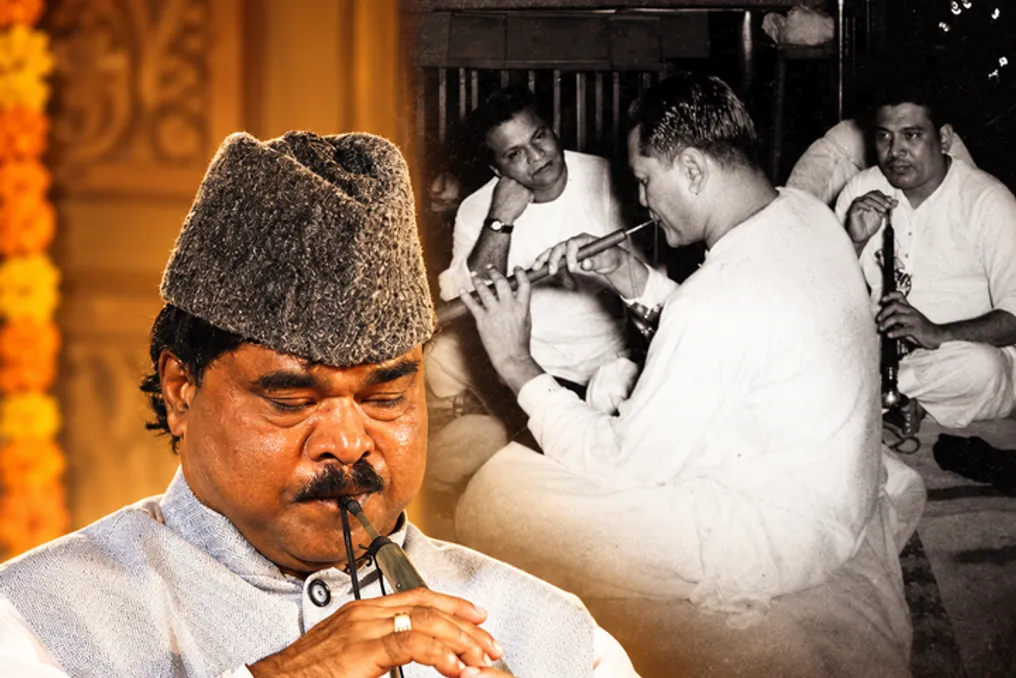
Musician Pandit S. Ballesh Bhadjanthri supports the tradition of playing the shehnai in India
Read more
The Better India
thebetterindia.com

Musician Pandit S. Ballesh Bhadjanthri supports the tradition of playing the shehnai in India

The shehnai was once an integral part of wedding celebrations across India. However, with the rise of electronic keyboards, live performances have begun to fade. Pandit S. Ballesh Bhadjanthri has dedicated decades to finding new methods to preserve the sound of this instrument.

He was born into a family of shehnai performers in Karnataka and initially studied under his father before training with the legendary Ustad Bismillah Khan. The latter played Raga Kafi at the Red Fort on August 15, 1947, during India's independence celebration.

Ballesh took the shehnai beyond wedding mandaps and classical concerts, integrating it into Indian cinema. He contributed to over 85,000 songs for films in 16 languages, collaborating with composers such as A. R. Rahman and Ilaiyaraja, thereby presenting his unique sound to millions of listeners.

It is possible that people heard his music without knowing his name; Ballesh performed the introductory shehnai passage in the song 'Yeh Jo Des Hai Tera' from the film 'Swades', conveying the instrument's emotion in a song listened to by an entire generation.

In addition to his work in the film industry, Ballesh founded the Tansen Academy of Music Trust to promote traditional music, train young musicians, and support needy artists. In 2022, he was awarded the Padma Shri for his contribution to the field of music.

Nevertheless, the future of the shehnai cannot depend solely on the legacy of one musician. It depends on whether young artists choose to learn the instrument, whether they have opportunities to earn a living through performances, and whether they find an audience willing to listen to this music. Ballesh has spent decades ensuring that the shehnai continues to resonate.
Similar stories

Five Indian Writers Who Refresh Narrative Through Dialects, Comics, and Wordplay
Read more
thebetterindia.com

Five Indian Writers Who Refresh Narrative Through Dialects, Comics, and Wordplay

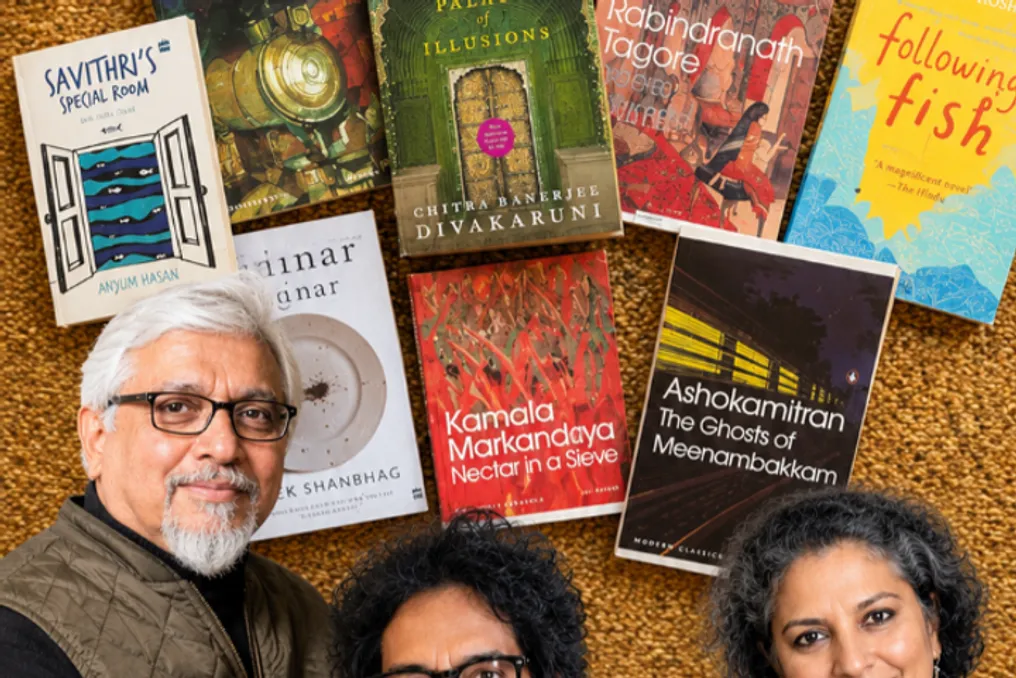
This year, Ann Carson received the Nobel Prize in Literature for reimagining ancient Greek myths through poetry, fiction, and other forms. Below are five Indian authors who experiment with literature in unique ways.

Amitav Ghosh, in the novel 'Sea of Poppies,' describes the lives of people from different social strata traveling across the Indian Ocean in 1838. He brings this world to life by using regional expressions and sailors' jargon, blending English with Indian dialects.

Sarnath Banerjee, in the book 'The Barn Owl's Wondrous Capers,' combines old Calcutta with legends, historical data, illustrations, and fictional documents. Readers must piece the story together themselves; his specialty lies in storytelling through comics, history, and visual clues.

Gitanjali Shree, in the work 'Shree's Tomb of Sand,' narrates how an 80-year-old woman starts a new life after her husband's death. The novel rejects a straightforward plot, employing playful wordplay, shifting perspectives, and unexpected deviations, which is her narrative innovation.

The novel 'Shree's Tomb of Sand' was originally written in Hindi as 'Ret Samadhi' and later translated into English by Daisy Rockwell. In 2022, it became the first Hindi novel to receive the International Book Prize awarded in London.

Arvind Krishna Mehrotra, in 'The Absent Traveller,' translates ancient Prakrit poems about secret meetings, stolen glances, and heartache into English, preserving their conciseness, wit, and power. His approach is to make ancient poetry relevant in another language.

'The Absent Traveller' is based on the 'Gatha Saptashati,' a collection of Prakrit poems attributed to the Satavahana King Hala. The short verses give voice to ordinary people and lovers, so Mehrotra's English remains equally brief.

Chitra Banerjee Divakaruni, in 'The Palace of Illusions,' retells the epic 'Mahabharata' from Draupadi's perspective, exploring her desires, doubts, and experiences that often go unnoticed in traditional versions. Her originality lies in giving a familiar epic a new voice through its main heroine.

Despite the differences, these authors share a similar method: Ghosh, Banerjee, Shree, Mehrotra, and Divakaruni alter the way the story is presented—whether through language, form, translation, or point of view, much like Carson does.

Ann Carson changed a myth, Shree transformed a novel, and Mehrotra updated ancient poetry. If these writers broke one rule of storytelling, what rule would you like to see broken next in Indian literature?

Popular