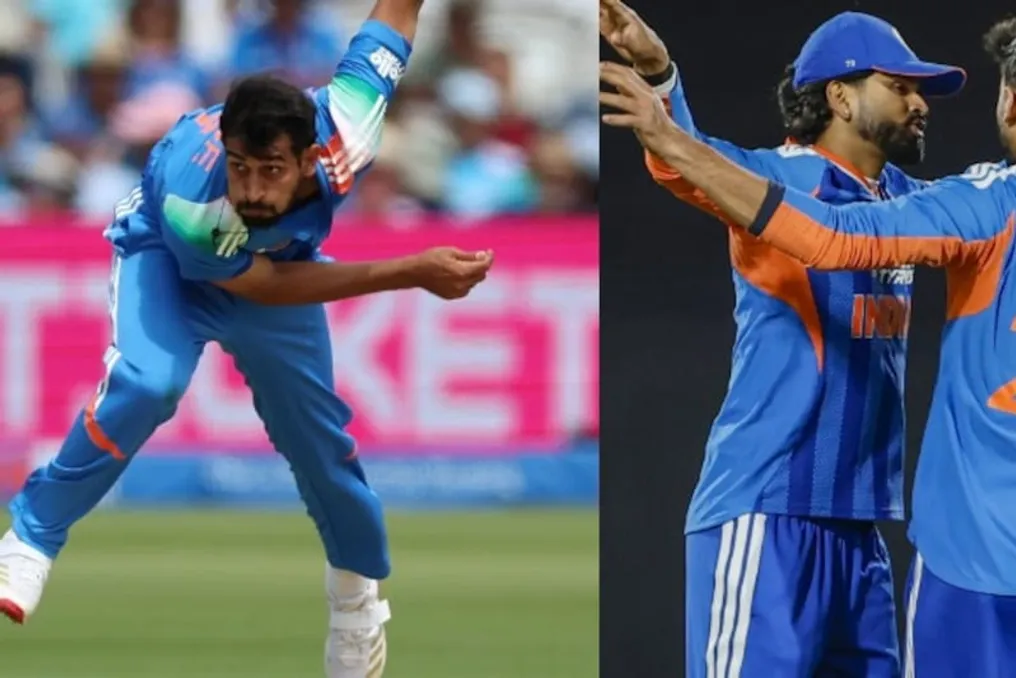
After Prince Yadav's error, Shreyas Iyer and Axar Patel expressed dissatisfaction on the field
Read more
Aaj Tak
www.aajtak.in

After Prince Yadav's error, Shreyas Iyer and Axar Patel expressed dissatisfaction on the field

The Indian team secured a memorable victory over New Zealand at the ground in Wellington, demonstrating powerful batting play. However, an incident occurred during the match when the team captain, Shreyas Iyer, appeared extremely irritated.

During the game, captain Shreyas Iyer and star all-rounder Axar Patel lost their composure. In the final over of New Zealand's innings, India missed a golden opportunity to take a wicket due to the slow and careless action of young fast bowler Prince Yadav.

Video of this incident is actively circulating on social media. This dramatic moment took place after the 19th over of New Zealand's innings, in the last over.

Daryl Mitchell and Josh Jackbaugh were on the crease, and the New Zealand team scored 189 runs. During one ball of the over, Axar Patel quickly threw the ball from long-off directly towards the stumps, creating an excellent chance for a wicket.

However, fast bowler Prince Yadav showed sluggishness, standing in the middle of the field, which prevented him from reaching the stumps in time to receive the ball. Due to Prince's irresponsible behavior and lack of concentration, the throw did not hit the stumps, and the chance for a wicket was missed.

As soon as the opportunity was missed, captain Shreyas Iyer became furious and reacted sharply to the young fast bowler. At the same time, Axar Patel, who made the throw, also looked very angry because Prince was standing in the middle of the field and not positioned for coverage. He began expressing his dissatisfaction to Prince right on the field. This anger, captured by broadcast cameras, has become a topic of discussion on social media.

Similar stories

Mitchell Santner blames fielding errors and dropped catches for loss against India
Read more
www.aajtak.in

Mitchell Santner blames fielding errors and dropped catches for loss against India

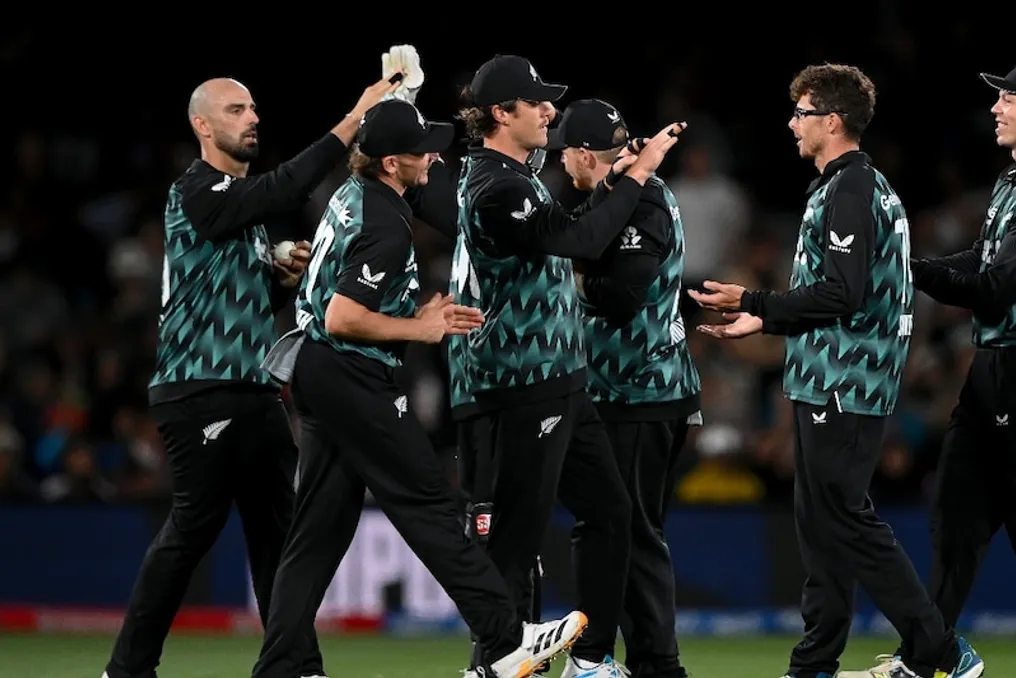
In the match between India and New Zealand, held at Hagley Oval in Christchurch, the New Zealand team suffered a painful defeat to India by a score of 4 wickets. Nevertheless, the captain of the New Zealand team, Mitchell Santner, managed to make an impression in this game, taking four wickets and forcing India to play defensively.

Starting first, the New Zealand team scored 180 runs, losing five wickets in 20 overs. When the Indian team batted in response, they were temporarily in a difficult position, but ultimately the young players managed to succeed. Thus, despite what initially seemed like a guaranteed victory for New Zealand, they had to face a defeat.

After the game, New Zealand captain Mitchell Santner looked quite disappointed and attributed the loss to minor shortcomings in the team's fielding, as well as a dropped easy catch. Santner stated that if they had caught all the balls in the match, the outcome could have been different. He acknowledged that small mistakes can have a big impact against a strong team.

He noted the good performance of Tilak Verma, Naman Dheer, and finally Nitish Kumar Reddy. Santner also emphasized that if his team could have taken one more wicket at the end of the match, the game would have been completely decided, but the Indian batsmen demonstrated excellent control under pressure. These batsmen forced the bowlers into errors with their powerful batting. The New Zealand captain was particularly displeased with the fielding errors and missed opportunities.

During the match, Bowen Jacob dropped an easy catch of young Vaivava Suryawanshi, bowled by Michael Bresshaw, which angered Santner, who was captured by camera. After this save, Vaivava could not last long and was dismissed after scoring 4 runs. Santner believes that missing such crucial moments and showing sluggishness in the field cost his team dearly.

Earlier, New Zealand started the match poorly, quickly losing the first three wickets. However, after this, Glenn Phillips (70) and Bowen Jacob performed brilliantly, bringing the score to a respectable 180 runs. Santner highly praised his batting unit, noting that the bowlers showed excellent play in the initial overs, but minor errors in fielding at critical moments deprived them of a chance to win. Furthermore, he hinted at the need for player rotation in upcoming matches of the series, considering the load on them.

West Indies Coach Darren Sammy Sparks Controversy in India After Posting That No Score Is Safe
Read more
www.aajtak.in

West Indies Coach Darren Sammy Sparks Controversy in India After Posting That No Score Is Safe

The head coach of the West Indies cricket team, Darren Sammy, published a post on the social media platform X (formerly Twitter) on Thursday that caused widespread resonance among Indian fans. Sammy wrote: 'Wow... no score is safe. I know this feeling.' Following this phrase, which was succeeded by two English letters, the post became the subject of significant buzz and viral spread.

The situation relates to the results of two matches held on the same day, Thursday (October 22). In one of them, the Sri Lankan team set a historic record by achieving a massive target of 430 runs against England in an ODI match in Rawalpindi, with only one ball remaining at the end of the game.

In another match, in Christchurch, the New Zealand team (Black Caps) scored 225 runs in a T20, but India managed to win, securing those points with a 4-wicket advantage with 2 balls remaining. It was after these games that Sammy posted his message.

Sammy's post, who twice won the T20 World Cup, garnered millions of views in a matter of hours. Cricket critics noted that Sammy expressed a valid thought that even large scores do not guarantee safety in modern times.

However, the final words added by Sammy at the end of the post were interpreted by Indian fans as an insult, leading to a wave of memes under the post. Many users jokingly suggested that Sammy had learned Hindi during his tour in India.

It is worth noting that in the T20 in Christchurch, the New Zealand team initially scored 225 runs, which the Indian team overcame by a margin of 4 wickets with 2 balls left. In the series match continuing in Rawalpindi, England scored 429/4 thanks to a brilliant century by Harry Brook. In response, Sri Lanka managed to achieve a triumph in a tense battle, winning by 2 wickets with 1 ball remaining. In this contest, Pathan Ratnake scored 130 runs, while Dasun Shanaka and Avishka Fernando scored 97 runs each.

India's New Philosophy in T20: Team Ready to Attack Despite Bowling Issues
Read more
www.aajtak.in

India's New Philosophy in T20: Team Ready to Attack Despite Bowling Issues

India won the first T20 match against New Zealand, achieving a target of 226 runs in 19.4 overs.

This victory was achieved not only through strong batting but also demonstrates the Indian team's aggressive approach to chasing targets, unafraid to take risks. Despite shortcomings in the bowling game, the batsmen managed to compensate for these weaknesses with their power.

India's strategy became clear: instead of restricting the opponent to a low score, the team found it more advantageous to surpass their total. However, such a tactic will only be effective if there are consistent high performances in the attack, as chasing a target of 225 runs every day will not be easy.

The target of 226 runs indicates that serious questions face the Indian bowling unit. Allowing over 200 runs in T20 itself is a signal that the strategy, length, and line of the delivery need improvement, especially towards the end of the match. Nevertheless, India's batting completely changed the course of the game.

By reaching 230/6, India proved that its batting does not depend solely on stars. The squad includes players capable of increasing aggression under the pressure of a difficult task.

This victory is more of a statement about batting strength than a success of bowling.

Sanjju Samson laid a solid foundation for the chase, scoring 67 runs off 33 balls, including eight fours and four sixes. His key contribution was preventing the pressure of a large score from overwhelming the Indian batting.

Samson showed from the beginning that simply preserving wickets is insufficient to achieve a target of 226 runs; maintaining tempo and putting pressure on the bowlers is necessary. His play allowed subsequent batsmen to play in a more open manner.

The performances of Shreyas Iyer with 42 runs and Naman Dira without getting out for 42 runs (off 15 balls) were important elements of this victory. Axar Patel also made a useful contribution of 24 runs.

The significance of these innings is not limited to the runs scored. When chasing a big score, the quick start of one batsman must be supported by others. This is where Shreyas and Naman played their role.

Naman's unbeaten knock was particularly crucial, as the match needed to be concluded even after approaching the target. India demonstrated that it has options to score runs at different stages of the match, winning in 19.4 overs.

Despite the brilliant victory, it is crucial to understand the other side of the coin. Reaching a target of 226 runs shows India's strength, but this does not allow for ignoring the bowling deficiencies.

India's aggressive strategy is its strength, but a truly strong team is one that can control the game with both batting and bowling. India has shown that a large score is an opportunity to attack, not a cause for fear.

However, to maintain this dominance in the series, the bowlers will have to raise their level. India's new T20 declaration is this: if you make 225, we will make 226. But true dominance will come when the ball rules over the opponent alongside the bat.

Popular