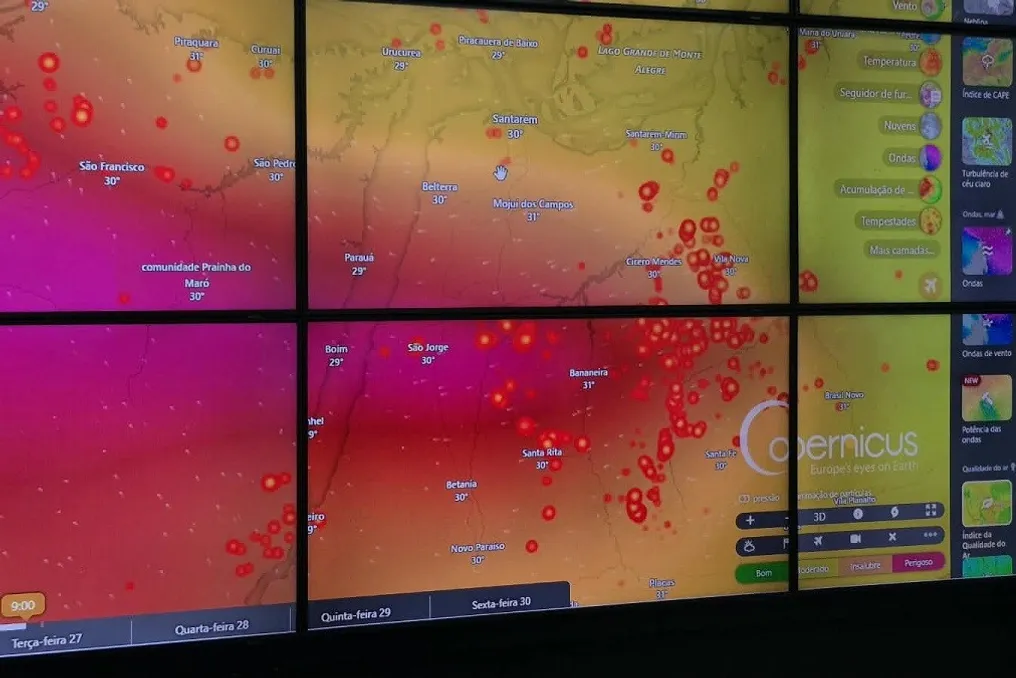
The air quality in the city of Santarém, located in western Pará, reached the worst level recorded recently in monitoring, being classified as 'poor'. This alert was issued by Professor Gabriel Costa, who coordinates the agro-meteorology and environmental diagnosis laboratory at the Federal University of Western Pará (Ufopa).
According to the researcher, the national air quality scale defined by the National Environmental Council (Conama) covers ranges from 'good' to 'poor'. Being in the worst range implies a high risk to human health, presenting serious dangers, especially for vulnerable groups such as children, the elderly, pregnant women, and individuals with respiratory conditions.
Experts suggest measures to reduce the effects of inhaling smoke, advising the population to avoid outdoor physical exercise and restrict direct exposure to pollution. Furthermore, it is crucial to increase daily water intake and ensure ventilation of indoor spaces to prevent the accumulation of soot particles.
The Ufopa laboratory has been constantly monitoring the air quality in Santarém since November of the previous year. Professor Gabriel Costa emphasized that this is the first record in the municipality to reach the poor quality level during the entire monitored period.
Satellite data analyses conducted by the university indicate that the heavy pollution is transported by wind coming from burns and forest fires that occurred in neighboring cities, such as Uruará and Mojuí dos Campos.
With the aim of mitigating the crisis, there was a meeting between representatives of Prevfogo and Ibama and researchers from Ufopa. The meeting aimed to establish a situation room and offer support to the operations combating the most critical fire outbreaks in the western region of Pará.