How to incorporate dozens of vegetables and fruits into the weekly diet, according to new health guidelines
Read more
Grupo Globo
g1.globo.com

How to incorporate dozens of vegetables and fruits into the weekly diet, according to new health guidelines

A new health guideline has gained prominence in the last two years, succeeding the recommendation to walk 10,000 steps daily and consume five portions of fruits and vegetables daily. Currently, the guidance suggests including 30 types of plant-based foods in the weekly diet.

This trend is based on a 2018 study which demonstrated that individuals who reported consuming at least 30 categories of vegetables per week had a more diverse gut microbiota compared to those who consumed fewer than ten types. Subsequent research reinforced that adopting a diet rich in vegetable variety can optimize the composition of the gut microbiota, bringing known benefits such as the reduction of inflammatory processes and increased longevity and quality of life.

Initially, the idea of consuming 30 types of vegetables per week seemed daunting and almost unattainable, raising concerns about the need to prepare complex salads at every meal and managing the large amount of fiber. However, after one week of practice, the author reported that it was surprisingly simple, exceeding the goal and consuming 51 types of plant-based foods.

More vegetables, greater microorganism diversity

There is no strict obligation to reach exactly 30 types of vegetables. Rob Knight, director of the Microbiome Innovation Center at the University of California in San Diego, USA, led the research that popularized this suggestion. According to Knight, the number 30 does not have a specific justification, given that few participants in the study exceeded this mark. The researcher emphasizes that people who consume 20 or 25 varieties can also reap similar health benefits, with the greatest gains noted in those with a less varied diet; if the variety is already reasonable, additional increase will not bring such expressive benefits.

The recommendation of 30 types of vegetables has become a kind of challenge, where each distinct food item scores one point. Items are categorized into six groups: fruits, vegetables and legumes, whole grains, pulses (such as beans, lentils, and chickpeas), nuts and seeds, and herbs and spices. Tea, coffee, and chocolate are also counted, as they all contain beneficial substances, such as antioxidants.

Federica Amati, a nutrition researcher at Imperial College London, UK, was surprised to note that spices are part of this list. She points out that studies indicate that adding a combination of seasonings to meals can generate measurable changes in the gut microbiota in just 48 hours. Some sources suggest assigning a quarter point to each tea, coffee, or herb consumed. Amati explains that small dietary modifications can quickly alter what she calls the intestinal 'microorganism ecosystem,' but for the effects to be lasting, maintaining variety over time is crucial. Furthermore, Amati highlights that this advice encourages the consumption of foods beyond the usual ones, such as apples, cucumbers, and bell peppers. Scientific studies indicate that low consumption of whole grains, nuts, and seeds is among the main risk factors for premature mortality.

Although consuming so many different foods can represent a high cost, especially for those who purchase many fresh products, the author managed to combine fresh ingredients with pantry items and frozen products during their experience.

My week with over 30 vegetables

During the experimental period, breakfast maintained the routine of overnight soaked oats, supplemented with chia seeds and yogurt, but there was variation in the added fruits. Due to lack of time for lunch, sandwiches or leftovers from the previous night's dinner were chosen, which helped prevent waste. Dinner, on the other hand, required more planning, focusing on not repeating ingredients and prioritizing recipes that incorporated a good diversity of vegetables, while maintaining a familiar culinary style.

On Monday, dinner consisted of a chickpea tagine, a quick and flavorful recipe from BBC Good Food, enriched with peas to increase fiber. The vegetables consumed that day included oats, blueberries, chia seeds, cabbage, peas, chickpeas, couscous, tomato, onion, and raisins, in addition to various spices counted as a single item.

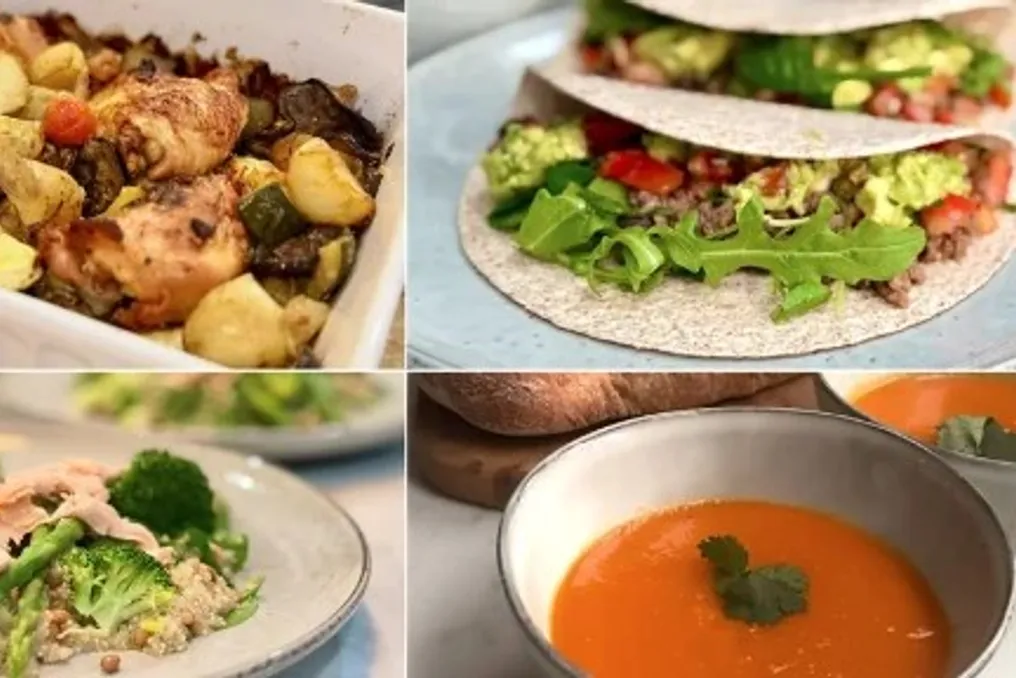
On Tuesday, Selena Wu, a nutritionist at King's College London, UK, advises including fiber through nuts or seeds in breakfast cereals, or by serving a sandwich accompanied by a salad, as was done for lunch. Dinner was a quinoa salad with green lentils, asparagus, and grilled salmon. The vegetables consumed that day were raspberry, tangerine, apple, quinoa, broccoli, spinach, asparagus, lemon, garlic, and chives.

Wednesday brought a curry, a frequent recipe, but a new version was tried, adding sweet potato and red bell pepper, served with green beans. The family enjoyed it, and the dish used a considerable variety of spices. The items consumed included coffee, banana, cashew, coconut milk, sweet potato, green beans, and brown rice, in addition to red bell pepper.

On Thursday, being close to the 30 vegetable goal, the focus remained on maximizing ingredient variation within the established plan. A simple and quick soup was prepared with onion, garlic, carrot, lentils, and sweet potato, accompanied by sourdough bread and salad. A healthy smoothie made of frozen banana, cocoa powder, and cashews was also made. The registered vegetables were tea, cocoa powder, cashews, pumpkin seeds, red lentils, and arugula.

On Friday, it became more challenging to find new foods, since each item could only be counted once. Despite this, fruits, vegetables, and legumes continued to be included, even with repetition. Tracking herbs and spices was also complicated. The day was dedicated to tacos, whose filling was made with black beans and ground meat, using ripe avocados for a good guacamole and tomato sauce. The vegetables consumed were whole wheat tortillas, cucumber, black beans, avocado, and fresh cilantro.

Saturday, due to the rush, stir-fried pasta with tempeh was chosen, a cooked and fermented soy product, although another protein could have been used. The children did not approve of the dish, and preparing the tempeh generated a slight bitterness, leading to a second, simpler pasta dish. The items consumed were dried mango, peanuts, tempeh, olive, Chinese mustard greens, baby corn, and sesame seeds.

Sunday, with decreasing willingness to try new recipes, the oven was decided upon for most of the preparation, making roasted chicken with vegetables on the same tray, accompanied by a salad. He managed to finish the week without needing to go to the supermarket, utilizing what was left in the fridge, such as eggplant, zucchini, and potatoes, in addition to thawed chicken thighs. The vegetables of the day were carrot, eggplant, zucchini, and potato.

Changes that are here to stay

At the end of the week, the total reached was approximately 51 types of vegetables. The most difficult aspect was organizing the menu and preparing distinct dishes after an exhausting day, but it is expected that this will become easier with the repetition of recipes. There was also a surplus of food, which ensured healthy lunches the next day, and snack consumption was reduced, avoiding restaurants and generating savings. Even the children, usually demanding, tried more new foods.

The most surprising thing was discovering that such intense preparation was not necessary; with usual meals, it would already be possible to get close to 30 points. It is notable how, when considering coffee, tea, chocolate, spices, and whole grains, the number of vegetable types quickly reaches 30, provided the dietary base is already healthy. However, the author intends to maintain the variation of weekly purchased ingredients and seek ways to integrate more vegetables into meals, keeping his stock of nuts and seeds for continuous use.


Similar stories

Nine new oncological drugs begin distribution through the SUS in Brazil
Read more
olhardigital.com.br

Nine new oncological drugs begin distribution through the SUS in Brazil

The Ministry of Health has started distributing nine high-tech medications intended for cancer treatment within the Brazilian public network. This initiative is part of a governmental plan focused on expanding access to oncological therapies in the country.

The drugs cover 13 clinical indications, covering treatments for high-incidence cancers such as breast, prostate, and lung cancer, as well as lymphomas. Initially, it is expected to benefit more than 116 thousand patients across 20 health units located in 17 states, with the goal of covering the entire public network by the end of the year.

Maria Ignez Braghiroli, an oncologist specializing in gastrointestinal tract tumors at Oncologia D’Or and a member of the Gastrointestinal Tumor Group at the State Cancer Institute of São Paulo (Icesp), detailed the impact of including these new medications in the Unified Health System (SUS), their applications, and the necessary care during treatment.

Among the introduced medications are abemaciclibe, used in breast cancer treatment, and pazopanib, indicated for advanced stages of kidney cancer. These therapies offer more treatment options but require rigorous medical monitoring and specific care.

According to Maria Ignez, abemaciclibe works by inhibiting proteins that stimulate tumor cell proliferation. It is used in a type of breast cancer that is hormone receptor positive. The treatment is often combined with hormonal therapy and, because it is oral, allows the patient to administer it at home, following prescribed times and doses, usually twice a day.

The oncologist warned that the most common side effect is diarrhea, especially in the first weeks, requiring constant monitoring. Additionally, it can cause fatigue and nausea in some individuals.

Regarding pazopanib, Maria Ignez clarified that it interferes with processes that promote tumor growth and the formation of blood vessels that nourish cancerous cells. It is an anti-angiogenic targeted therapy, released by the SUS for renal cell cancer, because it blocks signals that drive tumor growth and vascularization, restricting nutrient supply.

The use of pazopanib requires continuous vigilance, especially due to possible changes in blood pressure and liver function. Hypertension can occur even in patients without prior history, and liver changes must be checked through periodic blood tests. The doctor added that despite the increased risk of bleeding, the general tolerance of the drug is reasonable when compared to traditional chemotherapy.

Another novelty is the inclusion of trastuzumab, already used in certain breast tumors, to treat specific cases of stomach and gastroesophageal junction cancer. This indication is linked to the presence of the HER2 protein, whose amplification occurs in a percentage of gastric tumors.

Braghiroli explained that the efficacy of trastuzumab in this new context was investigated in studies over ten years ago. Initially, the drug was used in breast tumors with HER2 amplification, and a 2010 study demonstrated its benefit in treating gastric tumors with this molecular characteristic. Since then, it has been approved in combination with chemotherapy for specific tumors.

Research continues to advance, with recent studies, such as one from 2023, showing the benefit of combining immunotherapy with this combination. The doctor emphasized that for the SUS, this is a significant advance, given that this medication has proven efficacy for some time.

The list provided by the Ministry of Health includes treatments for various types of cancer, whose indications depend on the characteristics and stage of the disease. Abiraterone, for example, acts on hormonal stimulation, a key mechanism in prostate cancer progression. By reducing testosterone production, it helps control the disease, even in areas where conventional hormonal treatments were not fully effective.

According to the specialist, abiraterone is used when standard hormonal blockade methods fail, being a well-established treatment in clinical practice. However, not all treatments are universal; the indication for some depends on detecting specific genetic or protein alterations in the tumor cells, making laboratory tests crucial for therapeutic decisions.

Gefitinib, used against certain lung tumors, is an example of this. Although it is an established treatment, it is only indicated if the tumor presents a mutation in the EGFR gene, conferring sensitivity to the therapy. This alteration is confirmed by a molecular test performed on a tumor sample collected during diagnosis.

In addition to the provision of medications, the Ministry of Health has begun distributing 400 thousand fecal immunochemical tests to Brazilian states and capitals. This action aims to intensify the prevention and early diagnosis of intestinal cancer, targeting men and women between 50 and 75 years old.

The test detects traces of blood in the feces, even those invisible to the naked eye, which may indicate existing polyps or tumors. Early identification allows referral for complementary exams, such as colonoscopy, which allows visualization of the intestine and removal of polyps. Several medical societies recommend this preventive screening.

The fecal immunochemical test serves as the first phase of this investigation: a positive result directs the individual to colonoscopy to determine the source of the bleeding and evaluate lesions. Other improvements in the public network include the implementation of cervical cancer screening with DNA tests and federal funding for video-thoracic oncological surgeries, which allow for faster recovery.

Despite the expansion of these initiatives, the main challenge for the SUS remains ensuring that the availability of medications, exams, and procedures translates into effective care, guaranteeing complete patient follow-up throughout the entire treatment process.

Two smartwatch options on sale for health and style monitoring
Read more
olhardigital.com.br

Two smartwatch options on sale for health and style monitoring

For those considering buying a smartwatch, this is an opportune moment, as two good alternatives have been selected on sale on Amazon, catering to different profiles and needs.

The Samsung Galaxy Fit3 features a 1.6-inch AMOLED screen, providing a wide and clear view to track notifications, physical activities, and health indicators directly on the wrist. This graphite-colored model has a sophisticated design and includes functionalities such as heart rate tracking, blood oxygen saturation, and sleep control. Furthermore, it is water-resistant and has a long-lasting battery, making it a practical option for daily life.

The Redmi Watch 6 Active, manufactured by Xiaomi, offers an affordable and functional solution, perfect for those who want to start in the world of smartwatches while maintaining important features. In the Sunset Orange shade, it stands out with its vibrant look and provides constant health monitoring, covering heart rate and SpO2, in addition to supporting various sports modes and receiving phone notifications. Its robust battery ensures several days of use without frequent recharging.

Due to the risk of promotional stock running out quickly, it is recommended to check the current conditions on Amazon through the indicated buttons and secure the smartwatch before the offer ends.

Inmate with heart problems dies in Venezuelan prison; observatory denounces failures in medical assistance
Read more
noticiasaominuto.com

Inmate with heart problems dies in Venezuelan prison; observatory denounces failures in medical assistance

The Venezuelan Prison Observatory (OVP) denounced the death of another inmate suffering from heart disease at the Judicial Detention Center of the Island Region, located in the state of Nueva Esparta, northeast of the country. César Ramón Aguilera Villahermosa died on October 23 while detained.

The OVP released a statement on social media, stating that the death reignites the debate about the conditions of medical care in Venezuelan prisons and the obligation of the system to guarantee the health of those in custody. The denunciation comes after the OVP warned that between April and September 2026, more than 60 prisoners died under state custody.

According to the OVP, most of these deaths were linked to severe malnutrition, complications from illnesses, and the absence of adequate specialized care. Specifically regarding Aguilera Villahermosa, the OVP reported that he died due to 'cardiogenic shock, dilated cardiomyopathy, severe arteriosclerosis, and arterial hypertension,' demanding that authorities clarify whether there was prior diagnosis, what treatment he received, and if he had access to specialized and timely medical care.

Humberto Prado, director of the OVP, requested an immediate, thorough, and impartial investigation to determine the circumstances of Aguilera Villahermosa's death. He demanded information about the inmate's medical history, the treatments provided, and the actions taken by penitentiary authorities regarding his pathologies. The statement emphasizes that individuals deprived of liberty depend on the State to obtain medications, medical evaluations, and hospital transfers, and that in cases of death in custody, authorities must account for the support received, not just report the cause of death.

Additionally, the OVP denounced that the Margarita prison was the scene of one of the most notorious episodes of the 'pranato,' which is the control system exercised by organized crime and mafias in local prisons. This location was under the domain of Teófilo Rodríguez Cazorla, known as 'El Conejo,' who held great power, including operating a pool and nightclub. After his assassination on January 24, 2016, inmates responded with gunfire from inside the prison, exposing the armed control existing in the establishment.

In response to these events, the OVP mentioned that there was an intervention and evacuation of the prison in February 2016, resulting in the transfer of more than a thousand inmates to other units, while authorities announced renovation and restructuring works. The non-governmental organization also recorded in 2024 that at least 125 people remained imprisoned in that center, even without public communication about its rehabilitation or formal reopening.

The OVP adds that it has received reports that some inmates paid to remain in the facility, while others were kept in overcrowded prisons, both in island police stations and in other states of the country. Ten years after the evacuation, the operation of the prison continues to raise questions about the situation of the prison population, detention conditions, and oversight mechanisms. Humberto Prado reinforces the request for investigations to cover all human rights violations in Venezuela, especially those related to life, such as deaths due to lack of medical assistance and acts of internal violence, demanding the identification of those responsible. Finally, he urged local authorities to detail the current conditions of the Margarita prison, the number of inmates, and the health services available there.

Popular