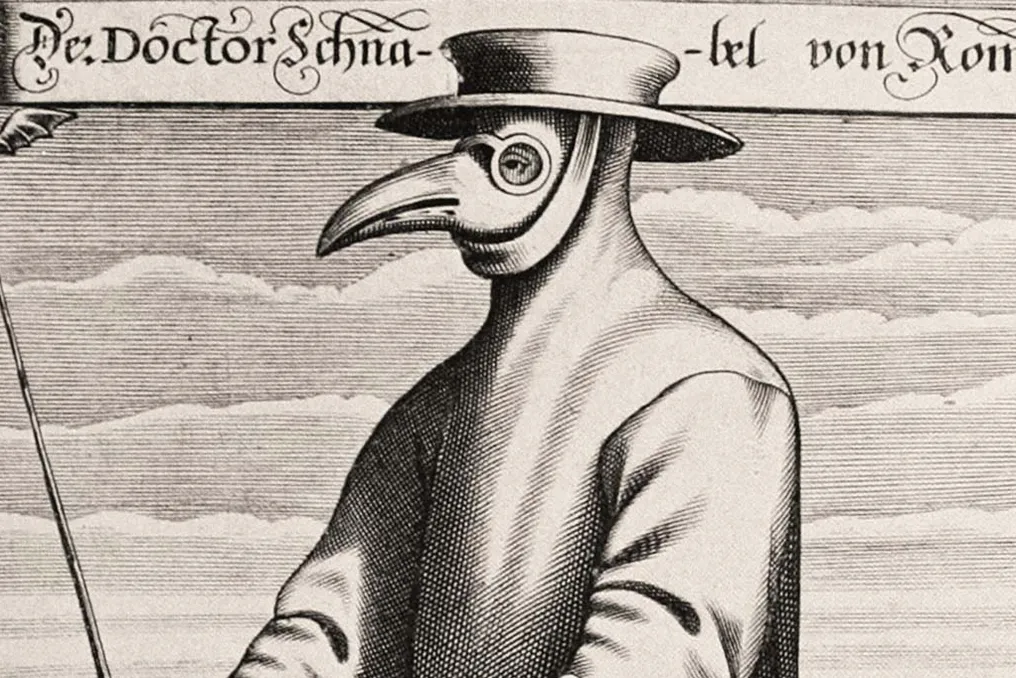
Black Death led to the abandonment of plantations and reduced biodiversity in medieval Europe
Read more
Super Abril
super.abril.com.br

Black Death led to the abandonment of plantations and reduced biodiversity in medieval Europe

The Black Death impacted virtually every aspect of European society during the 14th century, resulting in the death of one-third to half of the continent's population. In addition to altering ways of life, work, and people's organization, a less noticed effect of this epidemic was the drop in local biodiversity, directly linked to the neglect of agricultural areas.

Contrary to popular perception, medieval agricultural practices in Europe were beneficial for biodiversity. Unlike modern agriculture based on monoculture, peasants mixed various types of crops with forests, heathlands, and lagoons. This combination of ecosystems, known as a mosaic, generated more niches for different plant species to flourish.

This dynamic was altered with the arrival of the Black Death. Due to the bubonic plague epidemic, caused by the bacterium Yersinia pestis, vast expanses of cultivated land were left unused amidst social chaos and the loss of millions of lives. The absence of cultivation that sustained these varied environments led to a decrease in biodiversity, with an estimated drop of about 40% in plant species in these regions.

These findings were obtained from an article published in the journal Ecology Letters, which analyzed over 100 pollen collection sites, totaling approximately 4,600 samples. The study sites ranged from the northern, northwestern, and western regions of France and the southwest of the United Kingdom to the Swiss Alps.

The pollen records were examined to provide data on past biodiversity. Examples include cereals such as wheat, barley, and rye, which constituted an essential part of medieval agriculture; the presence of the pollen of these crops indicates the existence of nearby plantations.

The researchers categorized the pollen data into three groups, depending on the occurrence of cereal pollen: areas where agricultural production increased, areas where it decreased, and areas with no evidence of cereal cultivation. Overall, a decline in biodiversity as a whole was observed, driven by areas that recorded a drop in agricultural production.

Almost 150 years later, in the 16th century, biodiversity began to recover, even surpassing pre-Black Death levels, parallel to the resurgence of population growth and the return of rural activities.

For scientists, the period of the Black Death offers an ideal scenario to study the impacts of human intervention on biodiversity. Besides the bubonic plague, the preceding decades already represented a turbulent time for Europe, marked by the Great Famine, when the cold and humid climate of the early century caused widespread crop losses and unprecedented levels of starvation, between 1315 and 1317.

With the reduction in biodiversity observed during that period, the study strengthens an increasingly accepted hypothesis: that landscape modifications made by humans frequently generate more diverse habitats, called mosaics. This model, in turn, would be responsible for preserving a greater number of species compared to uniform landscapes.

Additionally, this highlights the disparities between land use in the Middle Ages and modern times, and their respective consequences for biodiversity. In the 20th century, global biodiversity suffered a reduction of up to 11%, with human actions, such as changes in land use, pollution, and climate change, being the main drivers of this decrease. In contemporary agriculture, the practice of monoculture is a primary factor in reducing biodiversity.
Similar stories

Study reveals that plants divert roots from decomposing organisms to avoid toxins
Read more
super.abril.com.br

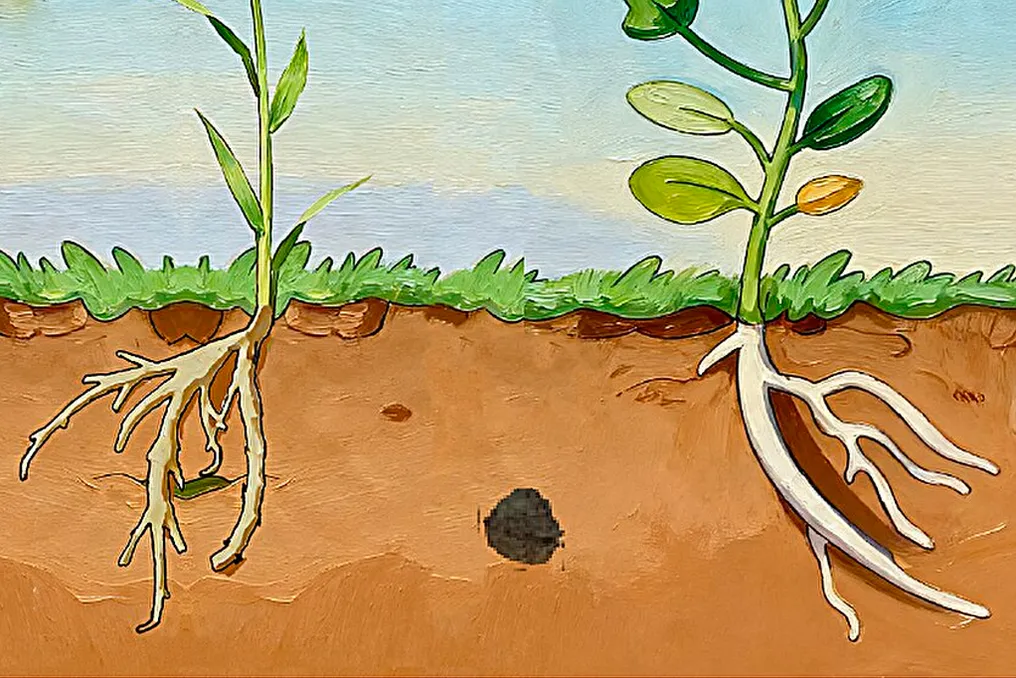
Study reveals that plants divert roots from decomposing organisms to avoid toxins

Plants demonstrate that they are not entirely inactive; they grow and adjust the direction of this development in response to various stimuli, a process known as tropism. Some species direct their shoots towards the sun (heliotropism), while others follow or resist the force of gravity (gravitropism), and many tend to lead their roots to areas of soil with greater water availability (hydrotropism).

Furthermore, plants use this restricted movement to protect themselves from harmful substances. In a recent study published in the journal Science, Chinese and Austrian scientists discovered a new type of tropism: plants curve their roots away from dead or decaying matter. This phenomenon has been named 'saprotropism', using the prefix sapro, derived from Greek for 'rotted' or 'decayed.'

This movement allows plants to avoid absorbing toxins released by microbes during decomposition in contaminated parts of the soil. Biologist Yuzhou Zhang, co-author and originator of the study, commented that 'animals instinctively avoid spoiled food because it often harbors harmful microorganisms,' questioning whether plants, despite lacking mobility, could have developed a similar tactic underground.

The investigation originated from an unsuccessful experiment conducted by Zhang in a laboratory in Austria. While trying to understand the reaction of plants to gravity, he noticed that an agar plate had been contaminated by airborne microbes. This chance observation led to the finding that all the roots of the samples curved away from the contaminated areas, prompting a more detailed analysis.

In the tests, researchers planted seedlings of the species Arabidopsis thaliana in containers containing various decomposing organic materials, such as wood sawdust, leaves, or apple slices. As predicted, the roots diverted from the 'decomposition zones' where the putrefying material contaminated the surrounding soil. Notably, the roots exhibited different behavior when the organic material was of animal origin, such as pieces of chicken meat.

The same effect was observed in other crops, including wheat, tomato, and canola, suggesting that this reaction may be a common characteristic in the plant kingdom. A key factor distinguishing this phenomenon from other tropisms is that, while most previous tropisms were linked to non-biological (abiotic) stimuli—such as light, water, or gravity—in the case of saprotropism, growth is influenced by living soil microorganisms.

The mechanism behind this reaction also differs from other tropisms. While in phototropism the plant uses auxin redistribution, a growth hormone, to orient itself towards light, in saprotropism, the direction is determined by abscisic acid (ABA), a plant hormone sensitive to soil pH. Fungi act as signalers: by decomposing dead plant tissues, they release acidic metabolites (such as organic and phenolic acids) into the soil, creating zones of higher acidity. Plants detect this increase in acidity and concentrate abscisic acid on the side of the root closest to the decomposing material, forcing growth in the opposite direction and thus diverting from the contaminated area.

The experiments demonstrated that when the organic matter completes its decomposition and integrates into the soil, the plant returns to its normal growth. Zhang stated that 'when the plant material had almost completely decomposed, the acidic warning signal disappeared, and the roots stopped curving away.'

Popular