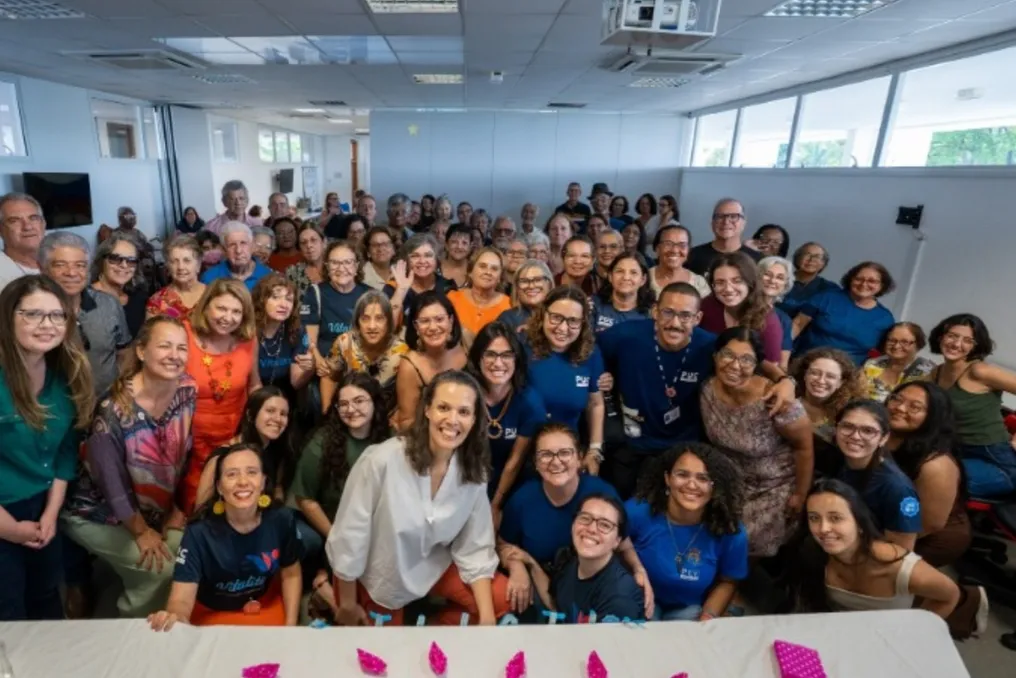
The VI Vitality Forum, dedicated to Aging and Longevity, was held by PUC-Campinas between September 28 and October 2. The event's central theme was 'Experiencing: why not? New experiences, new possibilities for aging,' aiming to encourage the exploration of new activities, interests, and contact with other people throughout maturity.
Organized by Vitality – PUC-Campinas Center for Aging and Longevity, this forum reached its sixth edition, bringing together various fields of knowledge to debate the multiple facets of aging and foster active participation of seniors in new experiences.
During the opening, the coordinator of Vitality, Prof. Dr. Mariana Reis Santimaria, clarified that the choice of the theme arose from the need to reflect on the relevance of maintaining openness to the new throughout life. She emphasized that the initiative's goal is to awaken in participants the desire to try new things.
According to Mariana, this approach is linked to the pursuit of higher quality aging, reinforcing that discovering new interests should not be limited to other phases of existence. For her, the University plays a crucial role in providing an environment conducive to learning, coexistence, and discovery.
The coordinator pointed out that an essential path to expanding these possibilities involves combating ageism, defined as prejudice related to age, which can even be internalized by the elderly individual themselves. Mariana stressed that Vitality constantly works against this prejudice.
She explained that people often believe that due to advanced age, they are no longer capable of trying something unprecedented or starting activities outside their history. This belief, according to the coordinator, must be overcome, as today's aging individuals have varied trajectories, interests, and experiences, maintaining the desire to learn and explore new knowledge.
In this scenario, the University presents itself as a place of vast opportunities, a space where new knowledge and horizons can be explored.
Psychologist Laís Calicchio, also part of Vitality, addressed the topic in the lecture titled 'Experiencing the new after 60+'. For her, increasing the chances of new experiences in old age requires overcoming the automatic tendency to associate experimentation solely with childhood.
Laís observed that when discussing experience, there is usually a bias that limits this possibility to the childhood phase. However, she stressed that recognizing this capacity in old age does not imply infantilizing the elderly; on the contrary, new experiences can arise from the vast baggage accumulated throughout life.
The psychologist added that this movement can boost knowledge, social participation, and active and healthy aging, and does not require large projects. A simple class, workshop, or manual activity can be the starting point for rediscovering dreams or beginning a personal project.
Over the five days, the VI Vitality Forum covered various topics, including subjects related to the university, entrepreneurship, mental health, self-care, cinema, culture, learning, and climate change, in addition to activities focused on quality of life and coexistence.
The agenda also included the launch of the fifth edition of Vitality in Action, musical performances, a lecture on entrepreneurship aimed at people aged 60 and over, the launch of the Theoretical-Practical Guide to Entrepreneurship for Elderly People (60+), and the holding of the second Entrepreneurship Fair (60+).
Integration moments also included a birthday cake for the six years of Vitality – PUC-Campinas Center for Aging and Longevity, celebrated on Tuesday, September 29. This celebration marked the Center's journey, which has been working on themes of aging and longevity since 2020.
Other activities held at the Forum involved the challenges and opportunities of aging, the effects of climate change on the elderly population, mental health care, and cultural activities, such as film screenings with debates and dance performances. With this sixth edition, the Forum continues the Vitality initiative since 2020, emphasizing the chance to forge new paths at different stages of life, valuing autonomy, continuous learning, and social participation.