Five Lessons from Claire Keegan's Story 'Late in the Day'
Read more
YourStory [india, en]
yourstory.com

Five Lessons from Claire Keegan's Story 'Late in the Day'

Claire Keegan's story 'Late in the Day' is a short yet profound piece of literature that explores themes of relationships, regret, gender expectations, and the quiet ways people reveal their true nature.

The story focuses on the character Catalé, who reflects on his relationship with Sabine and the events that shaped their bond. Through the depiction of an ordinary day and memories of failed relationships, Keegan analyzes how everyday assumptions, small decisions, and unspoken presumptions can have long-term consequences. The story achieves its purpose not through dramatic plot twists.

Instead, it prompts readers to closely examine the details of human behavior and contemplate what they say about love, responsibility, and emotional maturity. Despite its conciseness, 'Late in the Day' raises important questions about how we treat those closest to us and whether we acknowledge our own flaws.

One of the key lessons drawn from the work is that character often manifests through mundane behavior rather than grand gestures. Catalé's interaction with Sabine demonstrates attitudes that might seem insignificant at first glance. His habits, assumptions, and reactions to everyday situations reveal his views on relationships and the role of women within them.

The piece urges readers to look deeper than what people say about themselves. A person may describe themselves as caring, fair, or attentive, but their daily actions often provide a clearer picture of their values. This principle applies to friendships, romantic, and professional relationships. How a person listens, shares responsibilities, reacts to disagreements, or treats others when nothing is expected in return says a great deal about their character. Actions often transmit what words try to conceal.

Romantic relationships cannot exist solely on attraction or attachment; they also require attention, compromise, and a willingness to recognize the needs of the other person. In 'Late in the Day,' the relationship between Catalé and Sabine highlights the distance that can arise when one partner does not fully value the other. His perspective shows how someone can believe they are acting reasonably while ignoring the impact of their actions.

The story challenges the idea that being in a relationship automatically makes someone a good partner. Love requires active participation: the ability to listen, share duties, respect boundaries, and make room for the other person's preferences. It also requires questioning one's own assumptions instead of expecting the partner to constantly accommodate.

The lesson is that healthy relationships are built on daily choices. Small acts of kindness can strengthen a bond, whereas constant neglect of another's needs gradually weakens it. Love is not just about feelings, but about how we choose to treat a person.

Claire Keegan explores how deeply traditional gender expectations can influence relationships, even if people do not openly admit it. Catalé's behavior reflects notions about women, domestic duties, and how relationships ought to look. These expectations shape his interaction with Sabine and expose the imbalance that can occur when one person's comfort is prioritized over the other's independence.

The work emphasizes that gender inequality does not always manifest through overt hostility. It can arise from everyday expectations, unequal distribution of chores, and the belief that one partner should naturally yield to the other. These patterns are hard to notice because they are often perceived as normal. However, if they are not questioned, they can prevent both partners from building a relationship based on genuine equality.

The lesson is the necessity of critically evaluating the expectations we bring into our relationships. Household chores, emotional labor, and personal choices should not automatically follow gender lines. Healthy relationships allow both individuals to feel valued, respected, and free to make decisions about their own lives.

One of the most thought-provoking aspects of 'Late in the Day' is how it examines regret through the lens of memory and reflection. Catalé's memories prompt readers to consider how people interpret their own past behavior. We might deem certain events trivial, overlooking how those moments affected another person. Sometimes the consequences of our choices only become clear after the relationship has changed or the opportunity has passed. By then, understanding what went wrong may be insufficient to repair the damage.

Keegan's story reminds us that self-awareness requires more than simply recalling what happened. It demands an honest analysis of our own role in those events. This lesson applies to all types of relationships. Instead of immediately defending our intentions, we can ask ourselves whether our behavior was attentive and how it might have affected others. Regret can cause pain, but it can also reveal areas where we need to grow. It is important to learn from mistakes while we still have a chance to make a better choice.

Another important takeaway from the story is that emotional maturity involves acknowledging one's limitations and taking responsibility for one's behavior. It is easy to assume that relationship problems are caused solely by the other person. We might focus on their reactions, expectations, or ways of disappointment without examining our own contribution to the situation. Catalé's perspective invites readers to move beyond self-perception and consider the gap between how they see themselves and how their actions affect those around them.

True self-awareness requires questioning our own assumptions, listening to challenging viewpoints, and admitting when our behavior has been unfair. This does not mean blaming oneself for all problems or taking responsibility for things outside our control. It means recognizing those aspects of our behavior that we are capable of changing. The lesson is simple: personal growth begins when we are willing to honestly analyze ourselves. Understanding our behavioral patterns helps build healthier relationships and avoid repeating the same mistakes.
Similar stories

Activists in Newark Protest Immigration Detention Conditions
Read more
noticiasaominuto.com

Activists in Newark Protest Immigration Detention Conditions

Activists in Newark held a protest on Sunday concerning the rights of immigrants in the United States. The demonstration took place near one of the country's largest Portuguese-speaking communities and resulted in the detention of several dozen activists in the area.

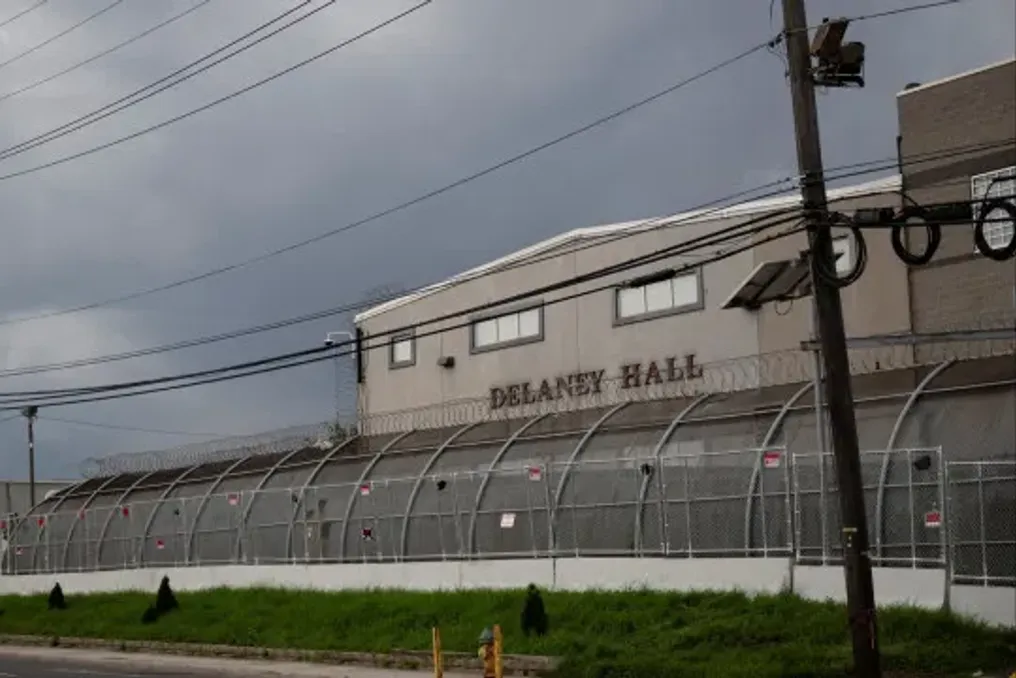
The protest was held on Doramus Avenue, a long industrial street where Delany Hall is located—a local jail managed by U.S. Border Patrol and immigration police. Distant sounds of freight trains and crows filling the electric poles could be heard.

Around sixty participants, representing local unions and left-wing organizations, sharply criticized both the institutions themselves and the staff working there. After months of demonstrations in front of Delany Hall, the complex's walls were covered in graffiti, including the message: 'From Dachau to Delany, a Nazi is a Nazi.'

Geoff Johnson, a union worker at the University of New York, categorically stated that calling it a concentration camp is no exaggeration, labeling it an 'abomination.' He demanded the release of all detainees and the complete demolition of the facility, arguing that it should not exist.

The exact number of detainees remains unknown, but it is estimated that about a thousand people are held in the monolithic building, surrounded by barbed wire and fences, who are transported from areas in New Jersey and New York. Johnson noted that the number varies, but hundreds of people are always present, who may stay for a short time or months, forced to work for meager pay, which he termed slavery.

Geoff Johnson emphasized that most of these individuals are either awaiting asylum decisions or are in the process of legalization. He condemned the current system, asserting that everyone there could be free, and that instead of functioning as before, the immigration system has turned into a network of 'Gulags' across the country.

He also mentioned that the location is neglected, and no local residents know about its existence, despite Newark housing one of the largest Portuguese-speaking communities. In Newark, families have encountered Delany Hall for negative reasons—either relatives were arrested, or they witnessed ICE raids.

Carl, a member of the Newark librarians' union, reported that many people are afraid to go outside and have stopped participating in community life. He recounted seeing ICE agents suddenly arresting people on the street, appearing unnoticed.

Union figures present at the monthly protest stated that they work alongside immigrants and can fight, for example, through strikes. They noted that they are organized, possess resources, and have influence in the electoral system, which they use to express dissatisfaction with this situation.

Geoff Johnson recalled the case in Minneapolis, Minnesota, where citizen mobilization led to the withdrawal of ICE agents from the city. Activists and their representative organizations aim to create a 'rapid response network' to counter ICE raids that attempt to abduct people. They coordinate their actions via the Signal messenger to respond quickly to detentions, as everything happens within minutes.

The protests, dubbed 'Labour eyes on ICE,' have been taking place in front of Delany Hall since May 2025. Johnson noted that the atmosphere is usually peaceful. Today, one activist approached agents at the post but received little response. Johnson considers ICE agents 'mercenaries' and 'bounty hunters,' claiming their actions are illegal because they do not pursue criminals but only people with immigration status issues or debts.

He added that these people are not criminals but working family members who have lived here for decades, and their deportation or confinement in places like Delany Hall, managed by the private group GEO, is absurd and a form of torture because they lack access to medical care. Johnson stated that three people have already died at this location, calling it 'fascism.'

Protest signs mentioned the name of Emiliano Andrade Covarrubias, a 56-year-old Mexican man who passed away last week in a center like Delany Hall in Laredo, Texas. Mary, whose family was affected by this incident, brought Covarrubias's name to Newark. She expressed doubt about the ability of the November 3 midterm elections to change the situation, especially given Trump's influence, who has repeatedly spoken about wanting to become a dictator.

Carl hopes that Trump will lose the midterm elections, fearing that Trump's victory could lead to manipulation of the electoral system. At the end of the day, activists began moving in circles, chanting slogans such as 'Free them all' and in Spanish 'Papeles para todos,' knowing that the detainees hear them, especially after instances of hunger strikes and internal labor.

How a village on the edge of a cliff in China is overcoming isolation through a rural revitalization program
Read more
cgtn.com

How a village on the edge of a cliff in China is overcoming isolation through a rural revitalization program

While rural communities across Africa have watched for generations as young people move to cities in search of better opportunities, a different story is unfolding in a remote mountain village in southwestern China. This transformation is built on strengthening community ties, improving living conditions, and enhancing rural viability.

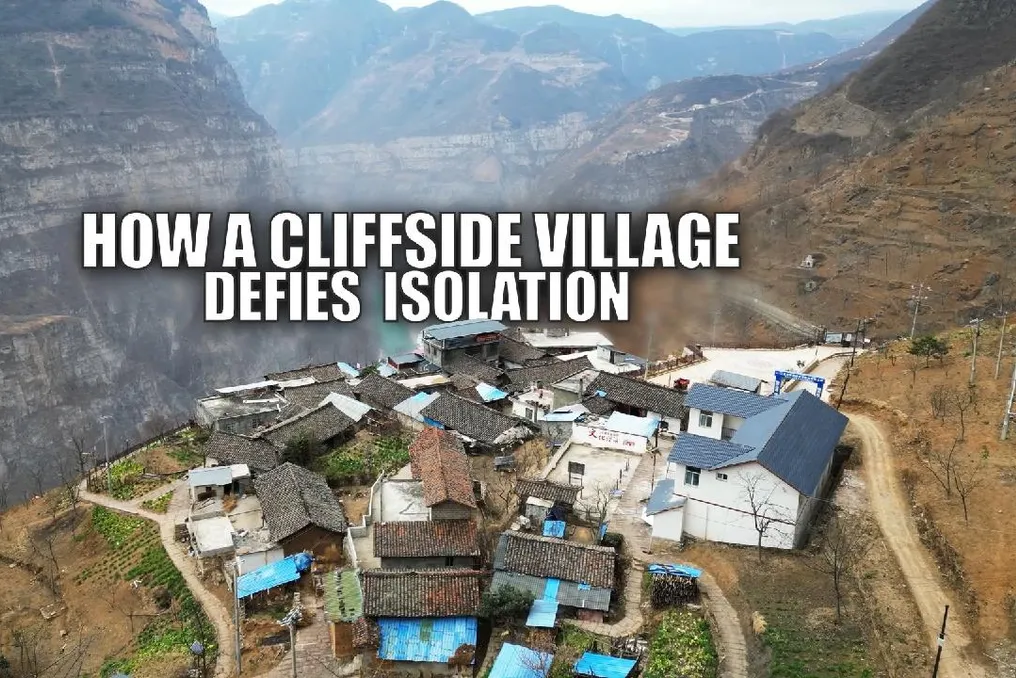
In the village of Gulu, located in Sichuan province, a 750-meter cable car spans a deep mountain canyon, providing residents with a vital link to the outside world. What visitors might perceive as a picturesque attraction has become a symbol of the changes taking place in this village.

During a trip from Kenya to Gulu, the author sought to understand how China's efforts to revitalize rural areas are changing life in communities far removed from vast cities and modern skyscrapers. This journey revealed a stark contrast between the past and present of the village.

According to village head Zheng Wanchun, residents previously faced immense difficulties accessing basic services. Before roads and safer routes reached the area, descents from the mountain could take several days. Children spent hours traveling to school, access to healthcare was difficult, and many families struggled with inadequate housing, food shortages, and lack of electricity.

Progress came gradually. In 2003, a narrow mountain path was laid, offering an alternative to dangerous cliffside routes. The road reached the area in 2009, and the cable car began operating in 2018, helping to overcome some of the geographical barriers that had isolated the community.

Today, tunnels and bridges connect settlements in the mountainous landscape, and infrastructure projects have improved access to essential services. A nearly five-kilometer pipeline supplies water to residents, solving a previously intractable problem.

However, the transformation of Gulu is not just about roads, bridges, and cable cars; it is also linked to creating economic opportunities. Local farmer Lan Xuan notes that improved transport links have attracted more tourists to the area, opening up new avenues for selling local produce and delicacies. She says that tourists from major Chinese cities are increasingly discovering this village, aided by social media.

For communities striving for a sustainable lifestyle, the hope is that better connectivity can generate income and give residents more reasons to stay in their hometowns. Nevertheless, challenges remain.

Resident Xiang Yucai points to an aging population, as many young people have moved to cities with their families. Although improved infrastructure has raised the quality of life, reversing the trend of rural-to-urban migration remains a more complex challenge.

The experience of Gulu offers insight into China's broader strategy for rural revitalization, which aims to link infrastructure development with agriculture, rural industries, public services, and improved living standards.

As an African journalist, the author raised a question extending far beyond China: can rural communities become places of opportunity rather than places people feel compelled to leave? Many African villages face similar issues, including poor infrastructure, limited access to healthcare and education, and inadequate economic prospects. Despite the differences in circumstances, Gulu provides a case study on how targeted investments in connectivity and local industries can help address some of these barriers. The mountains around Gulu have not changed. What has changed is how people move through them and what opportunities better connections can create.

Popular