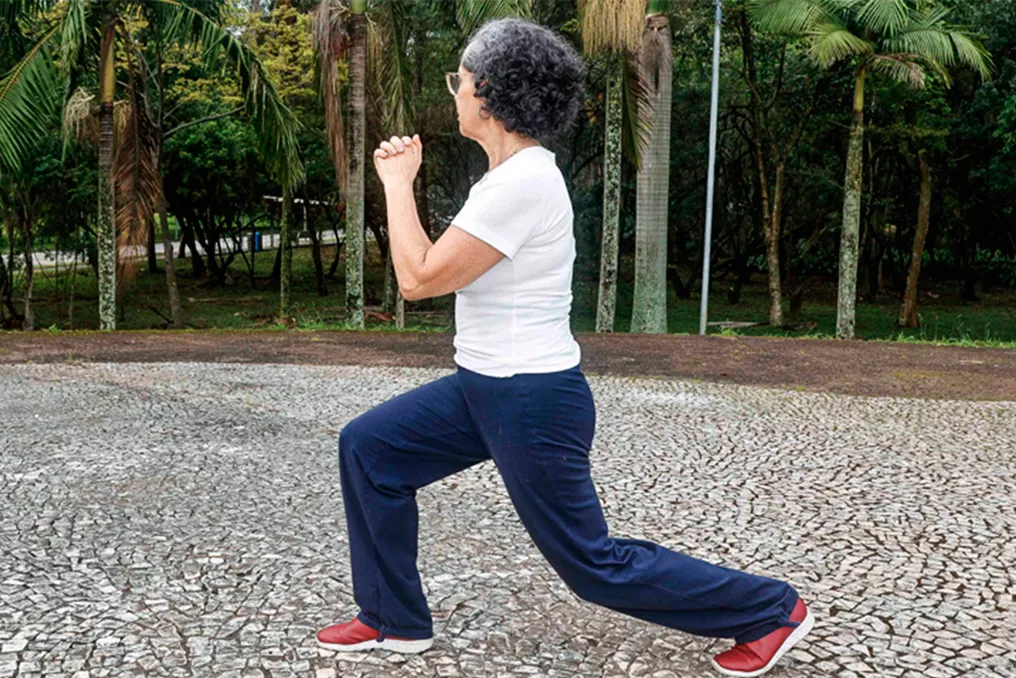
Simple exercises, using only body weight and adapted to individual needs, demonstrate the ability to reduce frailty in older people. Research conducted by USP showed that an interval training program applied to patients at a Basic Health Unit (UBS) in Sorocaba (SP) managed to reverse the state of frailty, improving the strength and functional performance of the elderly, in addition to reducing blood pressure indicators.
Definition and Prevalence of Frailty
According to Francisco Luciano Pontes Júnior, Professor of Gerontology at the School of Arts, Sciences and Humanities (EACH) of USP, frailty is defined as a clinical condition marked by decline in various physiological systems and reduced capacity of the organism to withstand stresses, such as infections. This condition is linked to problems with daily activities, risk of falls, hospitalizations, and mortality. It is estimated that frailty affects 9.1% of the Brazilian population and 17.4% globally, with pre-frailty being even more common, with prevalences of 51.8% in Brazil and about 46% worldwide.
The research monitored 60 participants, whose average age was 74 years, over one semester. These individuals were randomly allocated into two groups: one performed exercises using their own body weight, alternating phases of effort and recovery, three times a week; while the second group maintained its usual routine, serving as a control group.
Results of Interval Training
Throughout the study, participants who followed the training demonstrated a higher chance of progressing to stages of lower frailty. Lucas Marques Vieira, author of the research conducted at EACH in collaboration with the University of Manitoba, Canada, reported that 'the improvement can already be observed in the first 12 weeks and occurred progressively until the end of the 24 weeks of training.' He added that there were notable improvements in lower limb strength, walking speed, mobility, and performance in the sit-to-stand test from a chair.
The sessions took place three times a week, totaling 24 weeks, lasting 30 minutes. Each session began with five minutes of warm-up, followed by 20 minutes of interval exercises with body weight—alternating 30 seconds of exercise and 30 seconds of rest—and concluded with five minutes of stretching for calm return. The intensity of the exercises was gradually increased, moving from moderate to vigorous.
All exercises were adapted and included variations of squats and other multi-joint activities, involving different combinations of movements in the upper and lower limbs, as well as the abdominal region. Vieira clarifies that the state of frailty was assessed using the Fried Frailty Phenotype model, which uses five criteria for this classification: unintentional weight loss (4.5 kg or more, or more than 5% of body weight in the last year); exhaustion (feeling of excessive tiredness); reduced grip strength (low strength measured by dynamometer); low walking speed (slowness when covering 4.6 meters); and low physical activity level (estimated by questionnaire).
The findings were considered very positive, as the use of body weight as resistance allowed for the work of several muscle groups without the need for complex equipment. After 24 weeks, participants initially classified as frail showed significant improvements: 80% migrated to the pre-frail state and 20% were classified as robust. Among those who started as pre-frail, 69.2% achieved the robust classification after the training period.
Vieira also noted a decrease in systolic blood pressure. No relevant changes were detected in body weight, body mass index (BMI), fat percentage, or appendicular muscle mass of the participants. For Pontes, the bodyweight training program has the potential to be adopted as a strategy for managing frailty in primary healthcare, given that it requires little structure and does not depend on specialized equipment. The supervisor also emphasizes the importance of the participation of Physical Education professionals in UBSs, working alongside the health team in the prevention and care of chronic diseases through physical exercise. The results were published in the article Effect of bodyweight interval training on frailty status in older adults: a randomized controlled trial, in the journal European Geriatric Medicine.