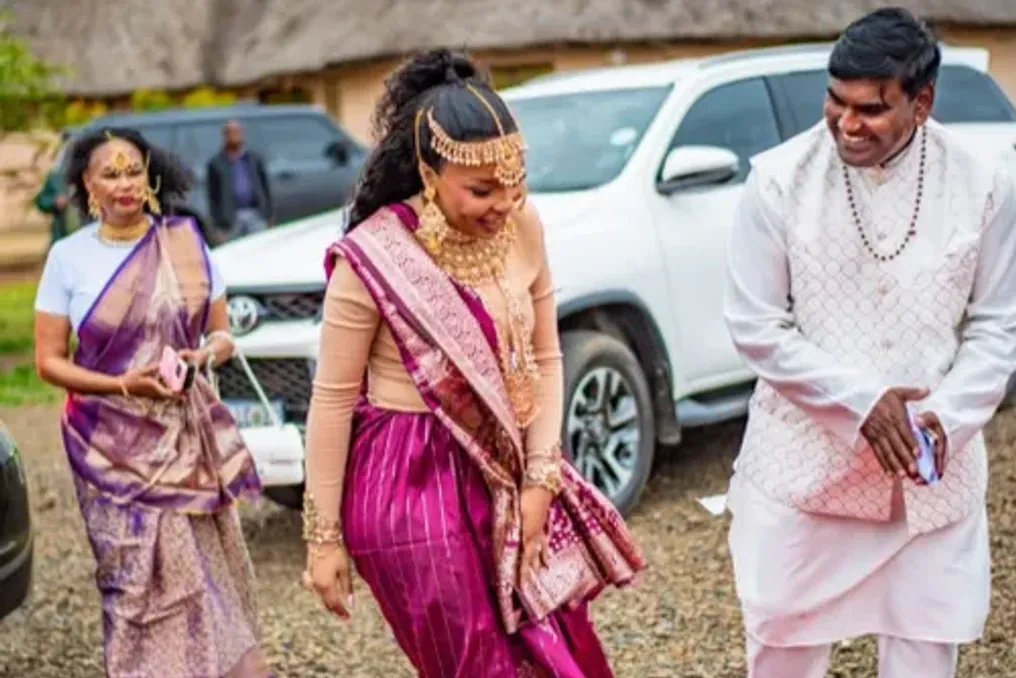
King Mzuzulu Azvelatini called on the Zulu and Indian communities to deepen cultural ties and jointly combat social division, youth unemployment, and gender-based violence.
Speaking at the Diwali festival in Baedé, held at the Emasobeni Royal Palace in Pongola on Friday, King Mzuzulu noted that the event demonstrated the acceptance of the Indian community by the Zulu people.
The festival was organized in collaboration with Prince Ishwar Ramlutchman Mabeka Zulu and the Sivananda World Peace Foundation. King Mzuzulu highly praised the contribution of South African people of Indian descent, including professionals and entrepreneurs whose activities support the economy and development of the country.
Reflecting on history, he paid tribute to the resilience of those who endured harsh conditions of colonial contract labor, as well as those who managed to establish themselves as traders. He acknowledged the shared sacrifices of African and Indian communities in the fight against colonialism and apartheid.
King Mzuzulu specifically highlighted the significant Indian community in Durban and KwaZulu-Natal, as well as the growing friendship and relations between different cultures. He also expressed appreciation for Indian cuisine and warmly commented on healthy lifestyles and well-being.
He affirmed the mission of social cohesion of his late father, His Majesty King Gudwill Zvelatini Kabhekuzulu. Furthermore, he recalled the historical acceptance of Prince Mabeka Zulu, the first person of Indian descent officially accepted into the Zulu Royal Family, as an unbreakable bond between the communities.
King Mzuzulu reiterated the role of Prince Mabeka Zulu as a royal envoy for social cohesion and economic development. He urged the Indian community to participate more actively in the Rid Umkhosi Umkhlanga dance. Simultaneously, he called on the Zulu people to participate in the Hare Krishna wheel festival in Durban, also known as Ratha Yatra, to deepen understanding through shared cultural experience.
Addressing the significance of Diwali, or Deepavali, which means 'row of lights,' King Mzuzulu contemplated the return of Lord Rama to Ayodhya after 14 years of exile, the veneration of Mother Lakshmi as the goddess of prosperity, and the triumph of knowledge over ignorance and light over darkness.
He drew parallels between these themes of renewal, purity, and light in Umkhosi Umkhlanga and the lighting of candles for ancestors in a plea for guidance. He linked these traditions to the teaching of Ubuntu: 'Umuntu ngumuntu ngabantu - I exist because you exist.'
He also paid homage to the teachings of Swami Sivananda, reflected in the work of the Sivananda World Peace Foundation: 'Serve, love, be kind, do good' and 'Serve, love, give, purify, meditate, and realize.' He strongly called for collective action against youth unemployment, gender-based violence, erosion of moral values, and division on social media.
Describing these problems as forms of darkness, he earnestly asked people to respond through service, education, care, and creating opportunities. 'Each one of us here today is a lamp,' he stated. He called on the communities to build KwaZulu-Natal and South Africa where diversity is a strength and where everyone has a place.