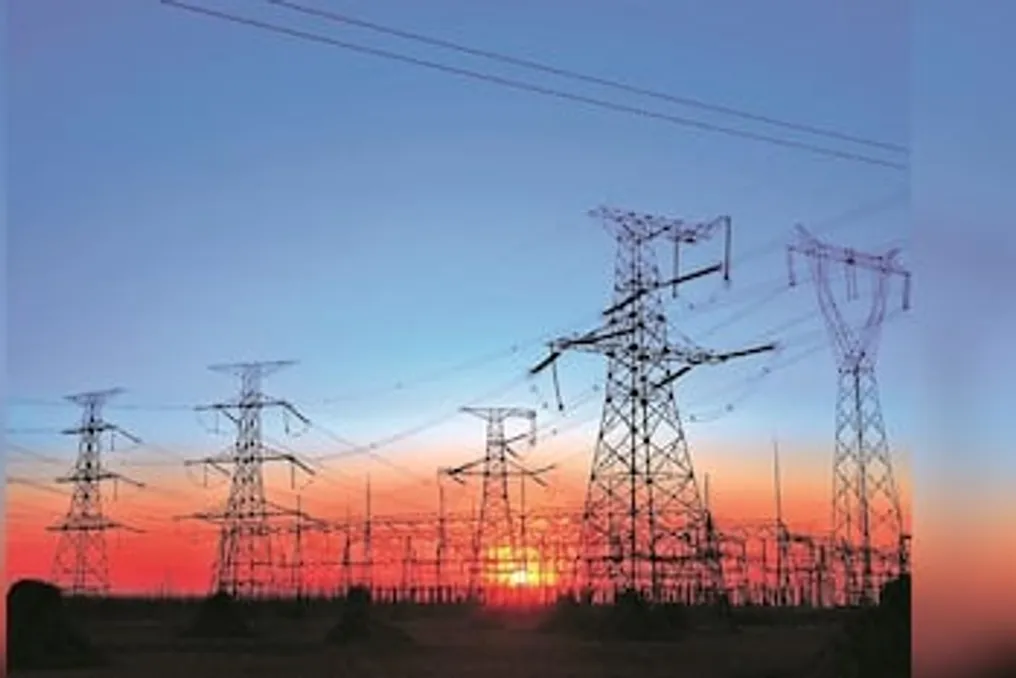
The Central government has approved the expansion of the power transmission network in the state of Andhra Pradesh with an investment of 27,370 crore rupees under the Green Energy Corridor Phase-III (GEC-III) program. According to information received from a source in Business Standard, the first phase of this project is planned to be commissioned during the 2029–2030 financial year.
This decision followed the approval by the Union Cabinet of the GEC-III scheme amounting to 1.86 trillion rupees, which took place on September 30. The objective of this scheme is to ensure the capacity to evacuate up to 135 gigawatts (GW) of renewable energy through state transmission grids by 2032–2033. The total funding includes approximately 1.36 trillion rupees for intra-state transmission (InSTS) and 50,000 crore rupees for Battery Energy Storage Systems (BESS).
The Center will provide financial support of 54,082 crore rupees to compensate for intra-state transmission costs. The project, proposed by APTRANSCO, involves the construction of 7,872 circular kilometers of 400 kV and 220 kV transmission lines, as well as the creation of 9,500 megavolt-ampere (MVA) substation capacity, including five new 400/220 kV substations.
The state's proposal includes new construction infrastructure. Planned facilities include key collection nodes in Mudigubbe and Talupule, each with a capacity of 5 GW, as well as in Porumalle with a capacity of 1 GW. Additionally, the construction of new 400 kV substations in Ramayapatnam and Koppaka is proposed.
Although the national GEC-III scheme was approved by the Cabinet last month, the component concerning Andhra Pradesh was awaiting clearances. A source reported that the current approval may enable the commissioning of the initial phase of the project by 2029–2030.
Renewable energy zones designated for energy evacuation include Roddam-Penkunda, Gorantla, OD Cheruvu-Amadaguru, and Kondikonda in the districts of Anantapur and Sri Sathya Sai, as well as Rajupalem in the Prakasam district.
The source added that the central assistance will reduce intra-state transmission costs and discom costs for power procurement, while also supporting Andhra Pradesh's Clean Energy Policy for 2024. This project is crucial for the state, as the Central Electricity Authority (CEA) estimates predict the peak demand in Andhra Pradesh will grow from 15,600 MW in 2025–2026 to 30,927 MW by 2035–2036. Without new renewable energy capacity and infrastructure for its evacuation, the share of unmet energy will reach 19.4 percent by 2035–2036.
According to NITI Aayog, the potential for mixed renewable energy in Andhra Pradesh is 237 GW, with renewable energy sources accounting for 51 percent (16 GW) of the state's total installed capacity. As of March 2026, 7.5 GW came from solar energy, 4.4 GW from wind, and the remaining 4.07 GW from hydro and biomass.
The state's clean energy policy aims to install 78.5 GW of solar and 35 GW of wind capacity between 2024 and 2029. It also plans to implement 25 GWh of Battery Energy Storage Systems (BESS) and 22 GW of pumped storage hydroelectric power plants. Furthermore, the state is working on creating green hydrogen production capacity of 1.5 million tonnes per annum (MTPA).