Rishikesh-Carnaprayag Railway Project Overview: 125 km, 12 Stations, and Complex Engineering Solutions in the Himalayas
Read more
Aaj Tak
www.aajtak.in

Rishikesh-Carnaprayag Railway Project Overview: 125 km, 12 Stations, and Complex Engineering Solutions in the Himalayas

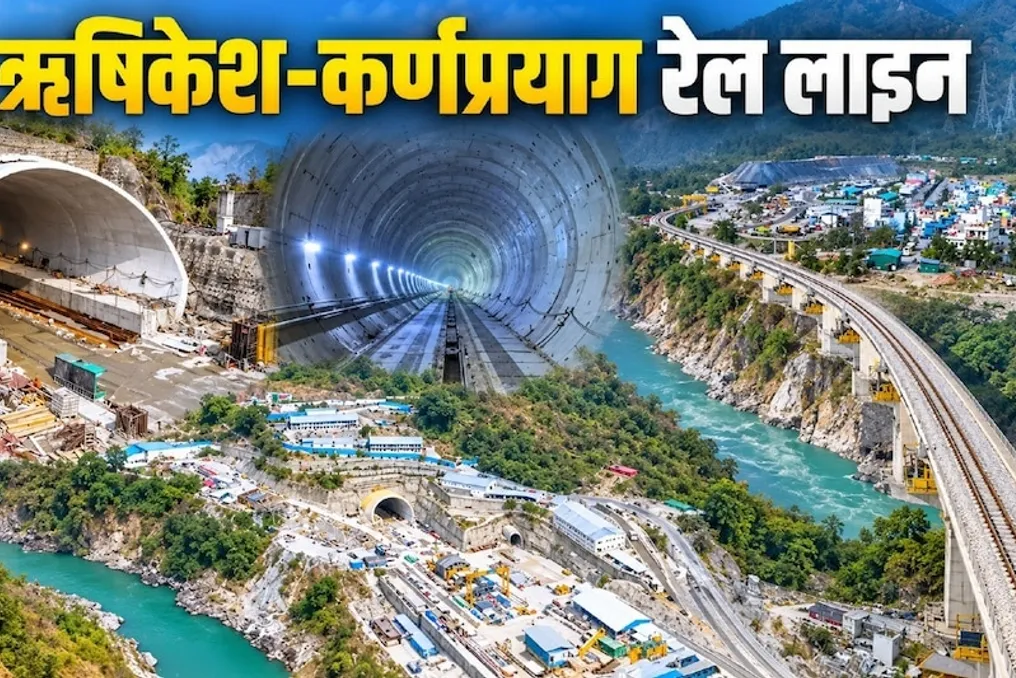
The Rishikesh-Carnaprayag railway line, being constructed in the Garhwal Himalayas of Uttarakhand state, is a significant project in terms of religious tourism and transport accessibility. This line, spanning approximately 125 kilometers, will connect Rishikesh with Carnaprayag. The project includes 12 stations, 28 main and emergency tunnels, and 57 bridges of various sizes. Notably, about 83 percent of the entire route will pass through tunnels.

The completion of this railway line construction will improve rail connectivity in the remote areas of the Garhwal Himalayas. This will reduce dependence on road transport and facilitate passenger movement, especially for those traveling to Kedarnath and Badrinath. Furthermore, the project will benefit local residents, workers, and trade turnover, contributing to the development of the regional economy and tourism business.

Railway Minister Ashwini Vaishnaw noted that constructing railway tracks in the difficult-to-reach mountainous regions of the Himalayas presents a complex challenge. As mentioned, about 83 percent of the project will pass through tunnels, including 28 main and evacuation (rescue) tunnels, as well as 57 bridges. The large number of tunnels and bridges indicates the necessity of applying special engineering solutions to create a railway path suitable for the mountain landscape, where high mountains, deep gorges, and complex geological conditions meet.

According to the minister, the geological structure of the Himalayas differs from plain regions. Here, rocks can be weak, fractured, or contain cracks, and groundwater is present in some places. Under such conditions, it is critically important to predict soil behavior during tunnel excavation and maintain its stability. In weak geological layers, the pressure from the surrounding soil can exert compression on the inner part of the tunnel, which in engineering is called 'compressible soil.' This can increase the load on the inner lining of the tunnel and require additional structural supports.

To overcome these difficulties, detailed geological surveys, continuous monitoring during construction, and the use of appropriate technologies are necessary. Modern technologies, including Tunnel Boring Machines (TBM), are used for tunneling. However, since the geological condition is not uniform across all parts of the Himalayas, the choice of technology and equipment must be made considering the specifics of each section. Construction requires extreme caution due to issues with weak rocks, groundwater, and soil stability. The ultimate goal is to create reliable and durable railway infrastructure capable of functioning in challenging mountain environments.

The Rishikesh-Carnaprayag railway should improve connectivity to the main religious sites of Uttarakhand. After arriving at Carnaprayag by train, passengers will have to continue their journey by road. Nevertheless, the railway connection can make part of the journey more convenient. The expected rise in tourism due to the project could potentially benefit businesses related to hotels, transport, and local trade. The actual impact of the project will depend on the commencement of railway operations, available amenities, and the condition of further road connections.

The importance of the Rishikesh-Carnaprayag railway line is also considered in the context of regional transport and strategic connectivity. According to available information, Carnaprayag is located approximately 123 kilometers from the India-China border. In conditions of complex geography and weather phenomena in the Himalayan regions, movement is often difficult. Thus, the development of infrastructure such as roads, bridges, and railways helps strengthen regional links. Although this line does not lead directly to the India-China border, its significance lies in improving the transport network in the Garhwal Himalayas and simplifying access to adjacent territories.

Improving rail connectivity will lead to an increase in tourist flow, which in turn will stimulate religious tourism and local business. Moreover, the construction process and associated activities will create new employment opportunities. In conclusion, the Rishikesh-Carnaprayag project covers 125 kilometers, includes 12 stations, 28 tunnels, and 57 bridges, and holds immense importance for religious tourism, regional transport, and strategic connectivity, despite the harsh geological conditions of the Himalayas.
Similar stories

Indian Railways announces launch of 11 pairs of special trains for Uttar Pradesh-Bihar region
Read more
www.aajtak.in

Indian Railways announces launch of 11 pairs of special trains for Uttar Pradesh-Bihar region

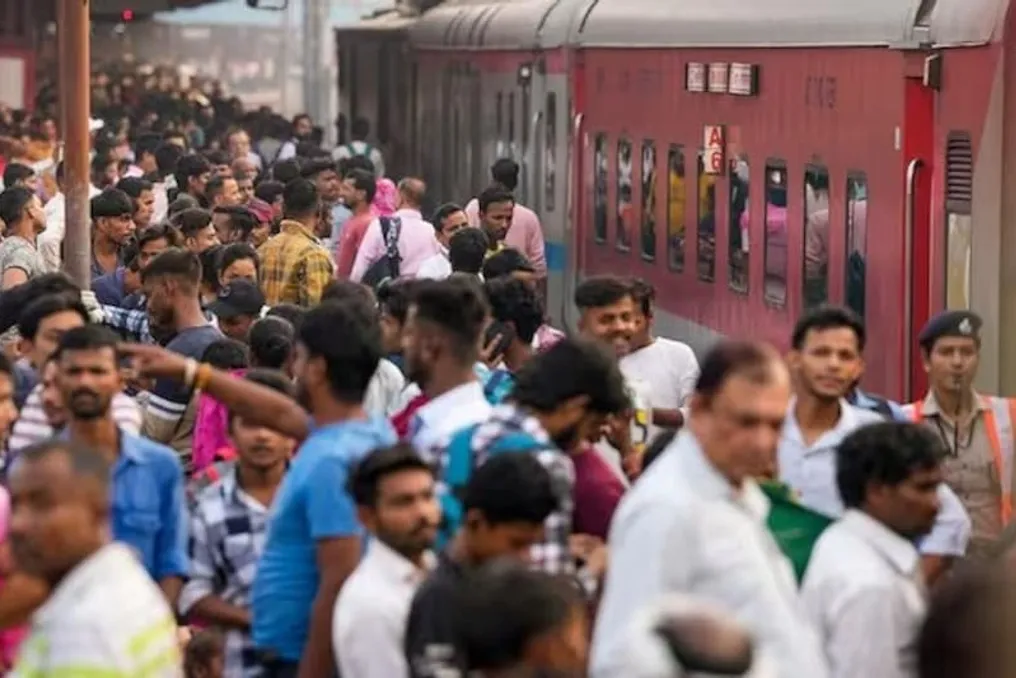
Indian Railways has made an important announcement for the residents of Uttar Pradesh and Bihar. In connection with upcoming holidays, 11 pairs of special trains are planned to be launched, which will provide significant assistance to people living in different parts of the country, allowing them to reach their hometowns for festivals such as Dussehra, Diwali, and Chhath Puja, while also increasing the chances of securing confirmed tickets.

Sarawati Chandra, DSP of East Central Railway, stated that to reduce additional load during festivals like Diwali and Chhath, the railway company is operating a series of special trains. These trains will connect major cities, including Gubbali, Bangalore, Nagpur, Udhana, Amritsar, Delhi, Gorakhpur, and Tata.

Train No. 07315/07316, running on the Gubbali-Muzaffarpur-Gubbali Special route, will operate from October 13 to November 24. It departs from Gubbali every Tuesday at 16:45 and arrives in Pune at 04:45 on Wednesday, making stops at other stations. On Thursday, it arrives in DIDDU at 08:30, then stops at Baksar, Are, Danapur, Patliputra, and Hajipur, reaching Muzaffarpur at 14:30.

The return train No. 07316 Muzaffarpur-Gubbali Special will run from October 16 to November 27 every Friday. It departs from Muzaffarpur at 08:40 and stops at Hajipur, Patliputra, Danapur, Are, Baksar, and DIDDU before arriving in Pune at 19:40 on Saturday and in Gubbali at 07:30 on Sunday.

Train No. 06581/06582, running between Yashwantpur-Saharsa-Yashwantpur (Bangalore) Special, will operate from October 11 to November 29. Train No. 06581 departs from Yashwantpur (Bangalore) every Sunday at 07:00 and passes through several stations, including DIDDU, Baksar, Ar, Danapur, Patliputra, Sonpur, Hajipur, and Muzaffarpur, arriving in Saharsa at 20:20.

Conversely, Train No. 06582 Saharsa-Yashwantpur (Bangalore) Special will operate from 14.10.2026 to 02.12.2026 on Wednesdays. It departs from Saharsa at 05:55 and stops at various stations, including Simri Bakhtiyarpur, Mansi, Khagdia, Salauna, Hasanpur Road, Samstipur, Muzaffarpur, Hajipur, Sonpur, Patliputra, Danapur, Are, and Baksar, arriving in Yashwantpur at 16:00 on Friday.

Train No. 01207/01208, running between Nagpur-Samstipur-Nagpur Special, will operate from October 21 to November 11. Train No. 01207 departs from Nagpur at 10:40 on Wednesday and stops at various stations, including Sonpur, Hajipur, and Muzaffarpur, reaching Samstipur at 23:45.

The return train No. 01208 Samstipur-Gorakhpur Special will run from 23.10.2026 to 13.11.2026 every Friday. It departs from Samstipur at 03:00 and stops at Muzaffarpur and Hajipur, arriving in Bhopal at 03:20 on Saturday and in Nagpur at 11:30.

Train No. 04640/04639, running between Chekharta (Amritsar)-Muzaffarpur-Chekharta (Amritsar) Special, will operate from October 19 to November 30. Train No. 04640 departs from Chekharta at 08:35 on Monday and stops at Amritsar, then at Bagha, Narkatiaganj, Betia, and Saguli, arriving in Muzaffarpur at 13:10.

The return train No. 04639 Muzaffarpur-Chekharta Special will run from October 20 to December 01 on Tuesdays. It departs from Muzaffarpur at 16:00 and stops at Saguli, Betia, Narkatiaganj, and Bagha before arriving in Amritsar at 21:00 the next day and in Chekharta at 21:30.

Train No. 04652/04651, running between Amritsar-Jaiyangar-Amritsar Special, will operate from October 16 to November 29. Train No. 04652 departs from Amritsar every Friday, Sunday, and Wednesday at 10:55 and stops at various stations, including Delhi, before arriving in Jaiyangar at 20:00 the next day. The return train No. 04651 Jaiyangar-Amritsar Special will operate from 18.10.2026 to 01.12.2026 every Sunday, Tuesday, and Friday. It departs from Jaiyangar at 04:15 and stops at Madubni, Darbanga, Samstipur, and Muzaffarpur, arriving in Amritsar at 15:00.

Train No. 05633/05634, running between Narangi-Gorakhpur-Narangi Special, was also mentioned, but no further details were provided in the text.

Construction of a new railway branch will allow bypassing Patna for freight trains and reduce the load on the Delhi-Howrah route
Read more
www.aajtak.in

Construction of a new railway branch will allow bypassing Patna for freight trains and reduce the load on the Delhi-Howrah route

An important step has been taken in Bihar aimed at reducing the congestion of trains passing through Patna and increasing the speed of rail traffic. Currently, an alternative railway route is being prepared that allows freight trains to bypass Patna.

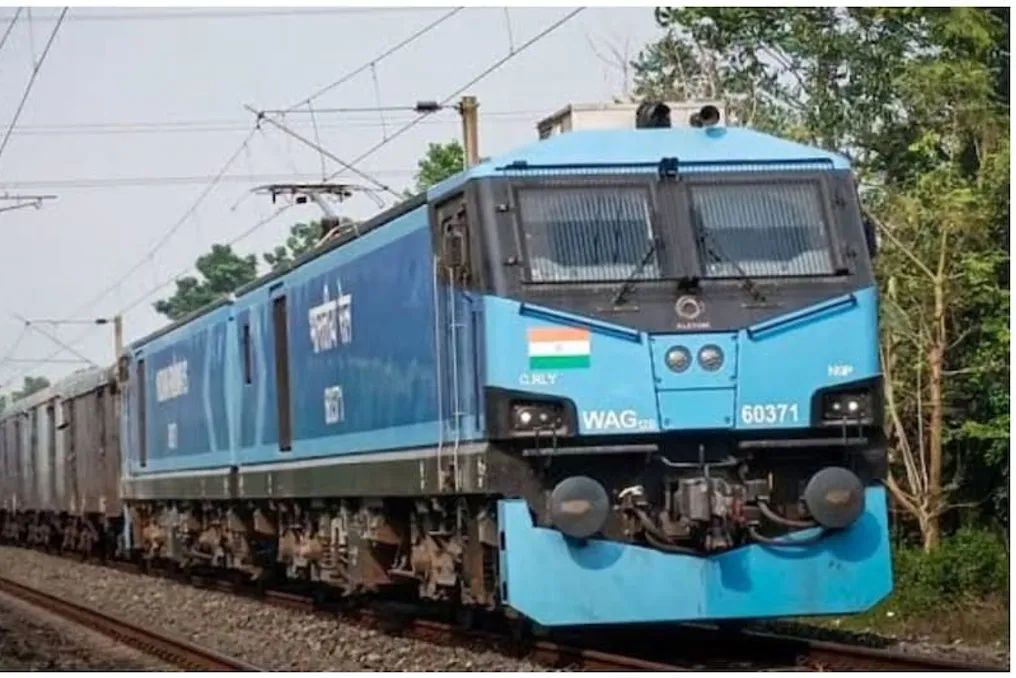
The competent authority has granted permission for the operation of a new 20-kilometer railway line running from Neura to Jatdumri. This will reduce the need for freight trains to pass through Patna and help free up space for passenger trains on the busy railway line.

Currently, both passenger and freight trains run simultaneously on the Danapur-Patna-Kiul-Jhajha railway line. This section is a critically important part of the main Delhi-Howrah railway connection, where high traffic intensity is observed. Providing a separate alternative route for freight trains will help reduce the pressure on this main route.

The full benefit of the new line will be achieved after the commissioning of the entire 42-kilometer Neura-Daniyawan project. After this, freight trains will be able to travel through Neura, Daniyawan, Biharsharif, Barbiga, Shekpura, and Kiul, bypassing the congested Patna railway line.

Before granting permission for the Neura-Jatdumri line, it was inspected by the railway safety commissioner. According to railway data, a train test was conducted on this section on October 8 at a speed of 120 kilometers per hour. Permission for railway operation was granted after checking all safety standards. This 20-kilometer section is part of the larger Neura-Daniyawan new railway line project, which is overseen by the Danapur East Central Railway Division. The project is being implemented in two phases: the first phase included the construction of the 22.74-kilometer Jatdumri-Daniyawan section, where train movement is already taking place. Now, with approval for the Neura-Jatdumri section, the project has moved forward.

The benefit of this project is not limited to freight transport. According to Saraswati Chandra, Chief Public Relations Officer of the East Central Railway, the new line will help create additional capacity on the busy Danapur-Patna-Kiul-Jhajha route for additional passenger trains. When an alternative route for freight carriers becomes available, some space will be freed up on the existing route. This may contribute to an increase in the number of passenger trains in the future. However, the railway has not yet announced specific dates for the start of additional passenger train services.

For passenger convenience on the new railway line, one new station and three halts have been built. A station at Gonpura was created between Neura and Jatdumri. Additionally, halts were equipped in Adpa, Chamachak, and Wajidpur. Neura station is located on the Patna-Ara section, and Jatdumri station is on the Patna-Gaya section. Various structures were also erected during the construction of the new line to ensure uninterrupted movement of both rail and road transport.

Three large bridges and 16 small bridges have been built on the Neura-Jatdumri section. Five low-clearance tunnels, two overground road bridges, and 12 underground road bridges have also been constructed. A structure allowing one railway track to cross another has also been created on this section. The goal of these construction works is to create the necessary infrastructure for the safe and uninterrupted operation of the railway line.

Obtaining permission for the operation of the Neura-Jatdumri section is a significant step for the project. However, the full benefit of the alternative route for freight trains bypassing Patna will only be available after the launch of the entire 42-kilometer Neura-Daniyawan line. As of now, the completion date for the entire project has not been set. Upon its completion, it is expected that freight transport will be shifted to alternative routes, ensuring better capacity for both freight and passenger rail services.

Popular