Iran and Indonesia have explored opportunities to expand scientific and technological interaction, with a particular focus on establishing science and technology parks, as well as strengthening academic and research ties.
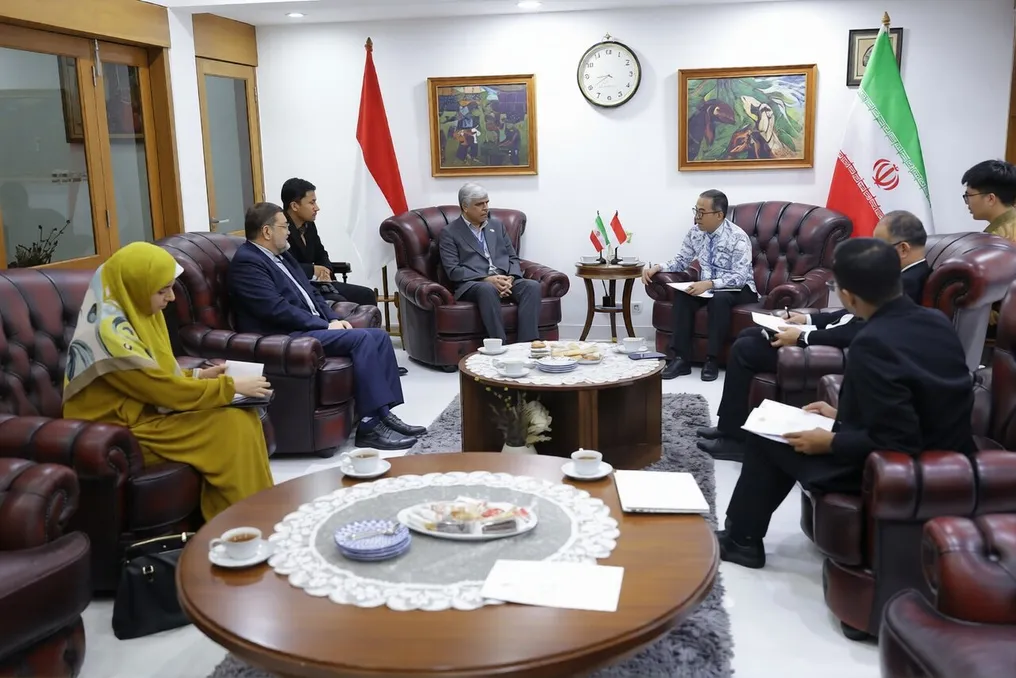
A meeting took place in Jakarta on October 23 between Esfandiar Ekhtiarari, Deputy Minister of Science, Research, and Technology of Iran, and Brian Yuliarto, Minister of Higher Education, Science, and Technology of Indonesia. The goal of the negotiations was to discuss cooperation through the exchange of teachers and students, as well as the more active utilization of the scientific and research potential of both countries, according to Mehr News Agency.
Ekhtiarari presented Iran's achievements in science, describing the country's infrastructure, including the Artificial Intelligence Center at Sharif University of Technology, the Institute of Laser and Plasma Research at Shahid Beheshti University, the satellite monitoring center at the Iranian University of Science and Technology, the quantum laboratory at Isfahan University of Technology, IT centers in other universities, and the Pasteur Institute of Iran.
He noted that these facilities were subjected to attacks during what he termed the US war against Iran, condemning these attacks and asserting that they were aimed at undermining the country's scientific and technological progress. Furthermore, the official representative announced Iran's readiness to provide and transfer expertise for the creation of science and technology parks that would support the development of Indonesia's innovation ecosystem.
For his part, Yuliarto condemned the attacks on scientific institutions, emphasizing that Indonesia rejects any form of aggression and colonialism. He stated that the partnership between the two sides is aimed at strengthening national technological potential and inter-academic research ecosystems.
According to Yuliarto, 'we are very pleased to have the opportunity to invite leading professors from Iran to work as visiting professors in Indonesian universities. This step is expected to significantly accelerate and improve the quality of scientific and technological cooperation between Indonesia and Iran,' quotes topik.id Yuliarto.
Addressing Iran's capabilities in science and technology sectors, the official stressed the importance of exchanging technological experience and expanding scientific contacts. The partnership also includes the commercialization and further development of research results. The sides also discussed the creation and development of high-tech startups in the fields of renewable energy and aerospace.
Both countries agreed to move the outcomes of the initial dialogue to technical discussions. The next step will be the development and signing of a Memorandum of Understanding (MOU) between the ministries responsible for higher education in both countries. This document is intended to serve as the legal basis and operational framework for faculty and student exchanges, student mobility, and joint research funding, involving leading universities in Indonesia and Iran.
Expansion of Scientific Cooperation
In August, Sharif University of Technology and Bandung Institute of Technology (Indonesia) signed a memorandum of understanding to deepen scientific, research, and educational cooperation, exchange of faculty, researchers, and students, and implementation of joint research projects. This memorandum aims to strengthen scientific and academic interaction between the two universities, explore the potential for technological cooperation and technology commercialization, as reported by IRNA. Accordingly, the faculties and faculty members of both universities can identify areas of common research interest and cooperate in implementing specific projects.
The agreement focuses on the exchange of scientific resources and information, conducting joint conferences, educational seminars, and symposiums, carrying out short-term scientific visits, as well as developing joint educational programs and curricula. Additionally, the agreement provides postgraduate students with the opportunity to study abroad, use library resources of partner universities, and conduct field research.
On the sidelines of the 13th BRICS Ministers of Education meeting, held from August 5 to 7 in Odisha, India, Masoud Shams-Bakhsh, Acting Minister of Science, Research, and Technology of Iran, and Yuliarto held a meeting to explore ways to develop scientific and technological cooperation. Both sides discussed ways to develop scientific collaborations, especially in the field of new technologies.
During this meeting, Yuliarto detailed Indonesia's scientific capabilities, particularly in the fields of science, technology, engineering, and mathematics, expressing Jakarta's readiness to implement joint research projects, exchange faculty and postgraduate students, provide unpaid leave, and organize short-term courses in cooperation with Tehran. The Indonesian official invited Minister of Science, Research, and Technology Hossein Simai-Sarraf and Shams-Bakhsh to visit Indonesia.
In turn, Shams-Bakhsh emphasized that the long-standing cultural, historical, and religious ties between the two countries have laid a natural, deep, and strong foundation for expanding educational and research cooperation. Key areas of discussion included increasing the number of scholarships, expanding scholarship exchanges, developing joint educational courses, conducting research on climate change, food security, renewable energy, and agriculture.
The sides also discussed including more Iranian universities in the BRICS University Network, based on Indonesia's experience. They noted the signing of a memorandum of understanding for the prompt implementation of the agreements reached.
On July 15, the Iranian National Science Foundation (INSF) and the Indonesian National Research and Innovation Agency (BRIN) held a joint webinar titled 'Promoting Scientific Research Cooperation between Iran and Indonesia: Strategic Opportunities Ahead' on Wednesday. The event was organized to explore ways to expand scientific and research interaction between scientists and scientific institutions of the two countries. The webinar began with opening remarks by INSF President Morteza Hormozinejad and Vice Chairman for Research and Innovation Promotion Agus Haryno.
Experts and professors from both countries in the health, water security, and environment sectors also gave lectures. This event served as an excellent opportunity to promote scientific ties, expand research cooperation, and develop joint projects between Iran and Indonesia.
In December 2025, Rolliansya Sumirat, the Indonesian Ambassador to Tehran, stated that the new Indonesian government intends to develop scientific and technological ties with Iran, highlighting Iran's extensive capabilities in science and technology. According to him, 'the administration expects to expand international cooperation, especially in the field of science and technology, which opens up new opportunities for interaction between the two countries. The main focus of the interaction will be on technology and new development exchange, as well as stimulating technological cooperation,' quotes IRNA Sumirat.